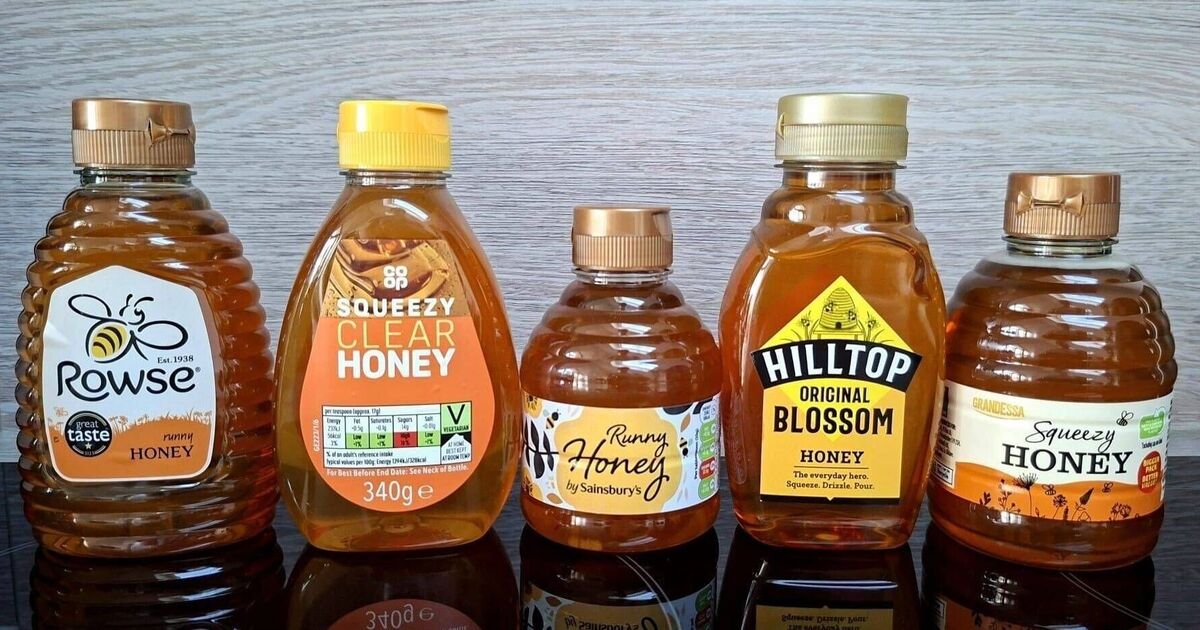


Honey is a kitchen staple, perfect for drizzling over yoghurt, stirring into porridge, or spreading on toast (Image: Millie Bull/REACH PLC)
In my household, honey is a daily staple. In fact, we go through several bottles every month. Typically, we purchase the budget-friendly supermarket squeezy bottles, priced at approximately £1.50. Recently, however, I treated myself to a jar of locally sourced honey from a delicatessen – £9 for 454g. While the cost was eye-watering, the contrast was remarkable: the local honey had a more floral and subtle flavour, and was much less sweet than the supermarket alternatives.
Given the expense, I save this honey for recipes where its distinctive flavour can truly stand out. However, it prompted me to question: Is supermarket honey genuine, and which brands actually deliver the best taste? In 2023, the European Commission examined 320 honey samples from 18 nations and found that almost half were fraudulent.

In my home, we use honey almost daily (Image: Millie Bull/REACH PLC)
All 10 UK samples failed authenticity tests, suggesting the presence of unauthorised additives, including food colourings, sugar syrups, or other substances.
In 2024, The Guardian reported that over 90% of honey products sampled from leading British supermarkets failed advanced authenticity tests.
According to Which?, by law, honey must not contain any added substances, have its pollen removed, or be processed in a way that alters its acidity or harms its natural enzymes. Devina Sankhla, a food policy adviser at the British Retail Consortium, commented at the time: “Our members work with suppliers to ensure the authenticity of their honey, conducting regular checks to ensure all honey they sell is as described. Retailers continue to support the development of improved techniques to detect any adulterated honey, so they can continue to ensure customers get the best products on the shelves.”
A Government spokesperson added: “There is no place for adulterated honey. We work closely with enforcement authorities to ensure honey sold in the UK is not subject to adulteration.”
With these concerns in mind, I embarked on a mission to find the best supermarket honey by putting five options to the test. I pitted own-brand runny honeys from Sainsbury’s, Aldi, and Co-op against branded varieties from Hilltop and Rowse.
Ensure our latest food stories always appear at the top of your Google Search by making us a Preferred Source. Click here to activate or add us as a Preferred Source in your Google search settings

Hilltop’s Honey Blossom Honey easily stood out as the best I tried (Image: Millie Bull/REACH PLC)
To ensure a fair comparison, each honey was judged on both taste and value, with all samples stored and tested identically: a small spoonful taken straight from the bottle.
1. Hilltop Honey Blossom Honey, 340g, £2.60 (Sainsbury’s)
Hilltop’s Honey Blossom Honey emerged as the clear frontrunner among those sampled. Its floral notes were distinctive yet pleasantly subtle, and it was markedly less sweet than its rivals.
Unlike Rowse and the supermarket own-brand alternatives, Hilltop’s offering carried none of that syrupy or artificial quality — instead delivering a fresh, fragrant flavour that reminded me of the best locally sourced honey. The label indicates that Hilltop’s honey is a “carefully sourced and fully traceable blend of non-EU honeys, from more than one country,” and that it’s “tested for authenticity.”

Co-op’s honey was a pleasant surprise (Image: Millie Bull/REACH PLC)
A 2021 Guardian piece revealed that roughly a third of UK honey imports originate from China, though this is seldom disclosed on supermarket packaging. The UK also imports substantial volumes of honey from India, Ukraine, and Vietnam.
While Hilltop’s honey costs more than supermarket equivalents, I feel the additional £1 is warranted by the enhanced taste and superior quality.
2. Co-op Squeezy Clear Honey 340g, £1.55
Co-op’s honey proved to be a pleasant discovery. Though sweeter than Hilltop’s, it still delivered a delicate floral note and wasn’t as sugary as other varieties.
It was marginally too sweet for my preference, but at £1.55, it is outstanding value.
Like Hilltop, Co-op’s honey comprises a blend of non-EU honeys.
The primary disadvantage is accessibility: not every part of the UK has a Co-op, though delivery is available.

Rowse’s squeezy clear honey was the priciest option I tried (Image: Millie Bull/REACH PLC)
3. Rowse Squeezy Clear Honey, 340g, £3 (Tesco)
Rowse’s squeezy clear honey proved the most expensive option I tried, which came as a surprise, given the brand’s popularity and extensive product portfolio.
The label describes it as a “blend of honeys from more than one country/Blend of non-EU honeys.”
To my taste, Rowse’s honey was slightly too sweet and lacked the delicate floral notes I associate with premium-quality honey. It didn’t have the depth of Hilltop, and at £3, I don’t believe it is good value.
That said, Rowse honey is regularly reduced through supermarket loyalty programmes such as Nectar and Clubcard.

Aldi’s honey is among the most affordable I tried (Image: Millie Bull/REACH PLC)
4. Aldi GRANDESSA Squeezy Honey, 454g, £1.39
Aldi’s honey ranks among the cheapest I sampled, yet it’s also one of just two that offer no information about its source on the packaging – the label merely states “honey.”
Regarding flavour, it’s exceptionally sweet and syrupy, with no floral characteristics whatsoever. While the cost is attractive, it tastes to my palate like sugar syrup rather than authentic honey.

Sainsbury’s own-brand honey stands out for its low price (Image: Millie Bull/REACH PLC)
5. Sainsbury’s Runny Honey, 340g, £1.04
Sainsbury’s own-label honey is notable for its budget-friendly price – barely over £1 – but I found it underwhelming. The flavour was closer to golden syrup than proper honey: excessively sweet, almost to the point of being off-putting, and it caused my throat to feel scratchy.
The label states it is “Pure Honey (100%)” but provides no details regarding origin. According to the supermarket’s website, it is “packed in the United Kingdom, using a blend of honeys from more than one country/ blend of non-EU honeys.”
I used to buy this honey all the time, but after comparing it with alternatives, I won’t be buying it again.

If you can, seek out local honey (Image: Millie Bull/REACH PLC)
The verdict
Hilltop’s Honey Blossom honey emerged as my undisputed favourite and is a brand I’ll certainly purchase again. For those watching their spending, Co-op’s honey is an excellent option that still provides decent flavour.
Having learned more about honey’s provenance, I now intend to purchase honey from a single country whenever possible. While single-origin honey is pricier than blended alternatives, the contrast in flavour and quality is remarkable – particularly when set against my locally-sourced honey.
Where possible, look for local honey. Otherwise, always examine the packaging to identify your honey’s origins – understanding the source can help you find better-tasting, superior-quality honey.
