
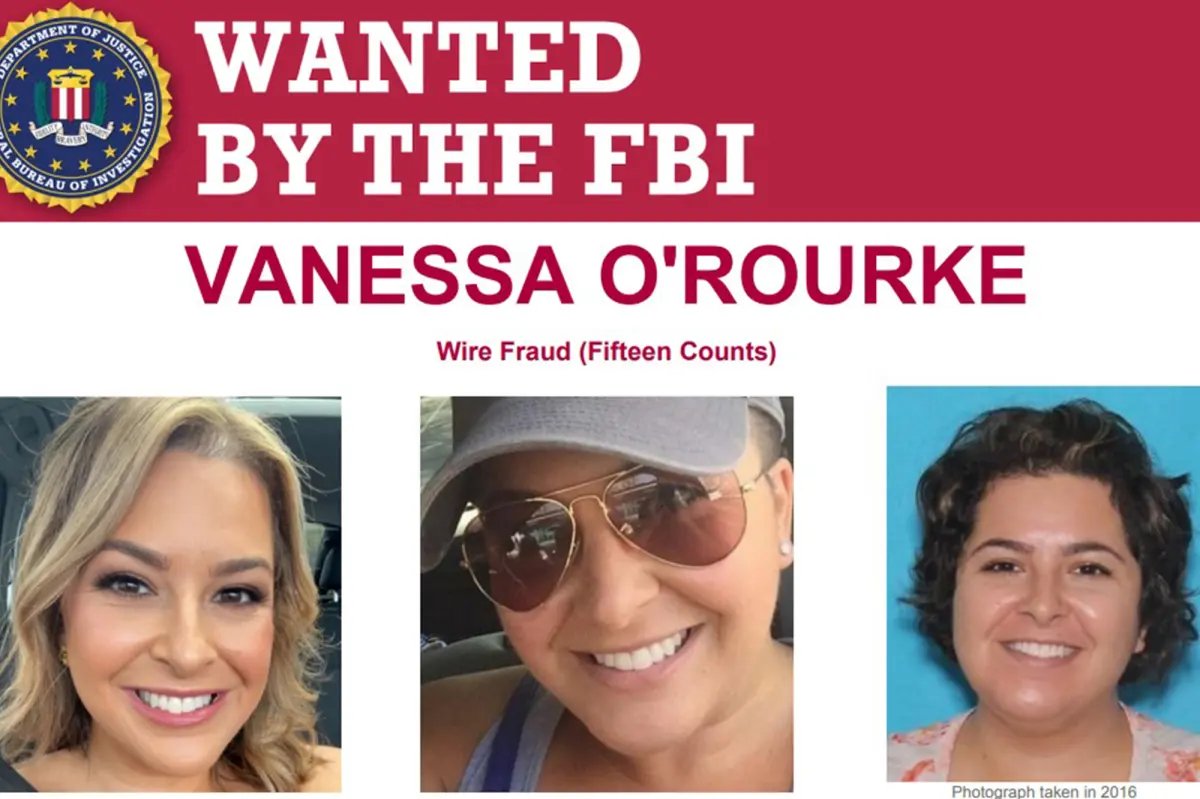


A Pennsylvania woman accused of faking terminal brain cancer to scam friends, family members and supporters out of thousands of dollars is among the FBI’s most wanted fugitives after authorities said she used the donations to fund luxury travel and vacations in Australia instead of medical treatment.
The FBI said on May 23 that it is still hunting for Vanessa O’Rourke, who has been on the run for years since she was indicted in 2018 for her suspected scheme.
Authorities allege O’Rourke, now 37, spent months convincing loved ones she was dying from glioblastoma, an aggressive and often fatal form of brain cancer, while claiming she desperately needed money for treatment, daily living expenses and experimental medical care overseas.
According to the FBI, O’Rourke told supporters that traditional treatment options had failed and that traveling to Australia for an experimental procedure represented her best chance at survival.
Friends and family members reportedly rallied around her, donating money and organizing fundraisers to help what they believed was a young woman battling a terminal illness. But authorities say the cancer diagnosis was entirely fabricated.
Investigators allege that between October 2015 and July 2016, O’Rourke used false claims about her health to obtain financial support from people close to her. Prosecutors say supporters provided money directly to O’Rourke and also helped organize fundraising efforts to cover what they believed were mounting medical costs.
In April 2016, O’Rourke traveled to Australia, allegedly telling loved ones she was receiving experimental treatment unavailable in the United States. Instead, according to federal authorities, she spent the trip engaging in sightseeing and recreational activities and received no medical treatment whatsoever.
After returning to the United States, investigators say O’Rourke continued the alleged scam by encouraging friends and family members to organize additional fundraising events on her behalf.
Authorities say a donation webpage was launched online and a fundraising benefit was held at a Pennsylvania restaurant, where supporters gathered to raise money for what they believed was O’Rourke’s ongoing cancer battle.
Federal prosecutors allege the money raised during those efforts was later used to fund another trip to Australia in 2016, where O’Rourke again allegedly participated in leisure activities instead of receiving treatment for the illness investigators say never existed.
The alleged scheme eventually drew the attention of federal investigators.
On May 3, 2018, a federal grand jury in the Eastern District of Pennsylvania indicted O’Rourke on 15 counts of wire fraud. A federal warrant was issued for her arrest, and she remains wanted by the FBI.
O’Rourke’s case is one of several high-profile “fake cancer” scams that have shocked communities in recent years, as fraudsters allegedly exploited sympathy, online fundraising platforms and emotional support networks for financial gain.
In recent years, several women across the United States and abroad have been accused or convicted of fabricating terminal illnesses while collecting money through fundraisers, crowdfunding pages and community events.
One of the most notorious cases involved California woman Amanda Riley, the subject of the hit “Scamanda” podcast and ABC docuseries, who admitted to faking cancer for years while receiving more than $100,000 in donations from supporters.
Like those cases, prosecutors allege O’Rourke’s scheme relied heavily on the trust and compassion of the people closest to her — friends, relatives and supporters who believed they were helping save someone’s life.
Authorities and fraud experts have warned that emotionally charged medical scams can be especially effective because they often target tight-knit communities eager to rally around someone they believe is fighting for survival.
The FBI is asking anyone with information about O’Rourke’s whereabouts to contact law enforcement.
