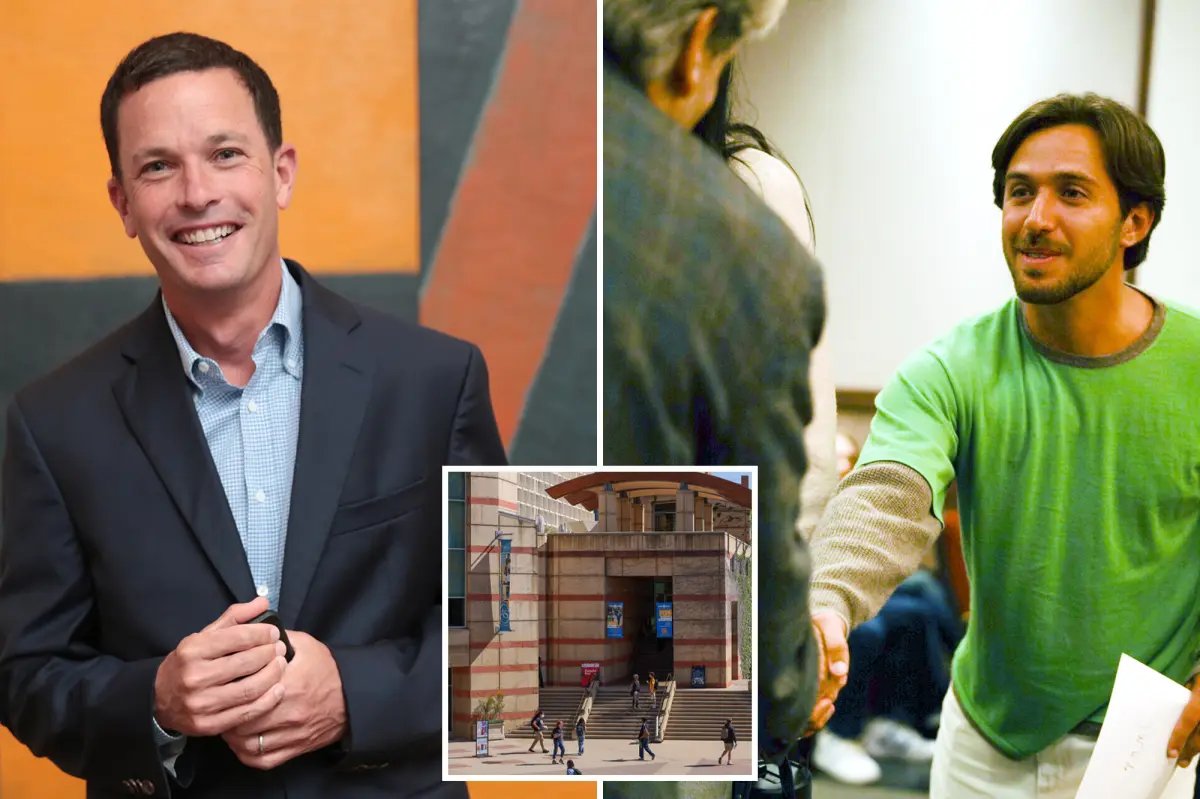


A group of “lunatic” UCLA student government members left a UC Regent member “disgusted and appalled” after they condemned an on-campus appearance from a Hamas hostage.
The scathing letter, published Friday by Jonathan “Jay” Sures, scolded members of the UCLA’s Undergraduate Students Association Council who said a visit from Omer Shem Tov — a 23-year-old who survived 505 days in Hamas captivity — “obscured the broader reality of ongoing state violence.”
“Like many University leaders, I am disgusted and appalled by the Council’s recent statement condemning an on-campus event featuring former Israeli hostage Omer Shem Tov,” Sures started his letter.
“Rather than hearing the perspective of a 23 year old peer abducted by terrorists at a music festival and held hostage by Hamas for 505 days, those of you who voted for the letter of condemnation chose not to listen at all,” Sures, who is Jewish, wrote.
Sures called the USAC’s condemnation of Shem Tov “shortsighted, antisemitic or both,” in an interview with Jewish Insider.
In his written response, Sures went on to quote a direct section of the letter from USAC condemning Tov’s appearance on campus, pointing out the hypocrisy.
“While we affirm the humanity of all people impacted by violence, we reject the selective platforming of narratives that obscure the broader reality of ongoing state violence,” USAC’s letter said.
“Let’s unpack this,” Sures wrote.
“Omer Shem Tov is not a representative of the Israeli government. In fact, he is a young student, like many of you, whose life took a horrific turn when he and his friends were kidnapped at a music festival and driven into Gaza, where he was held hostage and tortured for months underground without contact to the outside world,” he added.
Sures, who was appointed to the Board of Regents in 2019, continued to point to the ridiculousness of USAC’s messaging.
“While your letter expresses concern over ‘a troubling disregard for Palestinian life,’ it says nothing about the Israeli lives lost on Oct. 7th, including the shooting of many of Omer’s close friends. Nor does your letter mention the countless rapes and massacres carried out by Hamas on that day. It is as if none of that happened,” he said.
Omer Shem Tov spoke at UCLA on April 14 for Holocaust Remembrance Day in an event organized by UCLA Hillel.
Shortly after the appearance, the letter from USAC was published whining that only a “single narrative was elevated” during Shem Tov’s appearance.
UCLA defended Shem Tov’s appearance. “The event’s message was one of resilience and respect for human rights and dignity — a message we support,” a statement said. “The condemnation of such a peaceful event to share a story of resilience in the face of extreme suffering is antithetical to the values of our Bruin community,” it added.
USAC President Diego Bollo told The Post he was not present at a meeting to decide to publish a letter condemning Shem Tov’s appearance. He said the councilmember who introduced the letter did so on a day when another councilmember who had promoted Shem Tov’s appearance was not present to share her perspective and knowledge of the event.
Bollo also said the decision to publish the letter was passed by a “bare majority.”
“I acknowledge that this reflects a lapse in oversight on my part as President, and I take responsibility for that institutional shortcoming. To address this issue, I am initiating a review immediately of our internal processes for drafting and releasing public statements,” Bollo told The Post.
“I deeply value free speech and free expression on our campus. I have worked throughout my term to
ensure that the university supports all student groups in hosting speakers and a wide range of
programming. Free speech is a principle I do not compromise on — regardless of the nature or subject of
any given event,” he added.
As for Sures, he concluded his letter with a lesson for the USAC members who voted to publish the antisemitic note.
“The student leaders on your council who opposed this event would have benefited from what Omer Shev Tov had to say. All they had to do is listen. Instead, they have hardened their hearts and closed their minds,” he concluded.
UCLA has been under increased scrutiny following months of protests and encampments over Israel’s war in Gaza.
