
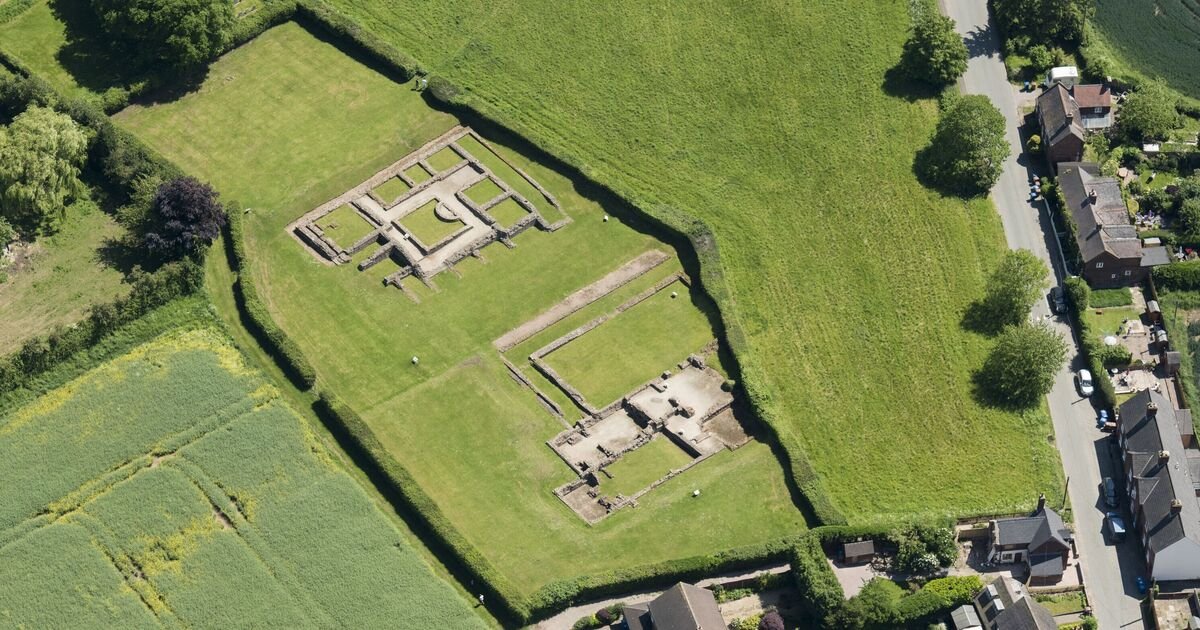

This small village is home to fewer than 500 people, though it houses the incredible remains of a Roman town and has a fascinating history. Located just south of Lichfield in Staffordshire, the village of Wall is home to only 484 people, according to the Wall Parish Council, and while it might seem like a quiet countryside stop, 2,000 years ago, this was the bustling Roman town of Letocetum. Wall stood at the crossroads of two major Roman roads, Watling Street and Ryknield Street, which made it the perfect spot for a staging post following the Roman conquest of Britain in AD 43.
Visitors to the Wall Roman Site are able to discover more about this history by visiting the small museum and seeing the excavated Roman baths, and there’s even an inn that was used to house travellers. Excavations have continued for over a century, revealing layers of Roman and pre-Roman history.
Although most of the original town is now farmland or hidden beneath the village, Wall still offers a glimpse into the daily life of Roman Britain, located right in the middle of the English countryside.
Inside the small museum, you’ll find Roman artefacts, including jewellery, painted plaster, pottery, and even a carved stone of horned Celtic warriors, thought to have come from a local shrine that predated Roman buildings. In October, the museum is open on October 11, 12, 25 and 26.
According to English Heritage, a full fortress was built in the early 50s AD to house part of the powerful XIV Legion, but the army didn’t stay long. After a few years, the soldiers moved on, and the site began to change.
More forts were built and later removed, especially during times of unrest, like the Boudiccan rebellion in AD 60–61. Wall’s position on the border between two native tribes meant that the Romans kept a close watch here and used the location to gather supplies and resources.
By AD 80, Wall’s military role had shifted to become more of a civilian town. The Romans built a mansio, which was an official inn or guesthouse for travelling officials, and added a bathhouse.
Over time, a small town grew around these buildings. The old fort sites were replaced with homes, workshops, and other industries.
By the late Roman period, official travel slowed, and the mansio was torn down. The bathhouse survived a bit longer, until about AD 300. Eventually, Wall shrank back to a smaller settlement, although some activity continued after the Romans left.
One TripAdvisor user wrote about the site: “Fantastic bit of history, can’t believe it’s free to visit, car park also free, it’s looked after very well, highly recommend a walk up to the church.”
Another visitor said: “This is a little hidden gem in the middle of Staffordshire just off the A5, parking is free and a very short walk from the ruins. Once at the ruins it’s amazing to see them and the fact that they are still standing after all this time, the site is well maintained and there is a small museum containing artefacts from the period.”
