


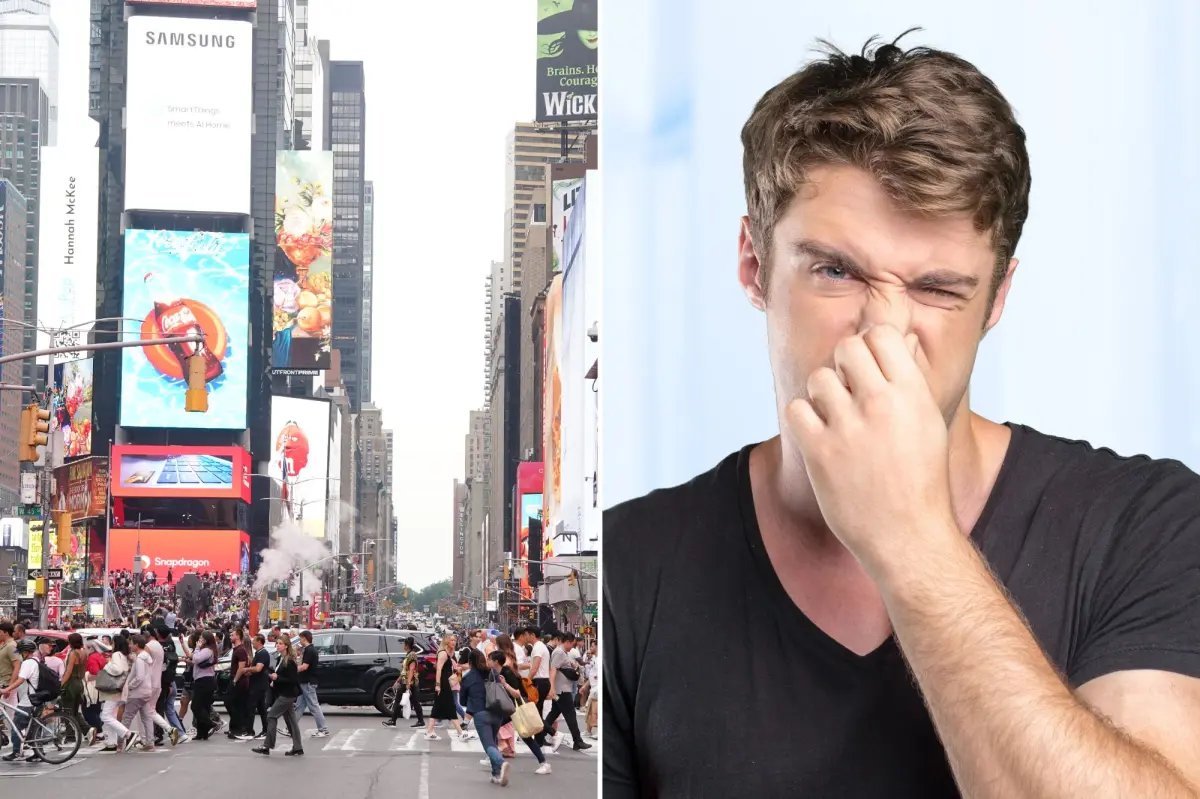

Grab your noses, folks.
While New York City has always been aromatic, it’s been a particularly pungent year so far, with smell complaints soaring higher than the Freedom Tower itself.
With 5,332 stench reports to NYC’s non-emergency 311 hotline already this year, 2026 is shaping up to be quite a stinker — and we haven’t yet even hit the peak summer stink season.
In fact, during the highly aromatic period from May 1 through July 31 last year, a whopping 4,093 smell complaints were logged, according to an analysis by The Post — a marked increase from the same period in 2024, which saw 3,756 calls.
In 2025, the city logged a gag-inducing total of 15,322 odor-related complaints, with categories ranging from “sewer odor” to “pigeon odor,” plus fumes emanating from “nail salons” and “food vendors.”
The top five olfactory infractions were for vehicle idling (5,381 complaints), chemical/gases and vapors (2,812), sewage odor (1,487), chemical odor (1,357) and sewer odor (1,202).
According to a spokesperson from the New York State Department of Environmental Protection, chemical gases, vapors and odors all generally refer to the same thing — smells resembling familiar chemicals, like cleaners, gasoline, tar or paint products — rather than more common everyday odors people may be more accustomed to, such as garbage, exhaust and animal waste.
The state DEP itself received just over 11,200 odor complaints in 2025, compared to more than 10,600 in 2024.
Perhaps it’s no wonder the Big, Rotten Apple was named 2025’s third-smelliest US city by online retailer Prilla, only out-stunk by No. 1 Houston and No. 2 Los Angeles — although NYC posted far more sewage complaints than the winner, according to Secret NYC.
Wondering whether your neighborhood was among the worst-smelling last year?
Below are NYC’s top 2025 offenders seemingly in need of a hose-down — either that, or their residents just enjoy raising a stink.
Grimes Square + Smell’s Kitchen
If you can’t stand the stench, get out of the Kitchen, we guess.
In the realm of offensive ZIP codes, none wage an assault on the shnoz like 10036, encompassing Times Square, the Theater District and parts of Hell’s Kitchen. (One neighborhood inhabitant being the uber-aware Post newsroom.)
The putrid district logged a nostril-singeing 1,648 complaints in 2025, 1,378 of which were related to fumes from vehicle idling. The numbers were a bit skewed, however, as the lion’s share of those interestingly hailed from 680 Eighth Ave., which is the address of the Times Eatery deli (no judgments!) and, according to a spokesperson from the NYS DEP, an otherwise heavily trafficked area near the Port Authority Bus Terminal.
Coincidentally, this comes as an increasing number of people are joining the Big Apple’s Citizen Idling Complaint Program, which inspires self-appointed vigilantes to snitch on idling trucks for cash — a pastime that’s proven highly lucrative for some.
One street snitch, Patrick Schnell, has reportedly pocketed $582,800 since the program’s debut in 2019 by filming trucks idling for more than three minutes, then sending his clips to the city and collecting checks worth up to 50% of the vehicles’ ensuing fines.
Turning Green
Greenpoint has got the funk, too, records show. The industrial chic neighborhood recorded 267 smell complaints last year, with 110 related to animal odors, although the NYS DEP could not specify the exact animal sources.
Residents have long been railing about the epidemic of entitled dog owners who refuse to pick up their pets’ excrement, leaving a veritable manure minefield on the streets.
“It’s shocking to me how some people are ok leaving human-sized dog s–t in the middle of the sidewalk, complained one fed-up Redditor earlier this year. “It’s so disgusting.”
“The ridiculous entitlement of dog owners in North Greenpoint really degrades the area,” another lamented.
Others noted that the problem persists despite the abundance of doggy bag dispensers. “It’s not a poop bag having problem,” they said. “It’s an abundance of lazy a–hole problem.”
On a more positive note, Greenpointers were able to exhale a bit in December after an asphalt recycling center — famous for spewing noxious fumes through the trendy nabe — closed off its stinky ports.
The facility, Green Asphalt, had been forced to shutter after it failed to raise its smokestacks by a state-mandated deadline. However, its closure is likely only temporary.
Big trouble in ‘Little Odessa’
Even the fresh, salty air of the seaside can’t mask the stink in Brooklyn’s 11235, which comprises Brighton Beach, Sheepshead Bay and Manhattan Beach.
Popular among fisherfolk and beachcombers, the fragrant seaside getaway was wracked by 243 smell complaints, 96 of which were related to chemical vapors and odors.
Unfortunately, the actual origins of chemical odors are “extremely hard to trace in outdoor air because they’re intermittent and usually dissipate before investigators can identify a source,” according to a state DEP spokesperson.
Queens of the stink age
Also under assault from nasal chemical warfare was 11364, the Bayside and Littleneck, Queens, area.
There were 220 smell complaints in 2025, with 182 relating to chemical odor.
It’s safe to say they could use an air freshener.
Taking out the trash
Unfortunately, airing out NYC has proven a monumental task, given the symphony of smells.
However, the city has made some strides.
Along with the idling vehicle program and the shuttering of the Greenpoint asphalt plant, we’re also clamping down on one major source of the NYC stench: garbage.
Last month, Mayor Zohran Mamdani announced plans to expand the “containerization” program — a key initiative of his predecessor, Eric Adams — to six districts, bringing garbage bins to 25,000 residences in larger buildings across NYC.
While the expansion won’t be up and running until 2027, buildings with one to nine residential units will be required to use special city bins for trash starting this June, according to NYC.gov.
In fact, New Yorkers have already ordered 1 million bins since they were rolled out in 2024, which has resulted in a reduction in rat sightings and a lower likelihood of whiffing eau de trash.
“The fact is, the ‘hot garbage smell’ is actually far, far less prevalent today than it has been in the past, thanks to our containerization programs,” said NYC Department of Sanitation spokesman Joshua Goodman in 2024.