


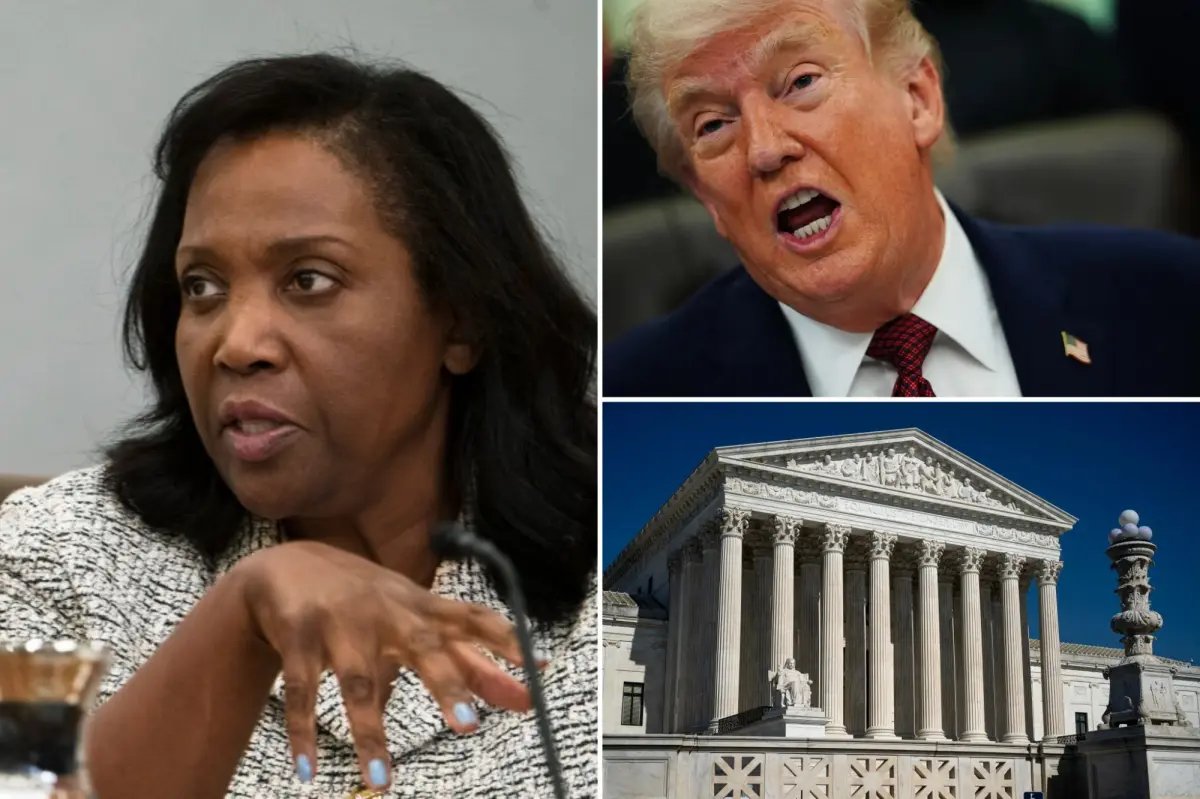

WASHINGTON — The Supreme Court formally blocked President Trump’s attempt to dismiss Federal Reserve Governor Lisa Cook in a ruling that is likely to reassure markets of the central bank’s independence.
Trump attempted to fire Cook, a Biden appointee, on Aug. 25, 2025, via a Truth Social post, citing accusations by Federal Housing Finance Agency Director Bill Pulte that she had committed mortgage fraud as justification.
Cook has denied wrongdoing, and independent analyses have questioned Pulte’s claims, which date from before she was appointed to the Fed board in May 2022. Cook sued to block her removal and was granted an injunction by a DC federal judge, keeping her in her position while the case played out.
The justices were asked to weigh whether Cook was entitled to notice or an administrative hearing before her termination, as well as whether the courts could even review Trump’s decision to fire her.
The Federal Reserve Act stipulates that members of the Board of Governors can only be fired by the president “for cause,” but not over political differences.
However, the act does not specify what constitutes a “for cause” dismissal.
During oral arguments, attorneys for Cook claimed the statute only applied to “inefficiency, neglect of duty, or malfeasance in office,” using language from other Progressive-era legislation such as the law creating the Federal Trade Commission in 1914.
Attorneys for the Trump administration, however, argued that cause for dismissal could include “misconduct, incompetence, failure to perform statutory duties, and any other faults ‘implying an unfitness for the place.’”
Former Fed Chair Jerome Powell and one of his predecessors, Ben Bernanke, attended oral arguments to show solidarity with Cook.
The Fed was designed to be insulated from political pressure so that it can focus on setting long-term economic policy, mainly by setting the benchmark federal funds interest rate, determining the extent to which banks and credit unions can loan each other money without requiring collateral.
The case, Trump v. Cook, is one of several the justices have heard this term dealing with the extent of the president’s executive power.
In February, the high court ruled that Trump could not use the International Emergency Economic Powers Act to impose reciprocal tariffs on dozens of nations, forcing the administration to begin the process of refunding billions of dollars to businesses that had paid the levies since they were announced in April of last year.