


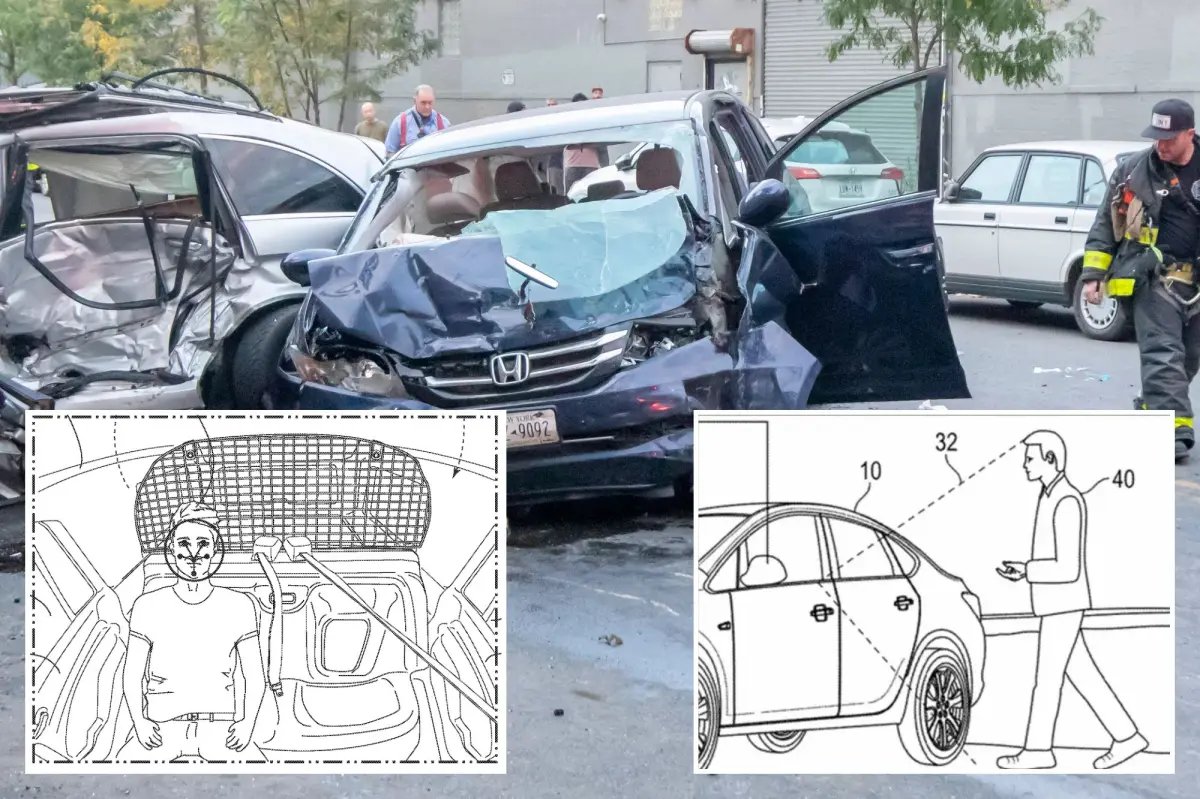

Are you ready for your car to decide if you’re fit to drive? If not, you’d better buckle up.
A federal mandate declares new vehicles must have in-car surveillance for 2027 models onward that can decide if a person is fit to drive and can make the car inoperable via a so-called “kill switch.”
And don’t count on brushing your teeth or gargling with Listerine to work around the driver monitor if you’ve had one too many.
Most new cars won’t make the determination via breathalyzer, but infrared cameras continually monitoring potential impairment cues.
They include pupil size, head movements, eye movements and various behaviors consistent with a driver being out of it.
Such measures are sounding very loud alarm bells with privacy campaigners.
“This is invading every driver’s privacy, taking information, deciding if you’re drunk” without having all the evidence. “Then you get in the car and can’t start it,” Lauren Fix, an automotive expert who founded “Car Coach Reports,” told The Post.
The statute for the new system was buried in the 2021 Infrastructure Act, passed by the Biden administration, which aimed to increase road, bridge and airport safety.
“Originally, it was designed by Mothers Against Drunk Driving, a good group that doesn’t want anyone driving drunk. Nobody wants people driving drunk,” Fix noted.
General Motors (GM) filed a patent for a system that detects if someone is impaired through cameras and sensors analyzing the way a driver walks up to the car. Ford plans to use cameras and “machine learning” to scan irises, track facial expressions and monitor heart rates to see if a driver is impaired.
Toyota is working on a system that will prevent the car from starting if sweat sensors in the steering wheel detect high levels of alcohol, according to a report.
But each approach has its flaws, according to Fix, who said there are “a million scenarios” that could make the car think you are inebriated when, in fact, you’re undergoing an emergency.
“Maybe your mother fell and she needs your help. Your house is on fire. Your wife is about to give birth and needs to be rushed to the hospital. Maybe you’re just stressed. And your car refuses to start? That’s where the problem lies.”
There are also questions about the resolve — how long until your car turns back on.
“How do you get out of ‘kill switch jail’? You can’t call the police. I’m mad about the control of something not letting you drive your own vehicle when you need to get somewhere. That’s a big problem.”
Alcohol-related crashes killed 12,429 Americans in 2023, and 804,926 people were arrested on suspicion of driving under the influence in the US in 2024, according to safehome.org.
While drunk driving is a very real problem, checking every driver before each ride is a huge undertaking. Every day in the US, 1.1 billion car trips are made, according to the Bureau of Transportation Statistics, almost half of which are for shopping and errands.
The National Highway Traffic Safety Administration admitted to Congress in a February report that the technology isn’t ready to deploy yet, pointing out that even a system with 99.9 percent accuracy would generate millions of false positives every year.
Privacy experts are also worried about what happens to all the information cars record about their drivers.
“It’s definitely not going to stay in the vehicle,” Harry Morgan, CEO of Privacy Bee, told The Post. “It’s tracking all kinds of visual signals … and they’re usually sending them up to some kind of automotive cloud.”
Morgan, who believes in enforcement against drunk driving, noted it’s unlikely that data will stay in the cloud: “A handful of large automakers take this behavioral data and, buried in your terms of service [agreement], you give permission for the automaker to sell that data.
“They’re actively selling it to companies that create an automotive ‘risk score’ on an individual and sell that to insurance agencies. As of November 2024, this was signed into law. In February 2026, Trump did pass it through the budget, so, it’s funded.”
Not giving up his fight against the “personal information of consumers being sold to the [highest] bidder,” Morgan said, “we can’t normalize the exploitation of personal privacy.”
As with many new measures, consumers will also end up paying for it. According to estimates, the infrared tech will jack up new car prices from $100 to $500, according to website Geekspin.
“Consumers don’t want [the infrared detection],” said Fix. “That’s going to cause people to keep the cars they have, so it will hurt the auto industry,” which, she claims, has not fought back very aggressively against the systems.