
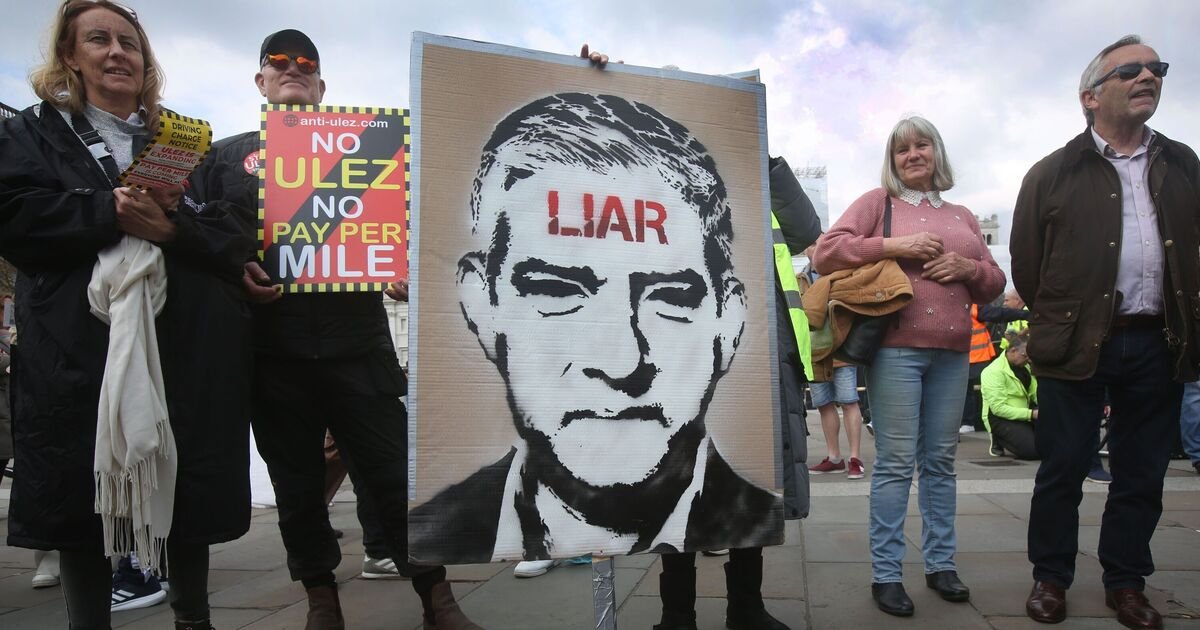

Transport for London (TfL) suppressed the results of a taxpayer research project that contradicted claims that low-traffic neighbourhoods (LTNs) reduce car use. TfL, which is under the authority of London Mayor Sir Sadiq Khan, decided against publishing the report’s findings after it found that traffic relocation schemes helped to increase cycling but failed to reduce the number of car journeys, according to the Times.
LTNs are local street design schemes introduced by councils which typically block through-traffic on residential roads using planters, bollards or cameras, while still allowing access for residents, deliveries and emergency services. Sir Sadiq has centred his mayoralty on reducing air pollution, introducing the ULEZ scheme to discourage the use of vehicles with high emissions. The Mayor has stated publicly on many occasions that he believes that LTNs help to reduce traffic and are therefore good for the planet.
In 2021 Khan said that the “main benefit of LTNs is to reduce short journeys by car,” adding a year later that LTNs “were “effective in reducing car use”.
Emails between TfL and the University of Westminster, which conducted the study, show concerns expressed about the implications of the results becoming public.
The exchanges discussed ways to present the study in the most positive light before a decision was taken not to publish.
In one exchange, an official stressed that “all of this stuff is FoI-able” (available under freedom of information laws) before pointing out that the findings were not yet in the public domain.
TfL initially agreed to pay £82,095 for the three-year study, but cut it short after two years, stating that it had failed to offer sufficient new insights, despite producing findings that contradicted claims about the impact of LTNs on car use.
It is unclear how much the organisation paid in total for the study after curtailing it two-thirds of the way through.
The study was led by Professor Rachel Aldred, director of Westminster University’s Active Travel Academy.
Aldred has previously lobbied councils to introduce LTNs and has published six academic papers, funded by TfL, in the past five years, all of which were positive about the measure.
John Stewart, of the campaign group Social and Environmental Justice, told the Times: “The failure to publish is a serious omission because it could have helped inform decision-makers. Councils and local councillors often support LTNs because they believe or are told that they are green and help reduce air pollution but this study hugely undermines that argument.”
TfL said: “We are committed to supporting high-quality research that helps us understand how our policies and programmes are working.
“This particular study was initially funded to explore the impacts of LTNs but following a review of the second year’s findings, we concluded that the data didn’t offer sufficient new insights to justify further investment in continuing the survey.
“We remain confident that LTNs can reduce traffic levels in the area, making streets safer and enabling more walking and cycling.”
The Daily Express has approached Aldred for comment.
