


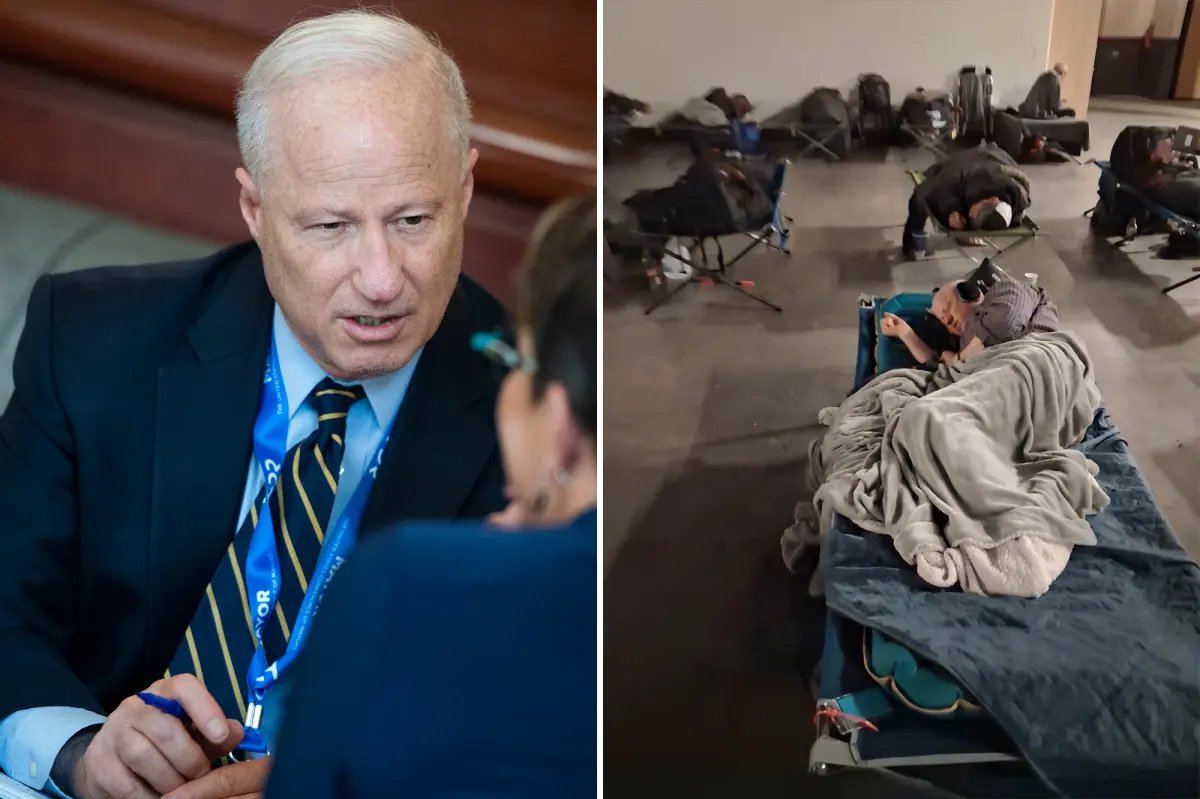

Every Friday night, the Republican mayor of Aurora, Colo. trades his office for a cot at the local homeless shelter — and he’s been doing it for months.
Mike Coffman, 71, sleeps at the Aurora Regional Navigation Campus in his town that borders Denver — so he can better empathize with the challenges homeless people face — before helping serve breakfast on Saturday mornings. His overnight stays also give him a front-row seat to how the state spends $481 million a year on homelessness.
“The experience has enabled me to better understand their unique and complex challenges and it has helped me to see them with compassion, as individuals, and not through a lens of condescension or contempt,” Coffman, a former Congressman and Marine who served in Iraq, wrote on Facebook.
“Consistency is important so that they know that I will be there every Friday . . . they have become more relaxed and open about talking to me about their challenges and expectations for their future.”
The overnight stays began in February at the 600-bed transitional housing campus, which Coffman helped launch in November 2025 through the nonprofit Advanced Pathways after his earlier experiences with homelessness in the city.
The program is designed as a three-step path toward independence, moving residents from an emergency shelter in to addiction recovery, mental health services and job training, before eventually reaching transitional housing for those working full-time.
“I will continue to stay with those experiencing homelessness, every Friday night, until the program is everything that I believe that it can be and it is a model, not just for Colorado, but for the country,” Coffman wrote.
The mayor’s latest hands-on approach follows a much more controversial experiment he conducted five years ago.
During the winter of 2021, Coffman — who served in Congress from 2009 to 2019 and became mayor in December 2019 — disguised himself as a homeless veteran and spent seven days and nights living in shelters and encampments across Aurora and neighboring Denver, sleeping beneath a tarp as temperatures dropped into the teens.
After the undercover stint, he told CBS4 News, “It wasn’t fun. It was really hard . . . but incredibly impactful.”
Homelessness, he concluded at the time, was largely a “lifestyle choice, and it is a very dangerous lifestyle choice,” reported the news station.
He also attributed the problem to “drug culture.”
The remarks sparked immediate backlash from homeless advocates.
Aurora Council member Juan Marcano, a progressive who ran unsuccessfully against Coffman for mayor and left office in 2023, called the undercover effort “the most disgusting thing I’ve ever seen an elected official do,” according to the Colorado Sentinel.
Others defended Coffman’s intentions.
Then-Mayor Pro Tem Francoise Bergan called the week on the streets “a brave thing to do.”
Colorado’s homelessness crisis has continued to worsen since the pandemic.
According to the Common Sense Institute, the state’s homeless population grew 90% between 2020 and 2024 — the fourth-largest increase in the nation — with nearly 18,700 people now experiencing homelessness statewide.