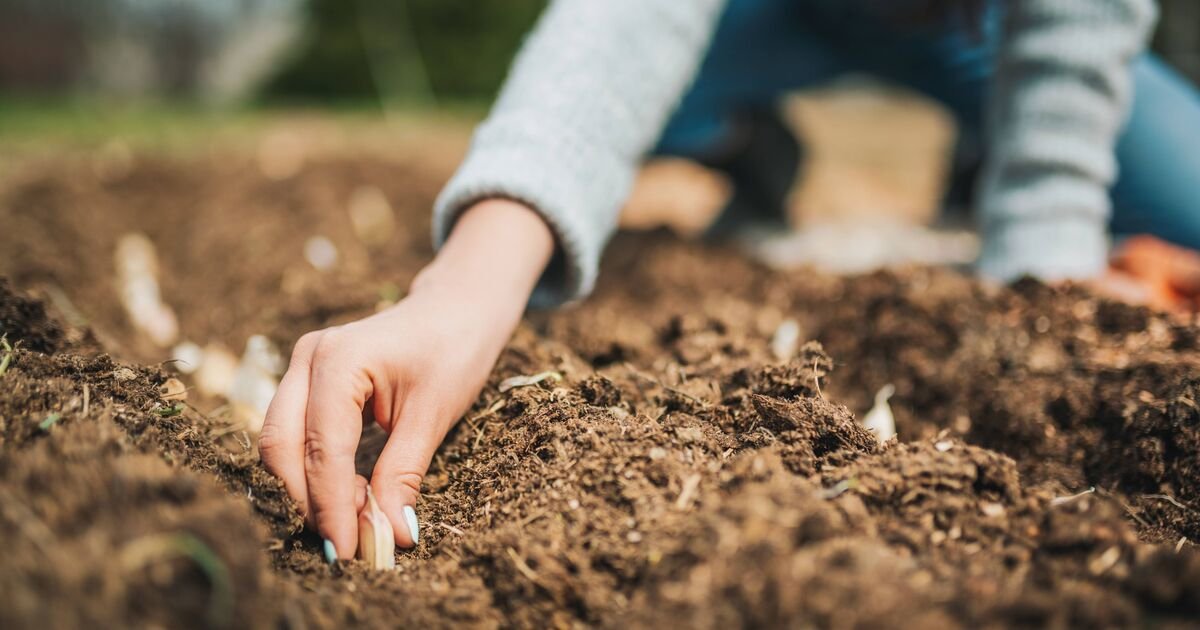


Garlic can go in now (Image: Vasil Dimitrov via Getty Images)
As the mercury falls and gardens grow still, it can be tempting to abandon vegetable growing altogether until spring arrives. However, November is actually a crucial month for sowing certain crops, with some vegetables requiring the cooler conditions to become properly established.
Gardeners are being urged to take advantage of the winter planting window, with broad beans, garlic and overwintering onions amongst the crops that can be put in the ground right now. Jo McGarry, luxury garden design expert at Caragh Nurseries, noted that a little groundwork during the colder months could make a “real difference” once spring comes around.
She continued: “People often think there’s not much to do in the garden during winter, but it’s actually a good time to get certain vegetables started. You can get them established now so they’re ready to grow when the weather starts warming up again.”

Broad beans can also be planted (Image: Toni Jardon via Getty Images)
Three vegetables to plant in November
Broad beans
Broad beans are an excellent choice for November planting, particularly in the milder regions of the UK. They can be sown directly into the soil and will begin developing their root systems over winter, giving them a considerable head start come spring.
“Broad beans are one of the easiest crops to get started now,” Jo explained. “If you’re in a milder part of the country, you can sow them straight into the ground and they’ll start establishing before the worst of the winter weather arrives. Just make sure they’re planted somewhere with good drainage, as they won’t appreciate sitting in waterlogged soil.”
November is also a perfect time to get garlic in the ground, as the cloves require a cold spell to develop correctly.
Jo said: “Garlic is one I’d definitely recommend getting in now. It needs a spell of cold weather to develop properly, so winter is a good time to plant it. Separate the bulb into individual cloves and plant them with the pointed end facing upwards, leaving enough space between each one so they have room to grow.”

Jo, pictured right with husband Ian and daughter Ella, has explained all (Image: Caragh Nurseries)
Overwintering onion sets and shallots can also be placed into the ground at this time. Getting them planted in November allows them to become well established throughout winter, primed to resume growth as temperatures begin to climb.
“Onion sets and shallots are another good option if you want to make use of the garden over winter,” said Jo. “Choose varieties specifically suited to overwintering and plant them in a sunny spot with well-drained soil. They don’t need much attention once they’re in, but it’s worth checking on them during particularly wet or cold spells to make sure they’re not sitting in water.”
How to protect vegetables from frost
While certain crops are well suited to winter planting, younger plants and those subjected to particularly harsh conditions may require additional protection to survive the colder months. “The main thing I’d recommend is keeping an eye on the weather and protecting anything that’s likely to struggle with frost,” Jo said.
“Horticultural fleece is really handy for this, as you can simply lay it over your crops when temperatures are expected to drop. Cloches and cold frames are also worth having, particularly if you’re growing younger plants.”
For those cultivating vegetables in containers, it’s advisable to relocate them to a more sheltered spot, such as positioned against a wall or inside a greenhouse. Jo added: “Pots get much colder than the ground, so moving them somewhere protected can make a big difference.”
Jo also recommended reducing watering throughout winter, as the majority of vegetables develop more gradually and require less moisture than during the warmer months.
She said: “You want to avoid the soil becoming waterlogged, as roots can end up sitting in cold, wet conditions and start to rot.”
Ensure our latest headlines always appear at the top of your Google Search by making us a Preferred Source. Click here to activate or add us as a Preferred Source in your Google search settings.
