
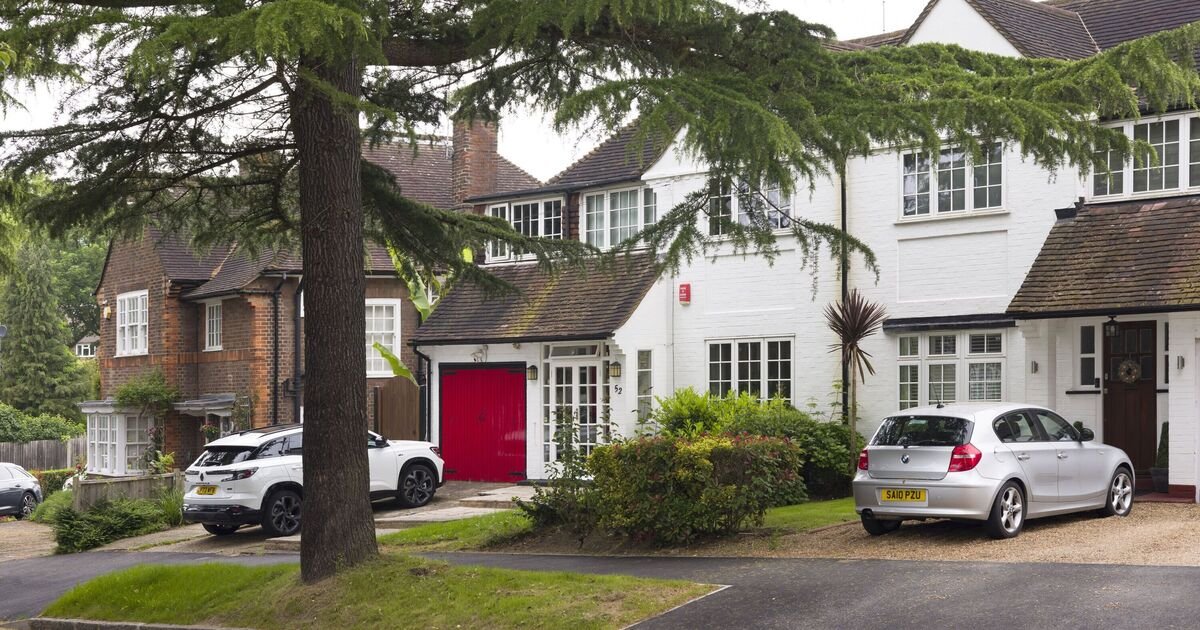

A new rule affecting every driveway in the UK was introduced earlier this year, with road users set to take advantage of new laws. Back in May, the Department for Transport confirmed that strict red tape rules around installing electric car chargers would be cut, opening up freedoms.
Under previous rules, drivers and businesses had to submit a planning application to install public or private EV sockets. However, the new rules cut down on paperwork, allowing road users to install a plug on their driveway without any hassle. The Government claims the move will “unlock saVings of up to £1,100” per year compared to running a petrol or diesel vehicle.
Patrick Dunne, Sainsbury’s Chief Property and Procurement Officer and MD of Smart Charge, was among those to back the move. He stressed the rule would likely help accelerate the “adoption” of electric vehicles to meet the needs of UK drivers.
Patrick said: “Everyone at Smart Charge knows how important it is to make EV charging simple, reliable and accessible – both to make transport cleaner and to ensure we’re meeting the everyday needs of drivers throughout the UK.
“We welcome this new streamlined approach to installing charge points, which will help accelerate the nation’s adoption of EVs.”
According to the RAC, the typical cost of installing a home charge point is likely to cost road users anywhere between £800 and £1,200.
A 7kW home charger is likely to deliver three times as much power at a much quicker rate than a domestic electricity socket. This comes at a cost, but will open up major savings with drivers set to pay less to charge their batteries at home than topping up at a public station.
VAT on electricity is charged at just 5% at home compared to 20% in public, with the so-called ‘pavement tax’ a real issue for many looking at making the switch.
Those charging in public are also unable to take advantage of the cheapest electricity tariffs overnight.
Future of Roads Minister, Lilian Greenwood, said: “We’re cutting down on paperwork to power up the EV revolution so that drivers, businesses and those looking to make the switch will have more chargepoints to power from and less red tape to deal with.”
