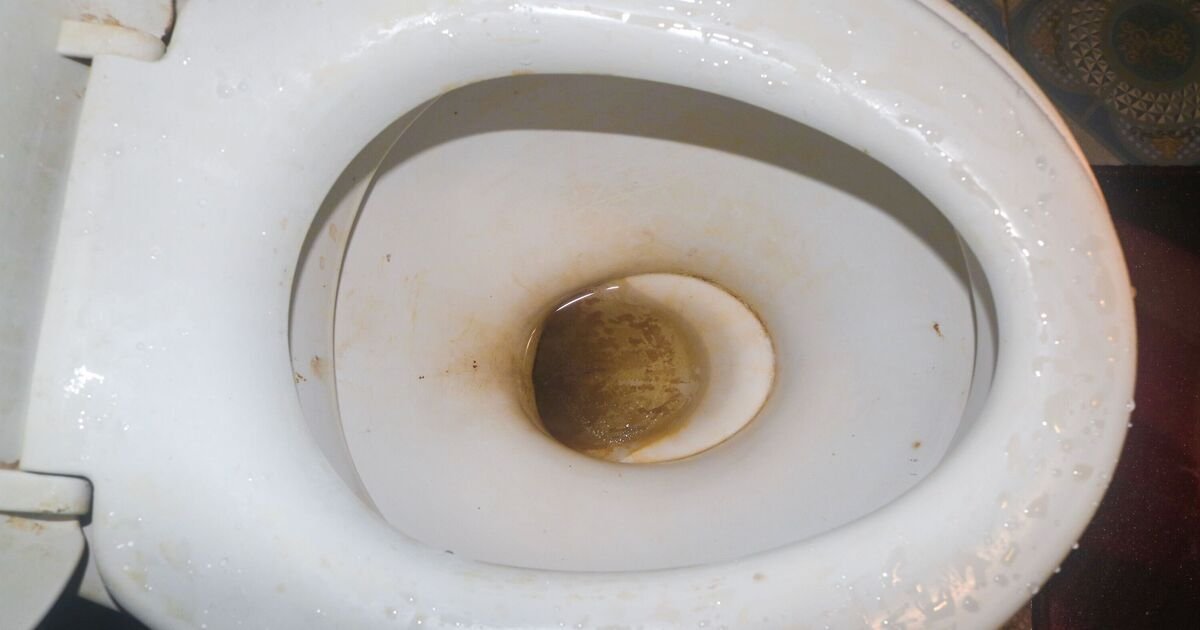

Chalky water deposits around taps and showerheads are synonymous with bathroom limescale, but it looks quite different when it gathers in the toilet bowl. Limescale is consistently composed of hardened calcium and magnesium deposits; however, limescale accumulation in toilet bowls frequently appears far worse than that found around taps.
These deposits can manifest in a revolting brown shade, making toilet bowls appear grimy despite thorough and frequent cleaning. Hardened stains can be tough to remove even with the help of bleach and vigorous scrubbing, as one Mumsnet user discovered. Like countless others, the forum member had reached the breaking point with persistent limescale build-up around their toilet rim, desperately seeking assistance from fellow forum members.
Posting on the platform, the user known as ‘BewareTheBeardedDragon’ wrote: “Under the loo, the rim has limescale that nothing I’ve so far tried can shift, and it’s starting to really bother me.
“Does anyone have any super limescale-busting tips? I’ve tried soaking it in supposedly limescale-tackling toilet duck, leaving it, and then scrubbing. Same with spray-on limescale remover. No luck. Is there anything else I could try?”
Much to their astonishment, numerous respondents recommended a comparable method that avoids harsh chemicals or lengthy scrubbing sessions.
One individual suggested: “I’d try soaking some loo roll in white vinegar, wedging it in there and leaving it overnight.”
Others endorsed it as a cleaning solution. Another forum member recommended: “Soak wedges of loo roll in vinegar or lemon juice and push into the rim. Leave overnight. The next day, run around the rim with an old spoon to remove softened limescale. Repeat as required.”
This approach mirrors a popular cleaning tip which involves soaking bathroom taps in a bag of white vinegar to soften the chalky build-up and reveal the gleaming metal beneath.
Distilled white vinegar, which you may already have in the cupboard, is both efficient and budget-friendly. It costs just 35p in Tesco and Sainsbury’s.
Frequently repurposed beyond the kitchen for household cleaning tricks, it’s a practical answer for tap and shower limescale as well.
Other Mumsnet users battling limescale at home recommended an alternative approach to tackle hidden grime lurking around the toilet rim.
A user with the alias QueenCT declared that toilet limescale was “her topic” after a prolonged effort to locate the source of a terrible smell in her bathroom.
She wrote, “Basically, my toilet smelt, and I couldn’t work out where it was coming from. I squirted a load of limescale remover under the rim and then got up there with my hands, a knife, and a flannel. Dragging the flannel along under the rim seemed to work well.”
The forum member continued: “Then I got a portable bidet bottle, filled it with hot water, and squirted it under the rim. The force of the water rinsed out a load of brown sheets of limescale. I attacked it from all angles, and it’s now perfect!”
When tackling limescale, it’s crucial to wear protective gloves and avoid mixing cleaning products, even natural remedies like vinegar, lemon juice and baking soda, with chemical products.
