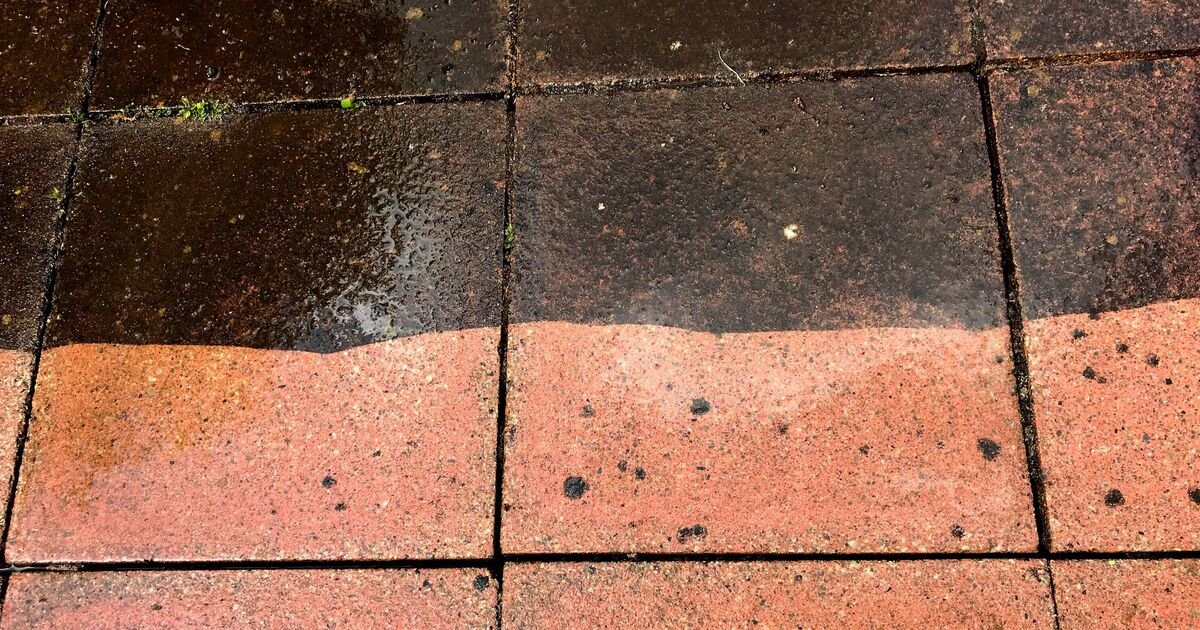


Patios will be cleaner without scrubbing or chemicals using Monty Don’s ‘best’ method (Image: Getty)
Even though you might’ve given your patio a nice cleaning when spring rolled around, by the time November arrives, it’s back to being green, slippery, and covered with stubborn black spots that just won’t come off. Autumn and winter create the ideal environment for algae, moss, and lichen to flourish on your patios, paths, and driveways.
The combination of shorter daylight hours, persistent moisture, and minimal sunlight gives these green invaders everything they’re looking for to thrive. Fallen leaves only make matters worse, as when they’re left sitting around, they hold onto moisture, leave marks on your paving, and provide fuel for more growth. With this in mind, gardening guru Monty Don has shared the “best way” to clean your patio for spotless results.

The best way to reduce the slipperiness is to wash off the algae with a pressure hose (Image: Getty)
How to clean patios properly
Taking to his gardening blog, Monty said, “The best way to reduce the slipperiness is to wash off the algae with a pressure hose (which can be hired by the day).”
While a pressure washer can effectively remove algae from patios, it’s crucial to be aware that it can also dislodge grout.
To protect patio slabs, grout plays a vital role. When using a pressure washer, be cautious to avoid damaging the grout, although accidental contact won’t cause significant issues.
When pressure washing, keep the nozzle 20 to 30cm from the surface. Closer means more power, so don’t inch towards the surface until you’ve tested it on a discreet corner.
Use slow, overlapping passes. Rushing leaves streaks. Rinse the whole area thoroughly after cleaning to wash away loosened grime.
What to do after pressure washing your patio
After removing algae and cleaning patios, Monty recommended using sand to repair and refill the grout, effectively blocking gaps between the block paving to prevent regrowth.
He advised, “When this is done, brush in sharp sand. If the path is brick or stone, the porous surface will absorb some of the sand.
Ensure our latest patio cleaning headlines always appear at the top of your Google Search by making us a Preferred Source. Click here to activate or add us as Preferred Source in your Google search settings

After removing algae and cleaning patios, Monty recommended using sand (Image: Getty)
“A quicker, but still quite laborious, alternative is simply to work sand in with a stiff brush without the washing.”
Monty emphasised that this method is a “very effective way” to clean a patio and ensure a path’s safety, “without resorting to chemicals” or spending hours scrubbing.
Do you need any cleaning products when pressure washing patios?
For best results, it’s really a good idea to skip any treatments on your driveway before you pressure wash it. Pressure washing can be pretty tough on your driveway surface, especially if you’ve got softer stone, so you’ll want to avoid adding anything else that might weaken it further.
That said, if your driveway is looking particularly dirty and grimy, you’ve got some gentler options. Consider using an eco-friendly, chemical-free cleaner or whipping up your own solution with warm water and a bit of washing-up liquid. These approaches will help get your driveway clean in a soft, natural way.
