


Los Angeles City Council just threw its full weight behind a crack down on LAPD’s pretextual stops.
In a unanimous 14-0 vote, lawmakers moved to rein in the traffic stops, a routine tool officers have long used to pull drivers over for minor violations and probe for bigger crimes.
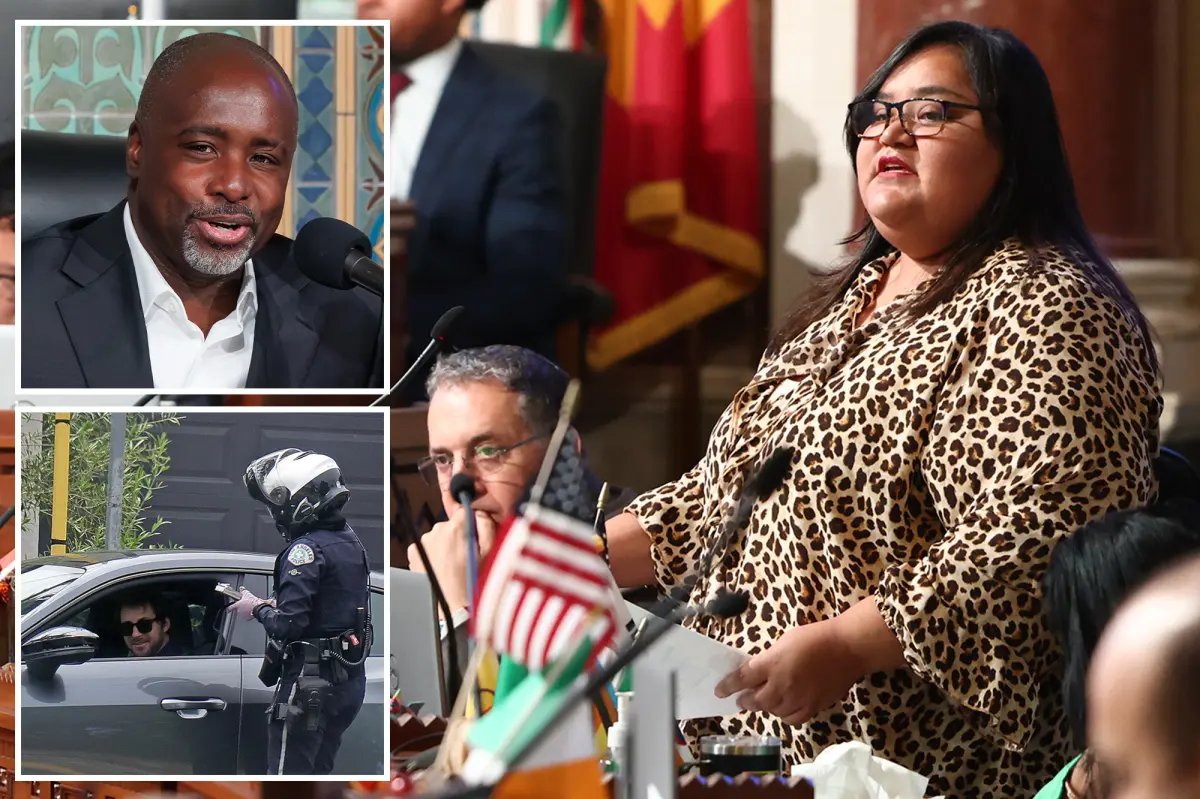
Council President Marqueece Harris-Dawson, who has championed the effort to eliminate the stops since first introducing the motion with former Councilman Mike Bonin in 2020, framed the vote as a moral shift, calling armed responses to minor violations “barbaric” and “wholly uncivilized.”
“This is a big down payment,” he said, signaling more changes ahead. The vote caps six years of City Hall buildup that began in the wake of the George Floyd protests.
Inside Los Angeles City Hall on Wednesday, nearly 200 people packed the chamber for more than two hours of testimony. But beneath the headline shift, much of what is being touted as new already exists.
According to LAPD sources, several of the restrictions driving this push have lived for years inside department policy and training.
Officers are already expected, in many cases, to justify stops, document encounters and operate within limits on searches, including requirements to articulate the reason for a stop on body-worn video.
What the council has done now is take those internal rules and lock them into city law, elevating them from guidance to mandate and turning day-to-day practice into a political flashpoint.
Under the new framework, minor violations alone are no longer supposed to open the door to a traffic stop unless there is a clear and immediate public safety risk.
But the final deal, shaped in part by Councilman Tim McOsker, makes clear what remains untouched.
Police still have the authority to stop drivers for dangerous violations. They can still act on reasonable suspicion of a crime.
That core power does not change.
What changes is how the encounter is defined and documented.
Consent searches are formally off the table without independent legal grounds like a warrant or probable cause.
Officers must state the reason for a stop on body camera before questioning begins, and any new suspicion has to be recorded.
The LAPD is now being directed to update training to reflect those standards.
The push also arrives under a cloud.
Harris-Dawson, who has made pretextual stops a centerpiece of his argument, recently came under fire over his own account of a traffic stop, which he described as racially motivated and traumatic.
But officials later said the stop was conducted by Los Angeles School Police, not LAPD, and involved a traffic violation near a high school, where he was cited.
LAPD officers conducted more than 77,000 pretextual stops between 2022 and 2025, encounters that have long been used to uncover guns, stolen cars, warrants and impaired drivers before situations escalate.
The policy now heads to the Board of Police Commissioners, where the question will not just be how to implement it, but whether this moment marks a real shift in policing, or a high-profile codification of what was already happening on the ground.
