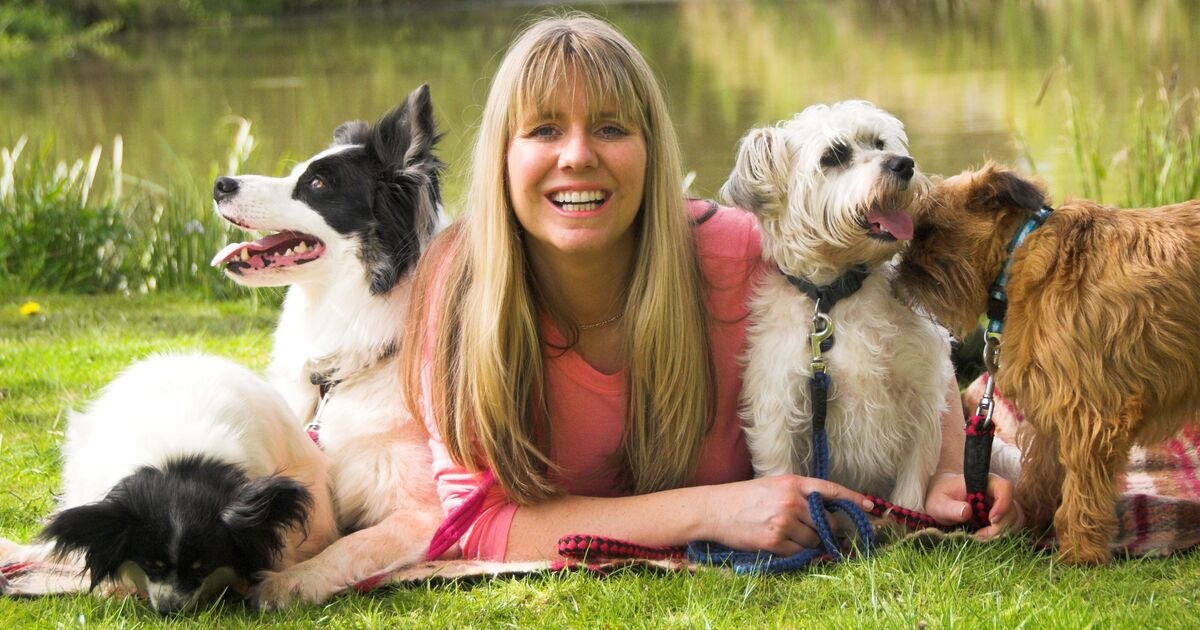


Dog trainer Sharon Bolt has revealed some key signs your dog might not be as happy as you think (Image: Sharon Bolt)
It may not be immediately obvious to us, but two dogs can stand on opposite sides of a road and have an entire conversation without even making a sound. One looks away and sniffs the ground, while the other stands taller, stiffens and fixes the first dog with a hard stare.
Sharon Bolt, a dog trainer and founder of Good Dogs, says that silent exchange can often tell us whether they’re trying to avoid trouble or whether a confrontation could be brewing.
“I’ve had the pleasure of working with dogs and their owners for over 20 years, and it’s often the smallest changes in a dog’s expression or posture that can tell me the most,” Sharon told the Express.
“Learning to recognise these signals early gives us the opportunity to understand when our dogs are feeling uncomfortable and take action before a situation escalates into growling, lunging, snapping or biting.”
On the day a new law comes into effect affecting five breeds and around 60,000 dogs, Sharon has set out key dog behaviours that owners might be misinterpreting. Today’s law change means it is now illegal to leave a child under 12 in close contact with certain dogs in a private setting without adult supervision.
A wagging tail isn’t always friendly
“This is one of the biggest misconceptions I see,” says Sharon, who is often heard discussing dogs on BBC radio. “If we take an example of two dogs greeting either visitors or another dog, one could have soft eyes, a relaxed body with their tail moving freely, while the other dog could be holding their body stiffly, their mouth tightly closed with their tail held high and wagging, often with short, rigid movements.
“Although both the dogs’ tails are moving, they are feeling very differently. The first dog is happy and relaxed whilst the second dog is giving other signals that indicate that they are feeling tense and that things could escalate. This is why it’s really important to read their entire body language rather than just trusting that a wagging tail always means that the dog is happy and friendly.
“And while a stiff, upright body is an important warning, other signals of discomfort can be so subtle they’re easily mistaken for something else entirely.”
A yawn doesn’t always mean ‘I’m tired’
“Imagine a visitor bending over a dog to say hello,” says Sharon. “Rather than leaning towards them, the dog turns their head away, licks their lips or gives an unexpected yawn. These signs suggest that the close interaction is too much and is making the dog feel uncomfortable.
“These subtle clues are known as calming or appeasement signals. Dogs use them when they’re uncomfortable, trying to ease tension with people or other dogs, or to avoid confrontation. They may also blink frequently or move their ears back.
“Of course, dogs yawn when they’re tired, just like we do, and they lick their lips around food. That’s why we need to look at the full picture of what’s going on around them to help us understand what these signals are telling us.”
Why grass suddenly becomes fascinating
“On a walk, a dog may suddenly start sniffing the ground as another dog approaches,” says Sharon. “They might slow down, lower their body or take a curved path instead of heading straight towards them. Another sign that they might not want to say hello is if they lift their head and deliberately look away.
“Just as some people feel uncomfortable meeting strangers, not all dogs enjoy meeting dogs they don’t know. Some are naturally shy or timid, while others have had unpleasant experiences and feel much happier keeping their distance. They may love the company of people and dogs they know, but do not want to necessarily greet every dog they meet.
“These signals are effectively saying, ‘No thanks, I don’t want to say hello, and I don’t want any trouble’. If they’re forced into a greeting despite displaying these signs, their discomfort can escalate into growling, lunging or snapping. Giving them more distance or changing direction from the other dog can prevent the confrontation before it occurs.”
The 3 Fs for dogs: Flight, Freeze and Fight
“When dogs feel threatened, they have three instinctive responses,” Sharon explains. “Their first instinct is to move away from whatever is worrying them (flight). If they can’t escape, they will often become completely still (freeze), and if the threat continues, they can resort to barking, lunging, snapping or biting to defend themselves (fight).
“This also helps to explain why some dogs react towards other dogs when they’re on the lead but are far more relaxed off it. The lead restricts their ability to move away from the other dog, leaving them feeling trapped and more likely to react defensively. Recognising the signals early means we can create distance before the situation becomes a problem.”
A happier, safer life together
“Whether your dog is looking away to avoid an encounter, freezing because they’re uncomfortable or reacting because they feel trapped, they’re communicating how they feel,” says Sharon.
“The more we understand what they’re telling us, the easier it becomes to prevent any unwanted confrontations and to enjoy a happier, more relaxed life together.”
