
On a Sunday morning like any other, I was driving to the office with a colleague. We were talking casually when I asked him to turn on the radio to catch the headlines. “Eight men, including seven Iranians, arrested in two anti-terrorism operations in England,” the broadcaster announced. We looked at each other, stunned.
Any anti-terror operation involving London, Swindon, Manchester, Stockport, and Rochdale should alarm every UK citizen. But for me, it struck a deeper chord. As an Iranian dissident activist, I have survived Iranian state-sponsored terror more than once.
Just weeks ago, on 12 March 2025, I testified before the Joint Human Rights Committee at Parliament, warning of the growing risk of Iranian agents orchestrating attacks on British soil. Having endured the regime’s transnational repression firsthand, I know its tactics all too well. UK police have long considered me a target of serious threats from Tehran.
In the mid-afternoon of a day in 1990, after completing a humanitarian mission in Turkey to prevent the extradition of Iranian asylum seekers, I narrowly escaped an assassination attempt. While en route to Istanbul’s airport, our car was ambushed – blocked by one vehicle and pinned by another. Two gunmen emerged. Instinctively, I rushed toward them, armed only with a briefcase. One opened fire, unleashing nine bullets; the other’s gun jammed. They fled. I was gravely wounded, shot in the chest and abdomen. The bullet to my chest narrowly missed my heart.
Iran’s state broadcaster was the first to report the attack, a chilling confirmation of the regime’s involvement. I spent four months in Istanbul’s International Hospital, including nearly 50 days in a coma.
Even then, the regime’s pursuit continued. Disguised as Turkish police, its agents attempted to infiltrate the hospital to finish me off. The plot was thwarted only because of heightened security due to the Turkish President’s mother being treated there. On another occasion, impostors posing as friends were foiled when my real friends arrived just in time. Since returning to the UK, I have been repeatedly warned by police to remain vigilant. The threat to Iranian dissidents remains persistent.
My encounter with Iranian state terror continued on 30 June 2018, when European police arrested four Iranian terrorists, including a serving diplomat, just hours before they could bomb an international gathering of tens of thousands of supporters of the National Council of Resistance of Iran (NCRI) in Paris. I was there, along with a large, cross-party delegation from the UK Parliament. All four perpetrators were jailed – though the diplomat, who had carried the bomb from Tehran to Europe on a commercial flight, was eventually traded for a Belgian national held hostage in Tehran.
Recent intelligence shows the regime has intensified its campaign of terror abroad to suppress dissent. As Iran faces the prospect of renewed uprisings – fueled in part by Resistance Units that galvanize public support through anti-regime activities like writing slogans on walls and installing banners supporting opposition leader Maryam Rajavi’s democratic platform – Tehran is resorting to desperate measures: executing dissidents at home and plotting attacks abroad.
While the UK police’s efforts to disrupt Iranian terrorist cells are commendable, and whether or not the recent arrests result in charges or convictions, a more comprehensive approach to confronting Iran’s menace is urgently needed.
First, the Home Office must proscribe the Islamic Revolutionary Guard Corps (IRGC) as a terrorist organization – a move with strong cross-party support in Parliament. Second, the UK should trigger the snapback mechanism in the Iran nuclear deal to reinstate UN Security Council sanctions targeting Iran’s terrorist infrastructure. Third, the United Kingdom must close the Iranian regime’s diplomatic missions, which serve as centers for espionage, intelligence gathering, and the orchestration of terror plots targeting dissidents and UK citizens. Finally, the government must recognize the Iranian people’s right – and that of their organized democratic Resistance movement – to overthrow the regime and establish a democratic republic.
The time has come for a new policy on Iran. Decisive action is essential both to safeguard UK soil and to support the Iranian people’s fight for freedom.
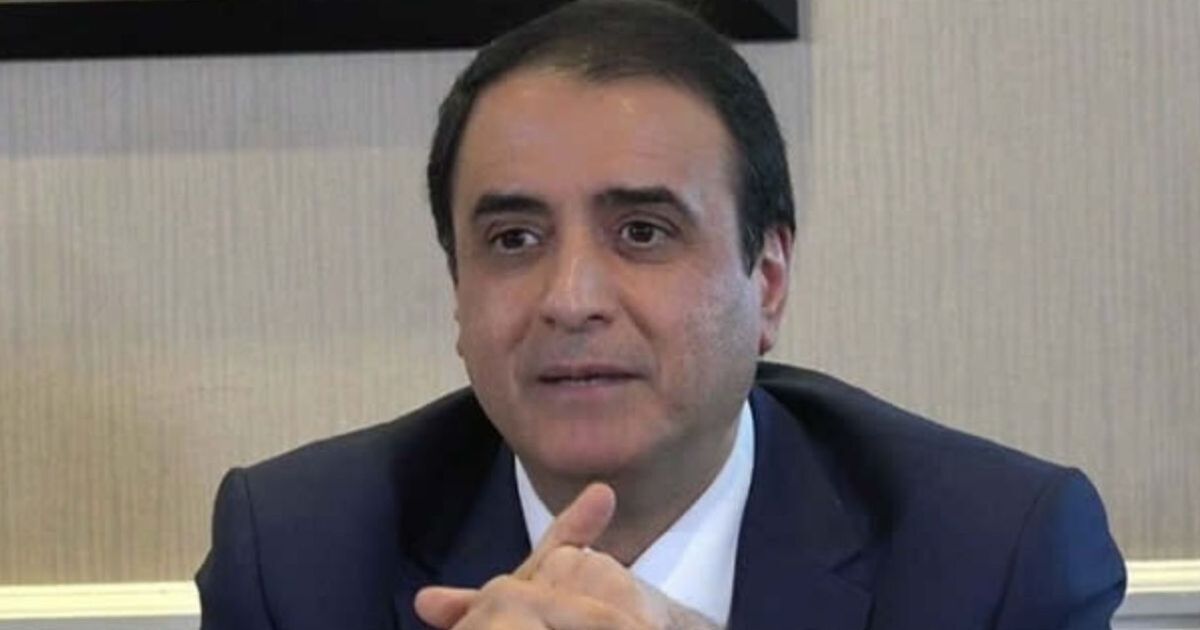
Hossein Abedini, is Deputy Representative of the National Council of Resistance of Iran (NCRI) in the UK. He has survived several attempts on his life by Iranian state-sponsored terrorism.
