
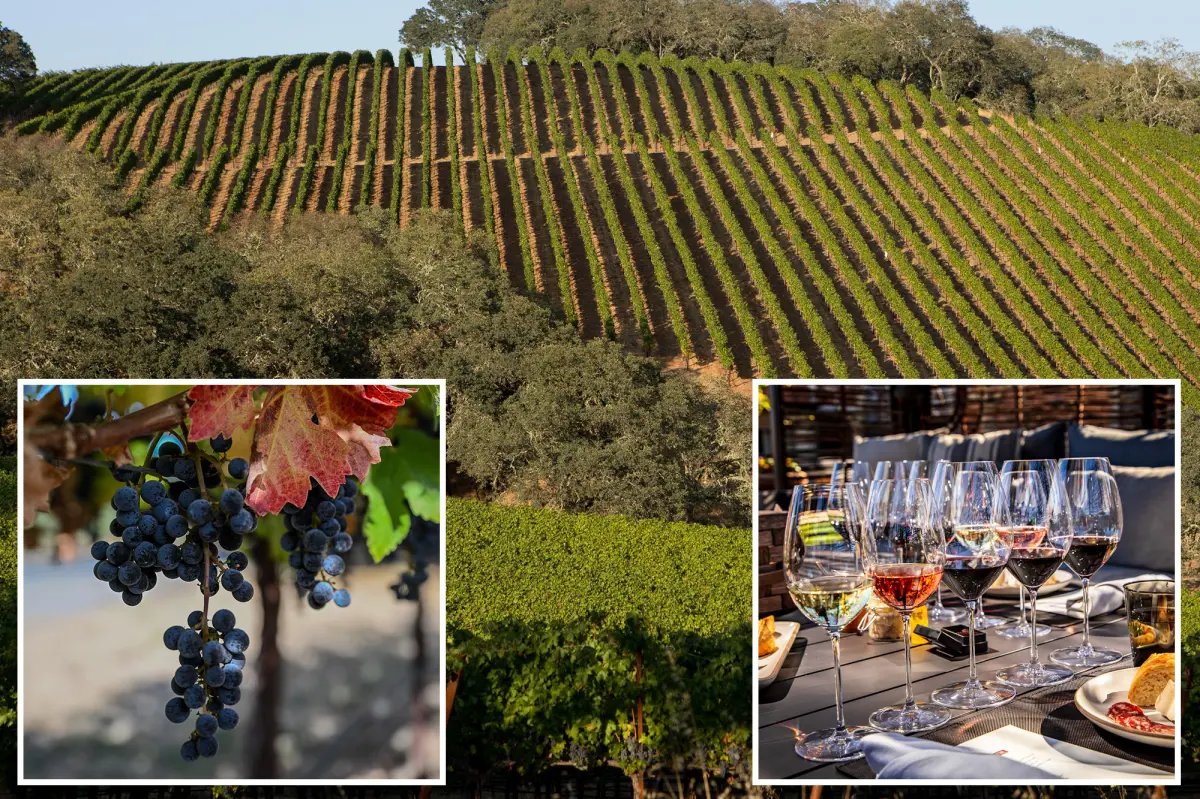


Napa Valley wineries are being crushed under crippling regulatory burdens that are pushing them to the brink, a shocking new report has revealed.
The study, conducted by researchers at Cal Poly San Luis Obispo, offers one of the most detailed breakdowns yet of what it costs vineyards to comply with layers of federal, state and local rules.
Compliance costs alone can run more than $1,700 per acre each year for large vineyards and upward of $1,100 per acre for smaller operations.
For a 1,000-acre vineyard, that translates to roughly $1.7 million annually just to meet regulatory requirements. Even a modest 200-acre farm is looking at costs exceeding $200,000 a year.
Peter Rumble, CEO of the Napa County Farm Bureau, which supported the research, told The Press Democrat: “So we expected the findings would not be good. But this is shocking.
“It shows how much work we need to do at the federal, state and local level to support agriculture. Without change, we might not have viable agriculture as we know it now in Napa, which threatens the Ag Preserve, something that defines us in many ways.”
Researchers found the expenses make up between 8% and 12% of total production costs in Napa — a massive slice of an already expensive business, where per-acre costs hover around $14,000.
The financial strain is hitting at a particularly fragile moment.
Demand for wine has softened, inventories are piling up, and long-term contracts between growers and wineries are becoming harder to secure — squeezing margins from all sides.
A 2025 Gallup poll found just 54% of US adults drink alcohol — the lowest level in nearly 90 years — as health concerns, the “sober curious” movement, and rising costs reshape habits.
While spirits and cider remain steady, the Lodi Winegrape Commission says per capita wine consumption has fallen to its lowest point since 2015.
“Growers and policymakers need to understand the impact of regulatory costs on the viability of farming, because these costs are usually missing from production planning budgets,” said Lynn Hamilton, a Cal Poly agribusiness professor who co-authored the study.
For families who have farmed Napa land for generations, the stakes couldn’t be higher.
“Our family has been farming in Napa County for six generations and the hope is we’ll continue farming for several more,” said Johnnie White Jr., a vineyard manager and agricultural board member.
“If we continue down the current regulatory path, we will find grape growing and farming in Napa County will no longer be sustainable.”
The bulk of the burden comes from labor-related rules, which account for the vast majority of compliance expenses.
Growers must navigate everything from mandatory safety training programs to wage laws, paid sick leave requirements and workers’ compensation coverage. Larger vineyards also face additional costs under federal health care mandates.
For instance, under current regulations, a vineyard operator with 50 or more full-time workers must provide health insurance coverage under federal law, adding more than $530 per acre in compliance costs.
On top of that, employers are required to fund paid sick leave — now up to 40 hours annually — maintain detailed payroll records, and comply with extensive safety mandates such as providing shade when temperatures exceed 80 degrees, access to clean drinking water, and protective equipment for workers.
Layer in environmental permitting, groundwater monitoring fees and pesticide reporting rules, and the total cost quickly balloons into the thousands per acre.
Environmental regulations specifically add another layer of complexity — and expense. Vineyards must implement erosion-control plans, monitor water usage under state groundwater laws, and meet strict air quality standards, including rules governing equipment and agricultural burning.
Even compliance with pesticide use comes with a web of requirements, including monthly reporting, licensing and restrictions near schools.
Smaller growers, meanwhile, often feel the pinch even more acutely.
Without the scale of larger operations, they end up paying higher per-acre costs in several categories, particularly when it comes to safety compliance and water regulations.
The report also warns that costs are only expected to climb.
New groundwater fees, rising minimum wages tied to inflation and expanded pesticide rules are all set to add further pressure in the coming years.
Without relief, many fear Napa Valley’s famed vineyards — long synonymous with world-class wine — could face a slow but steady decline.
Download The California Post App, follow us on social, and subscribe to our newsletters
California Post News: Facebook, Instagram, TikTok, X, YouTube, WhatsApp, LinkedIn
California Post Sports Facebook, Instagram, TikTok, YouTube, X
California Post Opinion
California Post Newsletters: Sign up here!
California Post App: Download here!
Home delivery: Sign up here!
Page Six Hollywood: Sign up here!
