


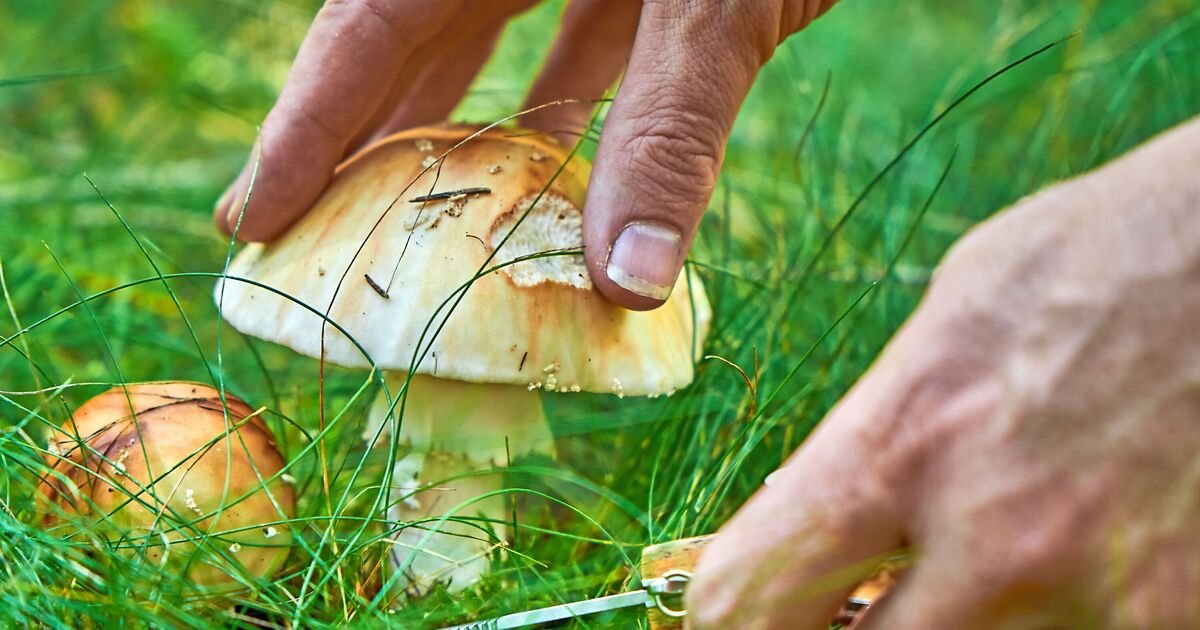
If the kind of mushrooms found in domestic lawns were always safe to consume, there is no doubt that many gardeners would be happy to let them grow. But the reality is that “mysterious and enchanting” fungi in the forms of mushrooms and toadstools should be treated with suspicion and caution, says the Woodland Trust. They warned: “There are poisonous mushrooms out there, and some of them are deadly.” Not all of them grow in domestic lawns, but those that do can be an eyesore for gardeners who take pride in a neat lawn, which is why it is tempting to remove them.
However, Tim Marshall, Raby Castle’s head gardener, advises against doing so as it could worsen the problem. Removing the fruiting bodies of the mushrooms can prevent the spread of spores to new locations. He stated: “They will reappear once damp conditions arise again.” That’s why gardening experts, including Angela Slater of Hayes Garden World, recommend using simple cupboard items.
Tim said: “Mushrooms are the reproductive structures (fruit) of fungi.Fungi love damp, carbon-rich soils containing organic matter which they can feed on and break down.”
If they are identified as being edible, they are certainly very beneficial.
“Removing them is an individual’s preference. If the mushrooms concerned are poisonous or thought to be, and there are children and pets in the vicinity, then it is worth removing the fruiting bodies to avoid contact.”
For long-lasting results, Hayes Garden World expert Angela recommends clearing and washing the grass as the first step in the removal process.
“Clean up any organic debris, such as leaves and lawn cuttings, as this is a habitat which mushrooms love”, she said.
She advised gardeners to dig out the clusters of mushrooms and pour a solution of washing-up liquid and water (made up of two tablespoons of dish soap to one gallon of water) over the surrounding area.
White vinegar can also be used to tackle mushrooms, but it should be diluted with water to avoid burning the grass.
Mix equal parts water and distilled white vinegar in a spray bottle and shake well. Generously apply to the affected area and allow it to soak into the roots of your lawn.
Angela also suggests applying baking soda as a gradual solution to keep mushrooms at bay.
She explained: “A solution of two tablespoons of baking soda to two gallons of water raises the pH of the lawn and kills the mushrooms gradually.”
It is advisable to ensure your lawn has well-drained soil since fungus thrives in damp conditions.
Angela suggests aerating your lawn and brushing in horticultural sand if you’re dealing with persistent drainage issues.
Tim also pointed out that increasing the nitrogen content in the soil can help reduce mushroom growth, although they’ll likely reappear if the root cause of the fungus isn’t addressed.
There are numerous ways to enhance the nitrogen levels in your garden, many of which involve organic materials such as coffee grounds and egg or legume shells.
Simply grind the shells into a fine, sand-like consistency and scatter them over your lawn. To achieve optimal results, it’s recommended to protect this from birds and pests after spreading.