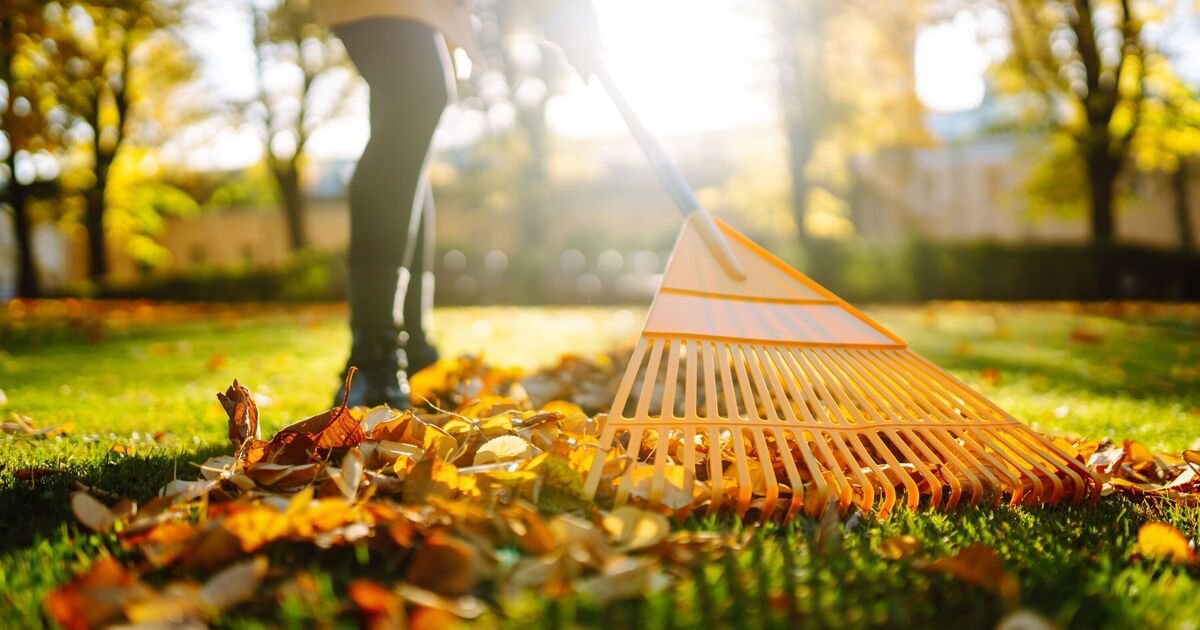


Don’t be tempted to throw away fallen leaves this November (Image: Getty)
With November underway, the leaves on the trees are finally turning various shades of brown and orange, covering the ground below. A common task during the autumn season is constantly raking them up to clear up gardens, but gardeners should hold off throwing them in the bin as they can provide more help than realised.
Gardening expert and social media creator Ish Kamran recently shared how gardeners can protect their plants during the colder months, while also saving money on items like compost and mulch. The key lies in those fallen leaves in the garden. Ish wrote in the video’s caption: “Don’t throw away those fallen leaves in your garden.

Simply put a layer of fallen leaves on the top of the soil (Image: Getty)
“They are not only nutrient dense for your garden but can save you hundreds by helping you fill your planters, feeding your plants and even protecting them over winter.”
How to protect plants with fallen leaves
Fallen leaves can be a gardening holy grail without you even realising it, saving gardeners money on items like compost and mulch for their plants. Ish said: “The fact of the matter is all these fallen leaves are absolutely jam-packed full of nutrients.”
Instead of raking them up and throwing them away, simply reserving them can make a whole world of difference to your plants – and your wallet. He continued: “You’re also saving money on mulch as well. It may be a bit messy on the top here, but leave it at the base of the soil, and it actually works as a really nice thermal layer, helps retain moisture on dryer parts of the month, but also keeps it less soggy on the wet months.
“So it’s pretty cool, and as it breaks down, it’s a feed.”
The leaves can act as a layer of mulch for plants, help improve the quality of the soil, help the soil retain moisture, and provide shelter for wildlife. The fallen leaves should be left – or moved under trees and shrubs, at the base of the plants, or put into planters.
Leaves can also trap moisture in the soil, especially if the leaves are wet. The leaves create a heavy and dense barrier that keeps the soil from drying out.
While the leaves trap moisture, they also prevent airflow to the ground, preventing the cold reaching the soil below. So, it keeps the soil moisture while keeping it warm at the same time.
However, leaves should be removed from lawns and paths. If fallen leaves are left on lawns, they can cause more harm than good and cause brown patches on the grass. Fallen leaves cause brown patches on lawns by blocking sunlight, trapping moisture, and restricting airflow, which suffocates the grass and encourages fungal growth.
Fallen leaves can deprive the grass of sunlight, even in the colder, darker months. Grass needs light to perform photosynthesis and produce energy. A thick layer of leaves blocks light, weakening and discolouring the grass blades underneath, ultimately leading to brown lawns.
What else you can do with fallen leaves
Other uses for fallen leaves include lining planters. Simply add them straight into the container and cover them with a layer of compost.
Ish explained that you can save about a third of what you’d use in compost with the leaves, meaning your compost will go further. The leaves will break down and turn into compost itself.
Gardeners can also shred the leaves, place them in a well-ventilated bag or wire cage and leave them to break down into leaf mould, or put into your compost heap. Lastly, the leaves can be broken down and soaked in water to create a natural plant feed.
See more of the stories you love from Daily Express and find us easily in Google by making us a Preferred Source. Free and easy-to-do, just click here to activate or add us as Preferred Source in your Google search settings.
