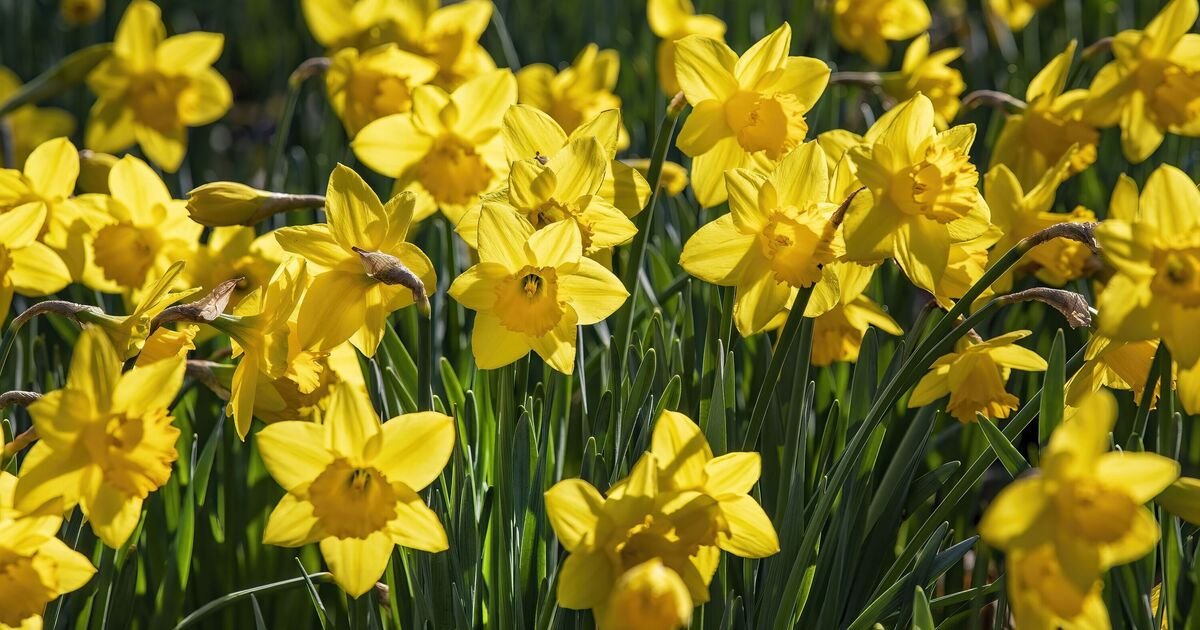

Flowering bulbs are a delight to watch bloom in the garden during their respective seasons, and when it comes to spring, daffodils are one of the most popular choices. Their bright, uplifting blooms are hardy, reliable, and perfect for borders, lawns, and pots. Planting season runs from September through November, which means now is the ideal time to get bulbs in the ground while the soil still holds warmth and before the cooler, wetter weather sets in.
But it’s no good simply planting daffodils in one go, warns Eflorist’s flower expert, David Denyer, who has over 35 years of experience. He suggests the “lasagne” planting method, which is especially effective for stretching your display across many weeks. By layering bulbs at different depths and combining early, mid, and late-flowering daffodils, you can enjoy waves of colour rather than a single flush.
Steady temperatures are one thing when planning gardening tasks like planting bulbs, but it should also be done before the weather gets too wet. This allows the bulbs to put down strong roots, which leads to healthy growth and spring flowers.
“If you wait until late winter, your bulbs may not establish properly, which can result in small or missing blooms,” warned David.
Choosing where to plant bulbs is easy, given that they need a simple mix of sun and shade. A sunny or lightly shaded spot with soil that drains well is recommended, but if you’re working with heavy clay soil, you can add grit.
Alternatively, David suggests planting your bulbs in raised beds and pots to prevent rot. In sandy soil, mix in some compost to help the ground hold onto moisture.
How to plant spring bulbs
Space and depth are essential for healthy bulbs. A general rule is to plant them around three times their own depth, usually 10cm to 15cm. Allow seven to 10cm between each bulb and place them with the pointed tip facing upwards, as this is where the shoots will emerge from.
For lasagne planting, the first layer of compost should be thick enough to allow for proper root development for the first layer of bulbs.
Depending on your pot size, fill it with about a quarter to a third of its capacity. Keep in mind that all bulbs will develop roots downward, so this layer will serve as a foundation for their growth.
David cautioned: “If your bulbs are planted too shallowly, they can become unstable and are more likely to topple once they flower.”
To grow daffodils in a continual succession of each other, you will need to layer the bulbs. This method is simple:
- Prepare the pot
- Add the first layer of compost
- Add the first layer of late spring bulbs, then add some compost
- Add the middle layer of mid-season bulbs, then add more compost
- Add the early spring bulbs, then add compost
Always give bulbs a thorough watering to help the soil settle around them and encourage root growth once planted. After that, they can usually be left alone through the winter, as rainfall should provide enough moisture.
Bulbs require little ongoing care as they already contain all the energy they need to flower, so you don’t need to feed them at planting.
David urged: “Just make sure the soil stays free-draining over winter, and if you’re using a container, keep an eye on it so it doesn’t become waterlogged.”
Gardeners should watch out for bulb-digging pests like squirrels, which will dig up young bulbs. You can deter them by placing a barrier of chicken wire or hardware cloth over the soil surface after planting, securing it to the pot’s edges.
