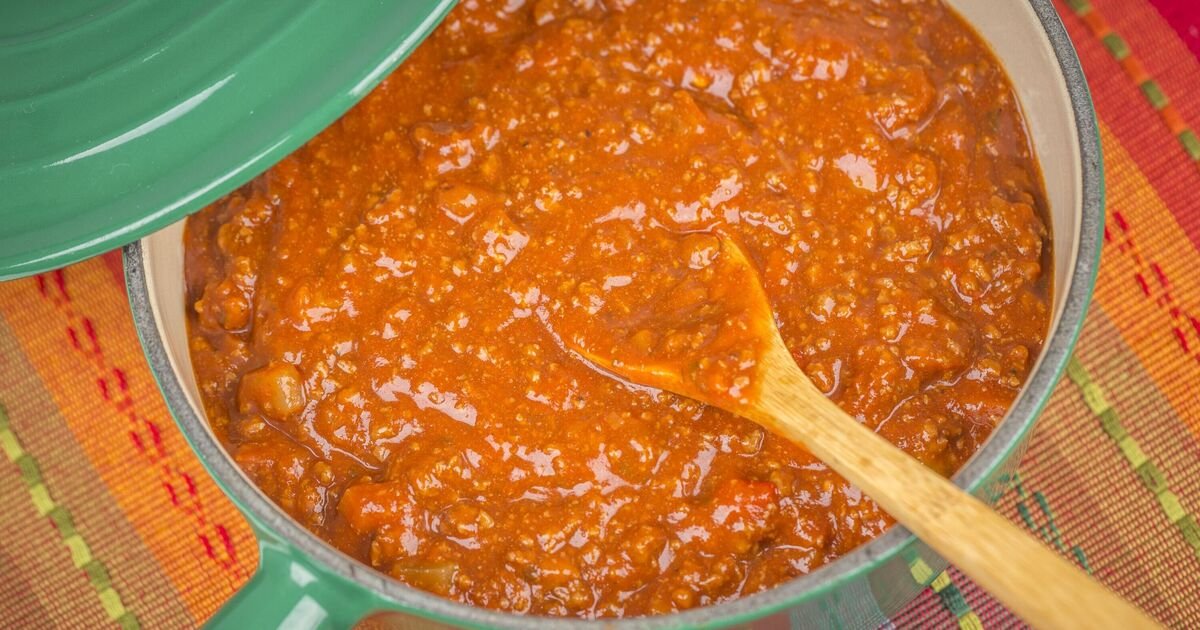

With pasta being a staple food item in many UK households, most people will have their own version of the classic bolognese recipe. Often, a recipe like this is made early to give it time to cook and get most of the flavour.
Taking to her recipe blog, Marcellina in Cucina, Marcella Cantatore has shared her authentic bolognese sauce recipe that was passed down from her Father, who lived not far from Bologna (where the sauce originates from). This Italian ragu recipe makes for a big batch and is perfect with homemade pasta or store-bought pasta if you don’t have the time. As well as the classic pasta sauce ingredients, there’s one in this recipe that you may not have thought of adding before.
Marcella claimed that “the secret ingredient” is a potato. Potato is not a typical ingredient in an authentic Bolognese sauce. However, just a small potato “makes all the difference, and Marcella claimed that “everyone notices if I don’t put it in”.
She added, “Dad would say that it reduces the acidity and smooths out the flavour. He always added a potato and crushed it through the sauce at the end of the cooking time. I don’t know what the science behind it is, but it consistently improves the sauce.
Ingredients
- Half a cup of olive oil
- Four tablespoons of salted butter
- two onions
- Two carrots
- Two celery sticks
- Eight garlic cloves
- 250g bacon or pancetta
- 1kg of beef mince
- 450g of pork mince
- 350g of pork ribs
- Two Italian sausages
- One cup of dry red wine
- One Parmesan rind (optional)
- Five cups of passata
- 800g of tinned tomatoes
- Four tablespoons of tomato paste
- Two cups of beef stock
- One potato, peeled and cut in half
- Five stalks of fresh rosemary or three teaspoons of dried rosemary
- One teaspoon of dried oregano
- Three bay leaves
- Freshly ground pepper
- Salt to taste
- One tablespoon of sugar
Method
Start by finely chopping the onions and garlic, then peeling and finely chopping the carrots and celery. Then cut the bacon or pancetta.
Heat a large saucepan over medium-high heat. It will need to hold over about five litres. Then add the oil and butter. When the oil is heated, add the onion, carrot, and celery. Turn the heat down a tad so they don’t burn. Fry until starting to become golden and catch a little on the bottom of the saucepan.
When the onion, carrot and celery are golden, add the bacon and garlic and stir well. Continue to cook for a few more minutes. Now start adding the mince a bit at a time. Stir well and allow the meat to colour.
Then add in the pork mince a bit at a time. Repeat the same as the ground beef. Once the mince is well-cooked, add the pork ribs and sausages.
After, pour in the wine and allow to boil and simmer for a few minutes. Now you can add the remainder of the ingredients – Parmesan rind (if using), passata, tinned tomatoes which have been crushed with a fork, tomato paste, stock, potato, herbs (if using) and seasonings.
Add half of the sugar, and you can taste it later if the sauce needs more. Bring to the boil, then lower the heat to a gentle simmer. Cover the saucepan and check and stir regularly. You may need to adjust the heat to achieve that sweet spot of a gentle simmer. This is going to be cooking for a long time, so a very gentle simmer is what we are looking for here. Once you have achieved that perfect simmer, allow it to cook for about four to five hours.
After about two hours of simmering. Taste and adjust the seasoning. You will be surprised at how much salt you need to add, and you may need a bit more sugar.
When the sauce is done, remove the sausages and the ribs. Cut up the sausage finely, shred the meat from the pork ribs and add the sausage and meat back to the sauce. Find the potato pieces and crush them against the side of the saucepan with a wooden spoon. Stir thoroughly.
As this makes a large batch, you can portion it up into containers and freeze them – they’ll keep for four to six months.
