
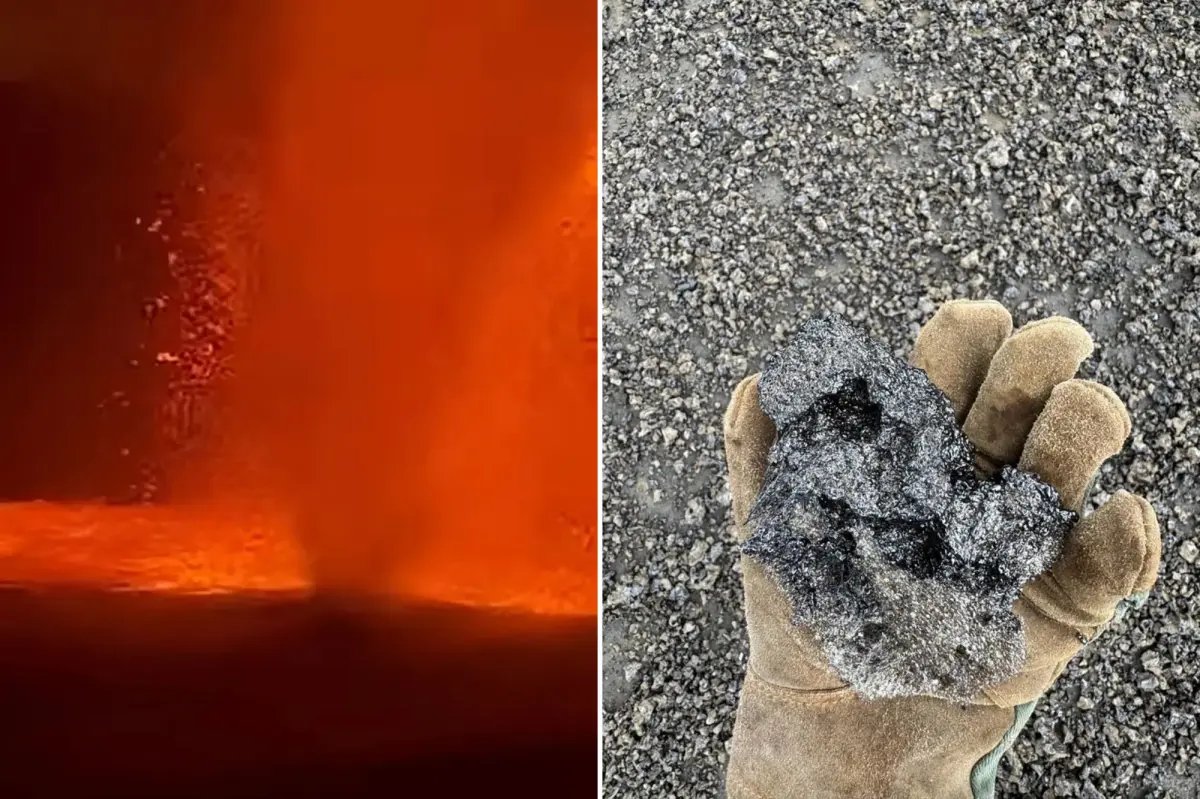

A unique phenomenon known as a “Tephra Devil” was captured swirling over a crater on Hawaii’s Kilauea during the volcano’s 47th eruptive episode last week.
Tephra is a catch-all term that describes various kinds of rocks blasted into the air during eruptions.
The swirl seen in this video is similar to a dust devil — where the ground warms a thin layer of air directly above it that rises. Surrounding air rushes in to fill that void and sometimes converges with a crosswind, producing a visible column of twisting air once debris is lifted.
According to the USGS, lava or fresh tephra can create enough localized heat to cause surface-level air to rise.
USGS scientists have observed low-density tephra produced in recent eruptions become short-lived “Tephra Devils,” spinning like small fiery tornadoes over the volcano’s craters.
Tephra can be carried by the wind and cause irritation to the eyes and respiratory system and, along with volcanic gas, are the main hazard to local communities during these events.

Hawaii’s Kilauea volcano erupted around 3:30 p.m. last Thursday, its 47th eruptive episode since Dec. 23, 2024.
Lava fountains reached a maximum height of 650 feet during this eruption.

According to scientists, the next eruption is expected between Friday, May 22 and Tuesday, May 26.
This period of frequent activity at Kiluea is being driven by magma chambers that are quickly refilling within the volcano. These short eruptions have not been strong enough to dramatically change the pressure in these chambers, which have reached something of an equilibrium.
“Since the ongoing eruption began in December of 2024, there has been little overall change in the amount of pressurization of the magma chambers beneath Kīlauea summit,” the USGS said in a FAQ report on Kilauea.
Unless a stronger eruption occurs, it appears that this pattern will continue in the near-future.
