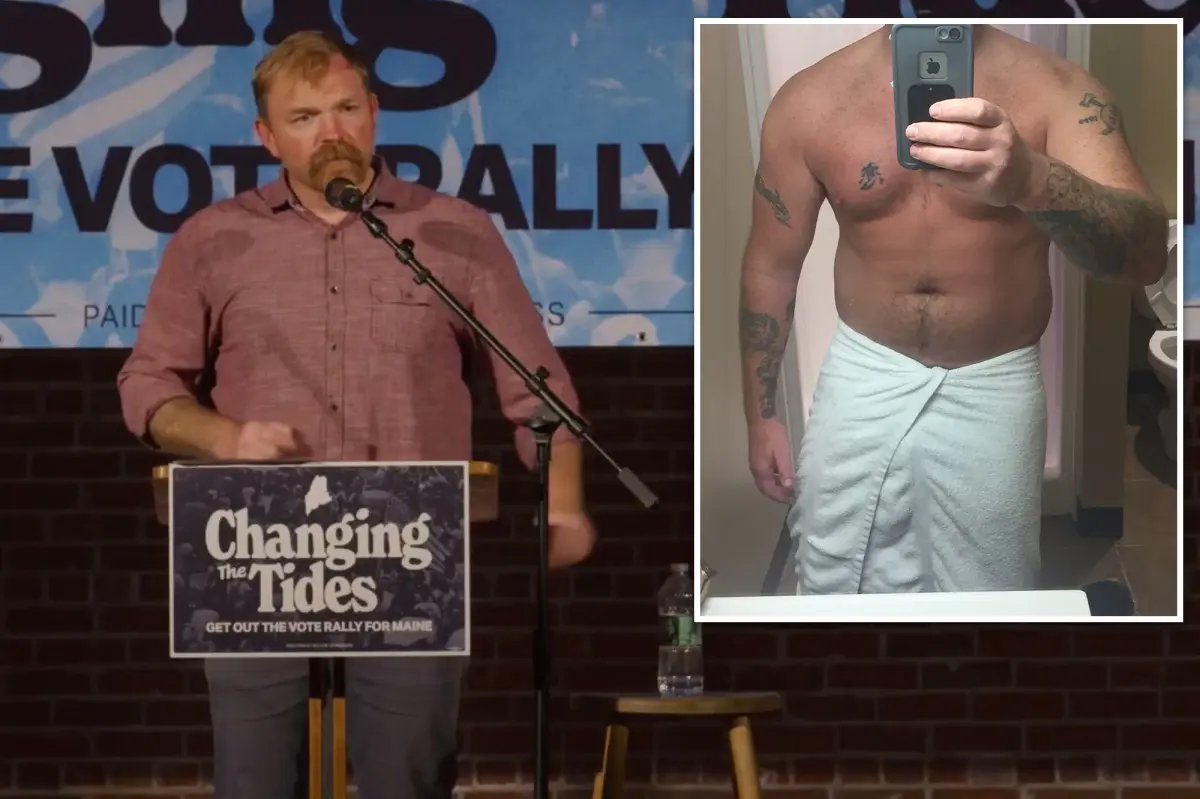


Democratic Senate candidate Graham Platner used a campaign rally in Maine on Friday to push back against the growing controversies engulfing his campaign, dismissing recent allegations against him as “politically motivated” and thanking supporters for standing by him as scrutiny intensifies.
Platner alluded repeatedly to the scandals that have rocked his bid to unseat Sen. Susan Collins (R-Maine), including resurfaced Reddit posts, allegations from former romantic partners and reporting about sexually explicit messages sent during his marriage.
“When hurtful things I said on the internet a decade ago came out into the public, as I shared my personal journey through PTSD and the darkness of recovery, accountability and growth, Maine had my back,” Platner told the crowd in Bar Harbor on Friday.
“As every single piece of that past and journey gets dug up, litigated, and weaponized. You have my back,” he said as new polling numbers show a tight race against the Republican incumbent, Sen. Susan Collins.
“And when politically motivated, serious and false accusations are made against me, Maine, you have my back.”
The remarks marked one of Platner’s most direct public responses yet to a wave of damaging stories that have threatened to derail his insurgent Senate campaign.
In recent weeks, reporting by the Wall Street Journal detailed sexually explicit messages that Platner sent to other women during his marriage.
Separate reporting by the New York Times cited former romantic partners who alleged episodes of physical intimidation, heavy drinking and troubling behavior during past relationships.
Platner has denied the most serious allegations against him.
Friday’s appearance in Bar Harbor came as the Democrat sought to refocus attention on his economic message and cast himself as a champion of working-class Mainers struggling with rising costs and economic insecurity.
The controversies began last year when archived Reddit posts surfaced showing Platner making remarks about race, sexual assault, police officers and LGBTQ people.
Platner apologized for the posts, describing them as products of a dark period in his life following military service and struggles with PTSD.
The scrutiny intensified after questions emerged about a chest tattoo resembling a Nazi-linked Totenkopf symbol.
Platner acknowledged having the tattoo and later covered it up, insisting he did not understand its association with Nazi Germany when he got it while intoxicated in Croatia in 2007.
Critics and former associates have disputed that claim.
More recently, the Journal reported that Platner exchanged sexually explicit messages with multiple women during his marriage.
The existence of the messages was later acknowledged by campaign-linked sources, though there has been disagreement over how many women received them. Platner and his wife, Amy, have said they worked through the issue through counseling.
The most serious allegations emerged this month when the New York Times cited former romantic partners who accused Platner of physical intimidation, heavy drinking and other troubling behavior during past relationships.
One former girlfriend alleged he grabbed her hard enough to leave marks and once held her in a room during an argument. Platner has denied allegations involving physical abuse, calling them false and politically motivated.
The scrutiny has also extended to Platner’s use of the messaging app Kik, which is used primarily by younger internet subscribers.
News reports identified an active Kik profile linked to Platner dating back years, and his campaign has acknowledged that the account belongs to him.
Campaign officials have said Platner deleted the app from his phone but never deactivated the account.
During the rally, Platner acknowledged his wife, telling the crowd: “And I would not believe [in redemption] because I would not have lived it if it was not for my wife Amy Jane.”
The Journal report prompted a public defense from Platner’s wife, Amy Gertner, who posted a video saying the couple had worked through difficulties early in their marriage through counseling.
Gertner described the disclosure of private marital issues as a betrayal and said the experience ultimately made their relationship stronger.
