
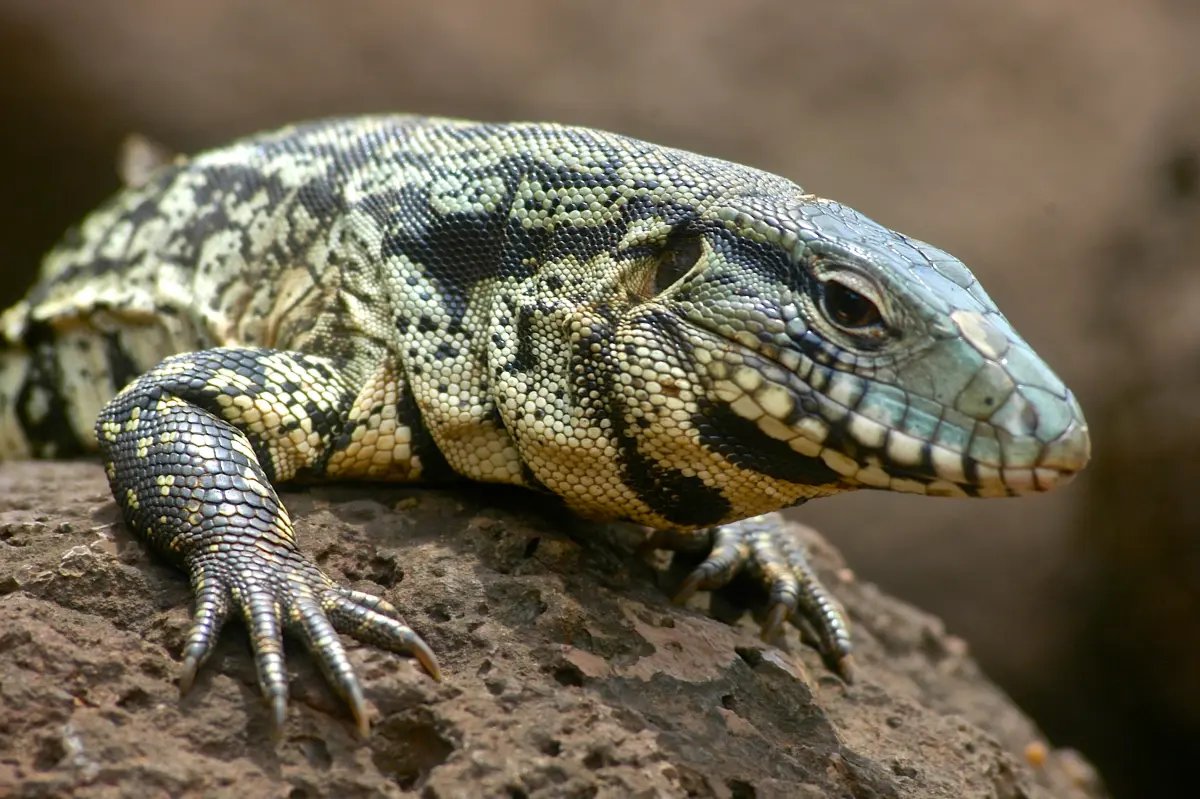

Georgia residents may not expect to find a four-foot-long reptile native to South America in their backyards.
But wildlife officials are now warning residents to be on the lookout for an invasive species that threatens native wildlife, spreads disease and disrupts habitats across the region.
The Argentine black and white tegu, a large lizard that can grow up to four feet long and weigh more than 10 pounds, has been found in Toombs and Tattnall counties in southeast Georgia.
The Georgia Department of Natural Resources (DNR) is urging residents to report sightings of the species or trap and kill the reptiles.
The invasive lizards have become a growing concern across the state due to their appetite to eat a variety of animals and ability to reproduce quickly.
Tegus are known to prey on a wide range of native wildlife, including the eggs of alligators, ground-nesting birds such as quail and wild turkeys and threatened species like hatchling gopher tortoises.

In addition to native wildlife, tegus will eat chicken eggs, fruits, vegetables, plants, pet food, carrion and small animals ranging from grasshoppers to young tortoises.
Authorities are also concerned that the reptiles could spread exotic parasites to native wildlife and contaminate crops with bacteria, as many tegus carry salmonella.
The DNR first began investigating reports of Argentine black and white tegus in Georgia in 2018, but the species has spread rapidly since then.

Native to Brazil, Paraguay, Uruguay and Argentina, the Argentine black and white tegu is one of the largest tegu species in the world.
With few predators, tegus can multiply quickly. Females can lay up to 35 eggs each year, with hatchlings typically happening in June and July in Georgia.
To combat this problem, the DNR is working with partners including the US Geological Survey and Georgia Southern University to trap the tegus in Toombs and Tattnall counties, remove the animals from the wild and research the population.
Officials hope that through continued efforts and public cooperation, the invasive species can eventually be eradicated from the state.
