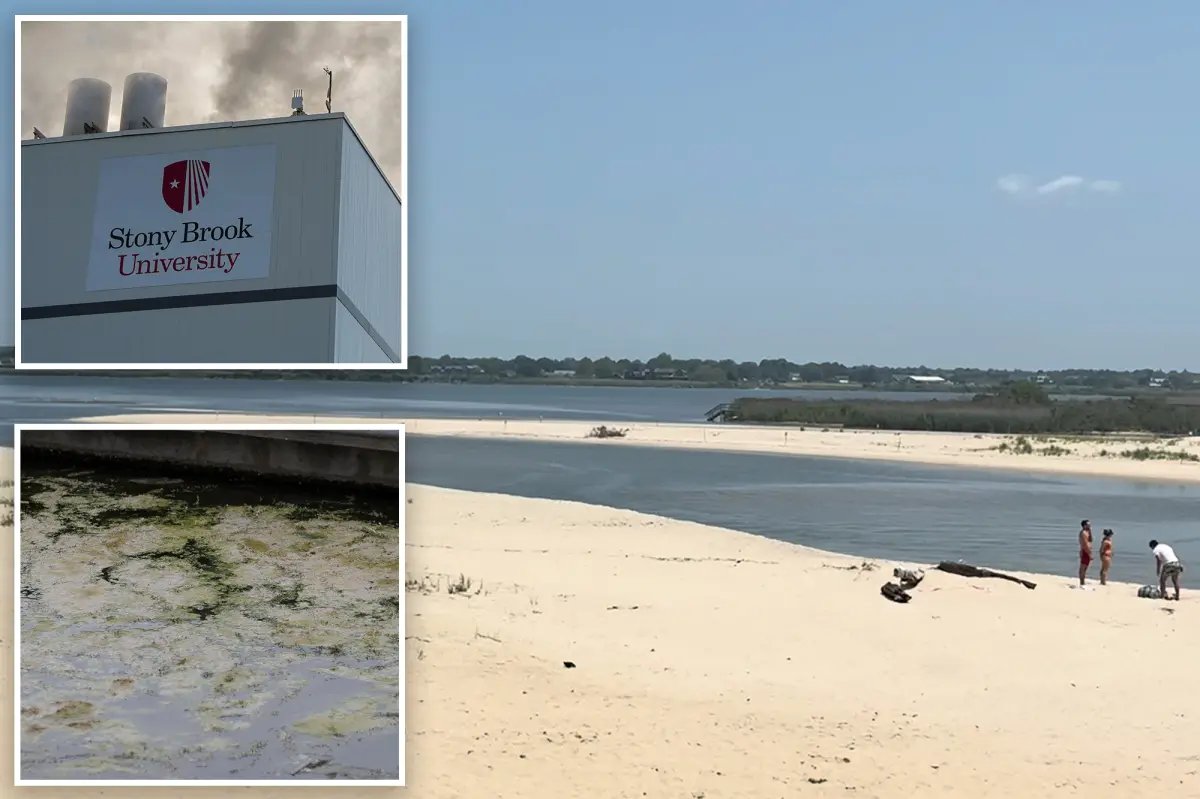


A vicious flesh-eating bacteria may be lurking in bodies of water across Long Island, as researchers warned its victims face a 20% chance of dying within 48 hours.
Stony Brook University professor Dr. Christopher Gobler, an ecologist within the School of Marine and Atmospheric Sciences, announced this week that his team has found evidence of vibrio vulnificus “hotspots” festering in several ponds.
“Bacteria known as vibrio vulnificus, also known by the [Centers for Disease Control and Prevention] as a flesh-eating bacteria, is present and a risk in our waters,” Gobler told reporters Tuesday.
“It’s a very, very serious infection, it gets into open wounds — people who are infected with this bacteria have a 20% chance of dying within just 48 hours.”
Researchers have studied the deadly bacteria originating in the Gulf of America since it was first detected in the Long Island Sound in 2023, when three people died from infections.
Gobler’s team announced Tuesday that the bacteria has now made its way to several more bodies of water, including Sagaponack Pond, Mecox Bay and Georgica Pond on the South Fork.
Gobler blamed the bacteria’s spread on a perfect toxic storm of nitrogen runoff, algae blooms and climate change.
The doctor explained that nitrogen runoff from Suffolk County’s roughly 360,000 aging cesspools and septic systems are leaching directly into the region’s waterways, causing harmful algae blooms.
That nitrogen then continues to feed the blooms as it warms and depletes the oxygen levels in the water.
“If someone’s immunocompromised, or elderly and they have open wounds in summer, you may want to stay out of the water,” Gobbler warned.
Gobler also warned that other areas including East Quogue, Southold, and the entire western half Shinnecock Bay are filled with algae that are pumping shellfish full of a poisonous neurotoxin that is 1,000 times more poisonous than cyanide, causing major losses in the oyster industry.
Dozens more bays and ponds across Long Island are also harboring toxins tied to harmful algae blooms across Suffolk County, Gobler explained.
“We’ve had here on Long Island, for example, dogs that have gotten sick and even died just from drinking lake water,” he said.
No deaths have been reported on Long Island since the three in 2023, but researchers warn the risk grows each summer as waters continue to warm.
