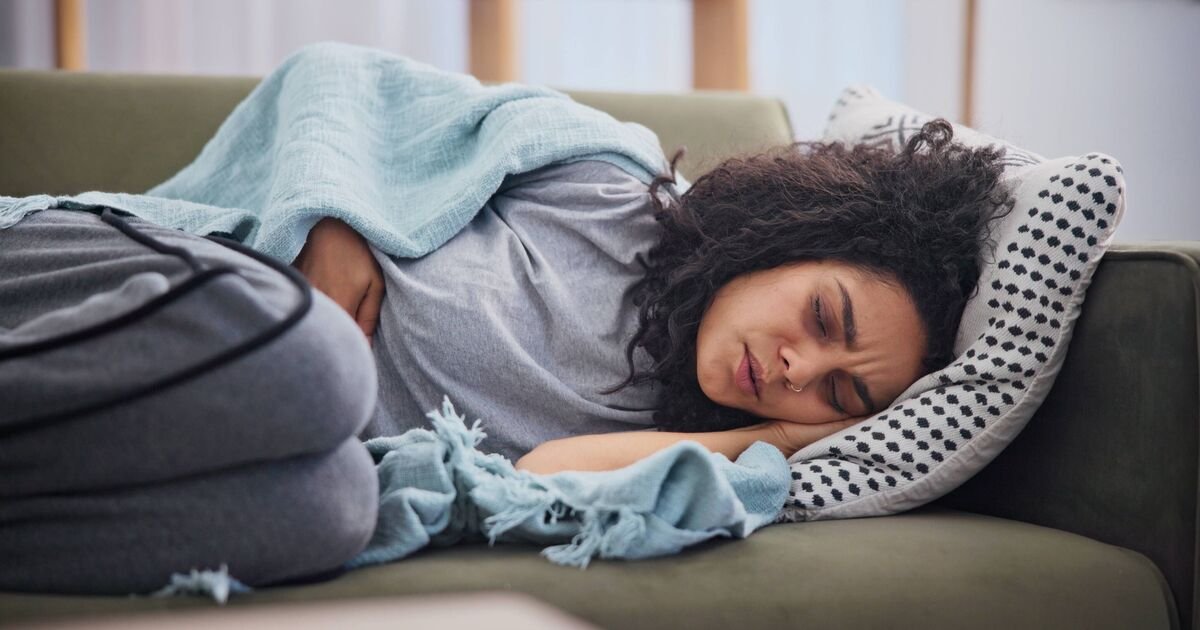


Sick, fatigue and woman with stomach pain in blanket for norovirus oubreak, fever or tummy cramps. Unwell, girl or belly inflammation in home from food poisoning, illness recovery and gut discomfort (Image: Getty )
People throughout England have been alerted to an ‘extremely contagious’ virus, which can persist on fabrics for ‘up to 12 days’ following contact. It can also linger on surfaces including glasses, mugs and plates for as long as ’14 days’ after contamination.
The UK Health Security Agency (UKHSA) has recently reported rising norovirus activity across England as the winter season approaches. With heightened activity noted nationwide, medical professionals are calling on the public to stay alert to the highly infectious bug, emphasising key symptoms to monitor, warning of common household and workplace danger zones where the virus can persist for days, and recommending when to remain at home.
Dr Corné Hurter, Medical Director for Services and Delivery at AXA Health insurance, said: “Norovirus is an extremely contagious virus that spreads through contact and can cause sickness and diarrhoea for those infected. Therefore, proper hygiene and cleanliness must be maintained as cases continue to rise.
“Norovirus can remain on surfaces for several days after contamination. High-touch points must be regularly cleaned and sanitised to prevent the further spread of the virus.”
UKHSA reported 257 cases over a two-week reporting period up to mid-November, with reports between October 26 and November 8 noted as 40.4% higher than usual. While still within expected levels, UKHSA expects cases to continue rising as winter approaches.
Five norovirus hotspots to watch out for:
- Washing-up sponges
- Kitchenware
- Door handles
- Gym equipment
- Towels
Dr Corné Hurter explains that whether it’s your kitchen sponge at home or in a shared workspace such as an office, these cleaning tools can play host to hundreds of different strains of bacteria and viruses. Washing-up sponges ought to be changed more regularly, and rigorous disinfection methods should be employed, including sterilising them in boiling water, reports the Mirror.
Norovirus can linger on surfaces such as glasses, mugs and plates for as long as two weeks following contamination if the item is not thoroughly cleaned. She said: “Always ensure that you are washing kitchenware with hot water and a disinfectant with proven efficacy against norovirus before and after use.”
Door handles are frequently touched surfaces, she cautions, rendering them particularly vulnerable to viruses and germs. Door handles should be routinely disinfected using bleach-based cleaning products to reduce the risk of contamination. “After touching door handles, always thoroughly wash your hands with warm water and soap to prevent the spread of viruses,” the doctor said.
Hundreds of people use gym equipment throughout the week, making it a high-risk source of norovirus transmission. Dr Hurter said: “Whenever you attend a gym or workout class, try to thoroughly disinfect equipment with bleach-based products before and after use. However, if this isn’t possible, make sure to wash your hands straight after your session with soap and warm water.”
Dr Hurter warns that norovirus can remain on fabrics for as long as 12 days following contact. She emphasises it is vital to steer clear of shared towels and flannels as infection rates continue to climb. She explained: “Where possible, use your own clean towel and opt for a hand dryer after washing your hands. When washing your clothes, use a cycle setting with a 60°C temperature, as this will kill off the virus.”

Norovirus can remain on surfaces for several days after contamination (Image: Getty)
Six key symptoms of norovirus to be aware of
- Nausea
- Vomiting
- Diarrhoea
- High temperature
- Headaches
- Abdominal or generalised bodily aches and pains
According to the NHS, the primary symptoms of norovirus typically begin abruptly and include feeling sick (nausea), being sick (projectile vomiting), and watery diarrhoea. Symptoms generally emerge one to two days following exposure and persist for two to three days.
The health service recommends staying away from work, school, hospitals, and food preparation for others for at least 48 hours after symptoms cease. Use warm water and soap instead of alcohol hand gels, which are ineffective against norovirus.
Ensure our latest headlines always appear at the top of your Google Search by making us a Preferred Source. Click here to activate or add us as Preferred Source in your Google search settings.

Use warm water and soap rather than alcohol hand gels (Image: Getty)
How to relieve symptoms of norovirus
Symptoms of norovirus can be treated at home and typically ease after a few days as the virus runs its course. Over-the-counter painkillers, such as paracetamol, can be taken to alleviate symptoms of norovirus, adhering to the packet instructions.
Dr Hurter explained: “With any illness that causes sickness, it’s crucial to maintain fluid levels whilst unwell to prevent dehydration, especially in the initial stage of sickness. Our bodies lose a lot of fluids through vomiting and diarrhoea, so you must be regularly drinking clear fluids and electrolytes when you are unwell with norovirus.”
She recommends eating only when you feel able to do so; when you do begin eating again, try to keep meals simple to prevent further stomach upset. If you’re finding it difficult to keep food down, she suggests trying small portions of easily digestible items such as dry toast or crackers, while steering clear of fatty or spicy dishes.
“Rest is essential for a quick recovery when infected with norovirus,” she continued. “You should ensure that you are giving your body adequate time to rest and recover.”
Dr Hurter concluded: “It is essential that if you become infected with norovirus, you avoid contact with the public for a minimum of 48 hours after your symptoms have subsided. Staying at home whilst unwell with norovirus is crucial for minimising the further spread of the virus.”
