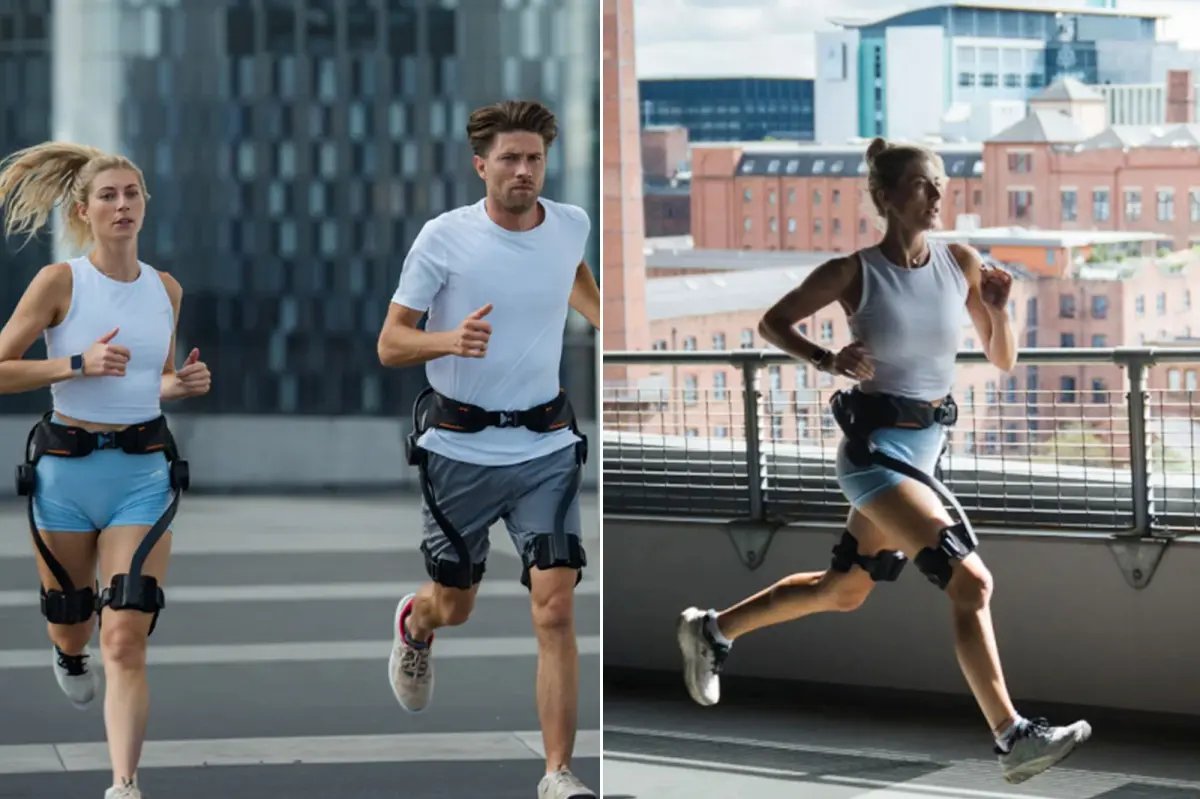


In San Francisco, AI-powered exoskeletons are beginning to transform the way Californians hike, walk and train outdoors.
Once limited to the military, industrial worksites and rehabilitation centers, wearable robotic systems are now being marketed to consumers chasing speed, endurance and a superhuman edge.
One of the latest models, Hypershell’s X Ultra S, uses AI software and motorized hip supports to help users power through steep terrain with less effort.
The carbon-fiber rig straps around the waist and thighs, while twin hip motors draw up to 1,000 watts to assist movement.
According to the company, the device can theoretically support speeds fast enough for an elite four-minute mile.
During a staff review for the Wall Street Journal, the exoskeleton noticeably accelerated uphill movement around Bay area trails after the “Boost” mode was activated through the companion app.
The motors grew louder as the device increased stride speed before automatically dropping back into its lower Eco setting about 30 seconds later.
Hypershell’s AI system is designed to interpret body movement and adjust assistance levels in real time, the support becomes more noticeable on steep inclines, stairs and sand, where walking typically becomes more exhausting.
The company said users can improve stability on uneven terrain by tightening the fit and lowering assistance levels.
Hypershell says the X Ultra S can typically handle 18 miles per charge, or roughly double that with the included backup battery pack.
The WSJ review also exposed some of the risks tied to consumer robotics.
After the device was removed while still active, one of the powered arms snapped back suddenly with full force.
No one was injured, but the moment highlighted the importance of properly disengaging the system.
Even with the robotic assist, the physical toll didn’t completely disappear.
Sore calf muscles lingered for days after testing because other muscles compensated while the exoskeleton handled part of the workload.
