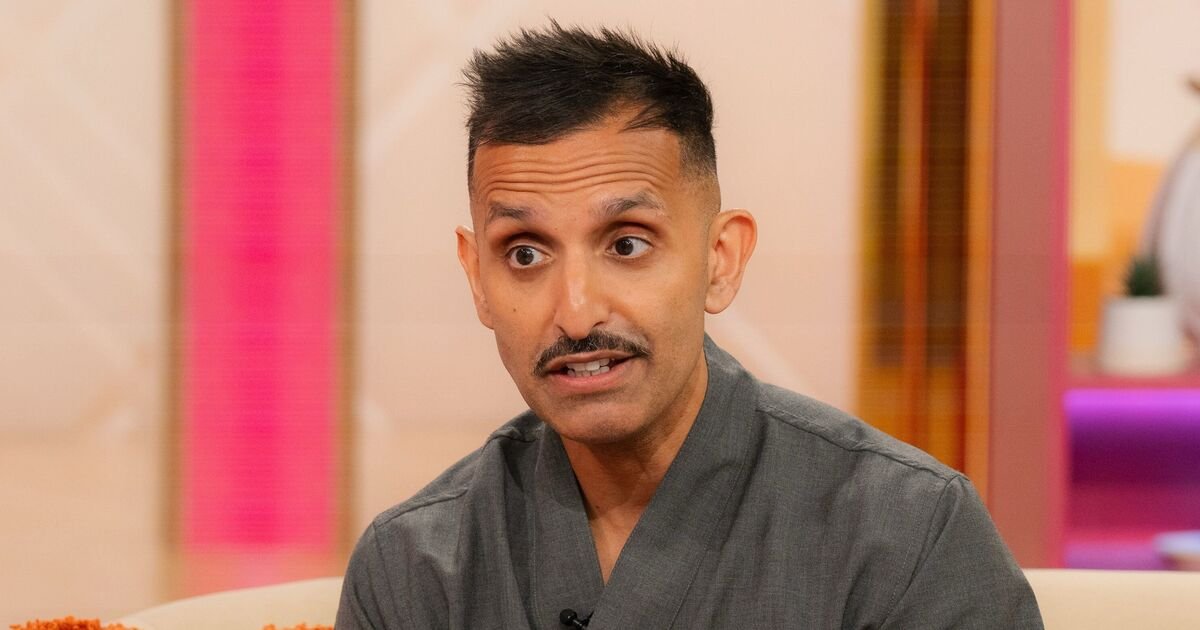


Dr Amir Khan is a familiar face on our TV screens (stock image) (Image: Ken McKay/ITV/Shutterstock)
As we get older, the risk associated with falls becomes greater. And now, one TV doctor has revealed a straightforward exercise that can enhance your balance and lower your likelihood of falls – and it only takes 30 seconds.
Dr Amir Khan is often seen on ITV’s Lorraine and Good Morning Britain, where he regularly shares valuable health guidance. He has now described one easy measure anybody can take to diminish their fall risk – and it’s remarkably simple, reports Wales Online. He outlined the advice in a TikTok video where he presented five actions everyone over 35 should be adopting immediately, claiming each would “genuinely can change how you age”.

Falls can be risky as you get older (stock image) (Image: Getty Images)
“We need to all be doing this,” he said. “Train your balance daily. Balance relies on your cerebellum, inner ear, and tiny sensors in your muscles called proprioceptors. These systems decline after 35 unless you challenge them.
“Thirty seconds standing on one leg while brushing your teeth is a really good way to train it, and train your core coordination and brain-body signalling. It dramatically reduces future fall and injury risk. So tonight, when you’re brushing your teeth, do it on one leg.”
Outlining his other suggestions he said everyone should endeavour to obtain some sunlight first thing in the morning. “After 35, your circadian rhythm becomes a little less responsive,” he stated. “So five minutes of outdoor morning light hits receptors in the back of your eyes and it sends signals to your brain’s master clock. That resets cortisol timing, boosts energy, improve sleep pressure at night, and even stabilises appetite hormones. It’s the most powerful free tool we have.”
The circadian rhythm serves as your body’s natural clock which signals when to sleep and when to wake. It additionally regulates processes such as digestion and hormones. Cortisol manages stress hormones.
His third recommendation focused on increasing the quantity of oxygen you can absorb, or VO2 max. It acts as a measure of fitness – the more oxygen you can process during exercise, the better. Dr Khan characterised it as “one of the strongest predictors of our health”.
“As we age, our heart becomes slightly less efficient at pumping blood and our mitochondria become less efficient at using oxygen,” he stated. “So, short bursts of intensity, such as 20 to 40 seconds of fast stairs, a brisk uphill walk, or a quick cycle sprint, forces your muscles to demand more oxygen than usual, and that stimulates new mitochondria and improves oxygen extraction.”
Dr Khan went on: “So you don’t need HIIT (high-intensity interval training) classes every day, just a moment each day where your heart genuinely rises.”
Another straightforward measure you can do at home is monitoring your own blood pressure. Dr Khan continued: “Blood pressure creeps up quietly as your arteries stiffen with age. Checking it, say, once a month at rest gives you a baseline. If it’s higher than 135 over 85 at home, do daily readings for a week and work out the average.
“If that’s high, speak to your doctor. That average is what predicts your stroke and heart attack risk, not one random reading. And catching it early can make all the difference.”
Blood pressure measurements are displayed as two numbers – the first shows the pressure in your arteries when your heart contracts and circulates blood, while the second reflects the pressure when your heart rests between beats. Home blood pressure devices can be obtained from chemists or online.
For his concluding recommendation, Dr Khan stated: “From your mid-30s onwards, you slowly lose muscle fibres and bone density. Strength and impact exercises send mechanical signals through your muscles and bones, what we call mechanotransduction.
“Your body responds by building them back stronger. This protects metabolism, joint stability, glucose control and long term fracture risk. So get them in twice a week.”
Ensure our latest headlines always appear at the top of your Google Search by making us a Preferred Source. Click here to activate or add us as Preferred Source in your Google search settings
