


It’s a pork-filled puzzle.
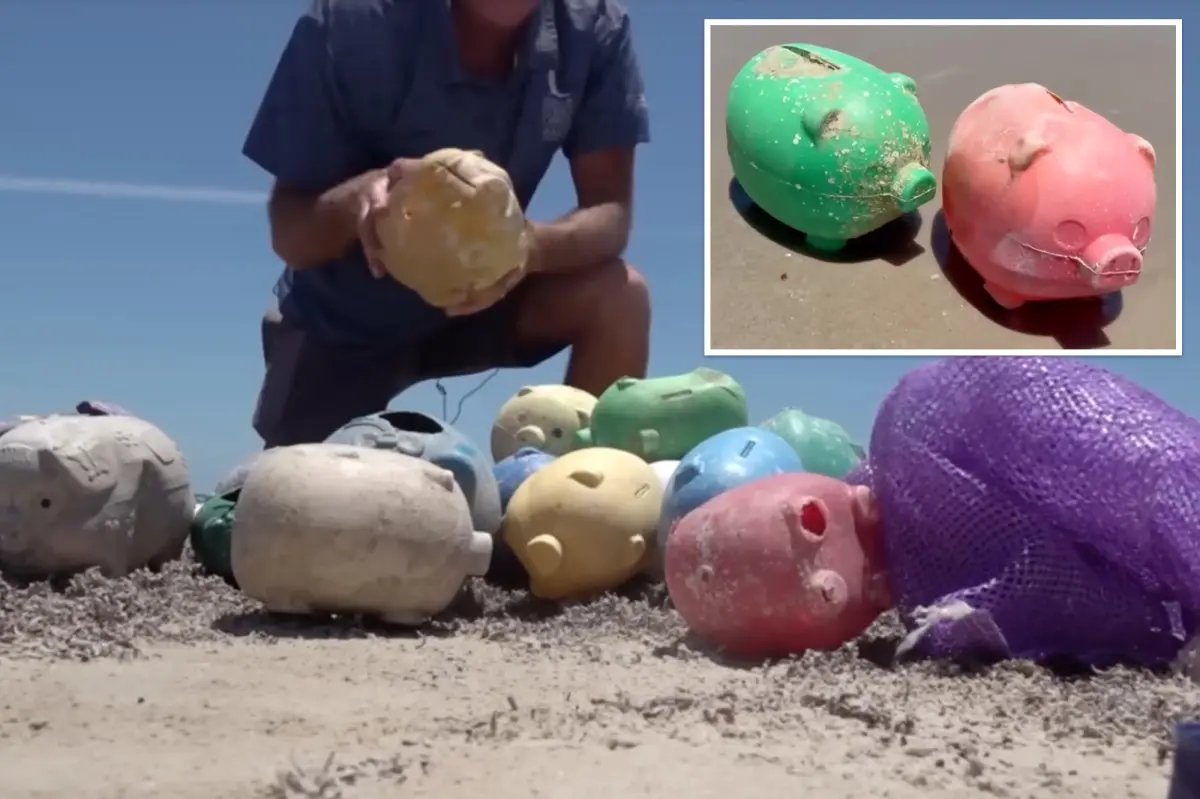
A Texas beachcomber dredged up more than five dozen piggybanks that washed ashore from the Gulf of America but no one’s quite sure where they came from.
Jace Tunnell, a marine biologist with the Harte Research Institute, discovered 60 brightly-colored piggy banks on several beaches in South Texas this year — including 14 in just one day. He suspects they were ditched by dissatisfied buyers — or became collateral in an accident at sea.
Tunnell told 12NewsNow that all of the discarded banks he’s collected, plus dozens found by other scavengers on the Bolivar Peninsula and South Padre Island, originate from South American or Caribbean countries.
He concluded that the tsunami of plastic sow could be collateral from a cargo spill or container ship accident — but said markings on the items could be a big clue to solve the mystery.
“Once these piggy banks have been used, you’ll notice there’s a bunch of cuts in them. There’s no other way to get the money out, so people dispose of them, whether it’s directly in the ocean or on land,” Tunnell told the outlet.
Some of the banks appeared to have never been used, as if they were ditched immediately after purchase or even by the distributors themselves.
Tunnell theorized the banks floated with ease because they were empty they floated with ease — and were likely pulled into currents that led them to the Texas coast,
Tunnell hasn’t found a single cent in any of the 60 piggy banks he’s retrieved, and warned aspiring treasure hunters not to get their hopes up.
“Every time I post one, people are like, ‘What was in there? Did you find any money?’ I just tell them, sand dollars. That’s the only thing I ever found in there,” Tunnell told the outlet.
Even with decades of marine expertise under his belt, Tunnell can’t say for certain why the banks are turning up in droves.
“Maybe the Gulf is just saving up for something big, one pig at a time,” Tunnell suggested in a column with the Caller Times.
