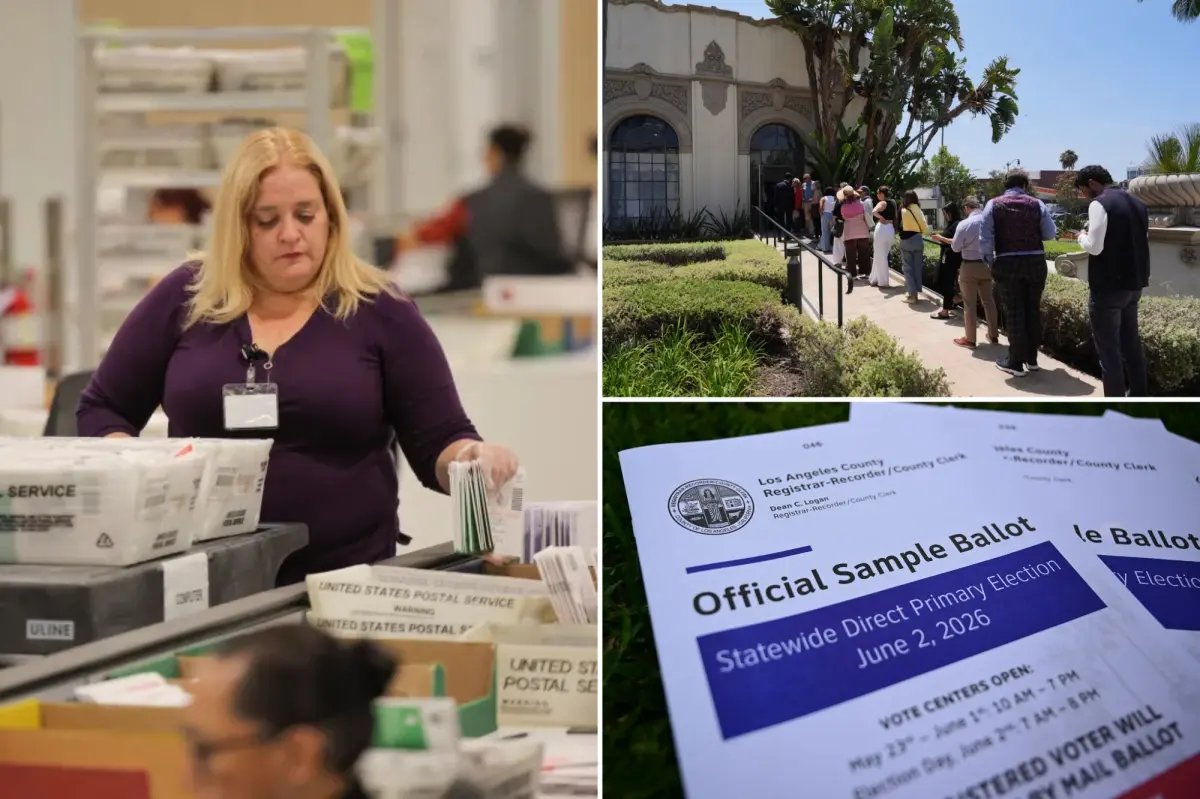


A new report Thursday by a California election watchdog blasted the state for having the slowest vote-counting process in the nation and revealed that the delays stem from fixable administrative bottlenecks.
The California Voter Foundation released its findings ahead of a July 2 deadline for counties to certify results from this month’s primary election, which attracted nationwide ridicule for leaving voters in suspense on who would win in the gubernatorial and Los Angeles mayoral races days after Election Day.
“California has one of the most accessible voting systems in the world, but our long count overshadows our strengths,” said Kim Alexander, president of the foundation. “When results take weeks, it creates space for confusion and misinformation.”
That frustration boiled over earlier this month when scores of Californians cried foul after mayoral candidate Spencer Pratt’s Election Night lead evaporated in the days that followed as officials continued tallying late-arriving mail ballots.
Much of the slow counting can be attributed to the state’s generous mail voting system, which accepts ballots that arrive up to a whole week after Election Day as long as they were postmarked on time.
But the report revealed other causes of delay.
Missing or non-matching signatures can get a lot of ballots rejected, and state law requires counties to notify the voter and wait up to 22 days for cures.
Bureaucratic red tape only adds to the delays. Before counties can process provisional ballots, they have to wait for other counties to update voter records in California’s centralized database to confirm a voter’s status. The cumbersome process stems from California’s outdated “bottom-up” voter registration system — a model only a handful of states still use.
The report highlighted the need for better voting equipment and facilities. For instance, in Placer County, investments helped more than double the number of ballots counted there in the first week from 2022 to 2024.
Fixing signature problems on mail ballots can be accomplished through electronic curing systems such as through text or on the phone, the report said, which can be faster and more helpful for younger voters that tend to have more of the signature issues.
It also recommended statewide awareness campaigns to get people to turn in their ballots early.
“California does not need to choose between faster results and voter access,” the foundation said. “What is needed now is state investment and guidance.”
California’s whole election system — particularly its expansive mail ballot access — may be under threat, however.
The nation’s top postal official has confirmed a proposal is being weighed that could block the delivery of mail ballots in states that refuse to share voter data with the federal government.
Meanwhile, a looming Supreme Court decision could put an end to delayed ballot counts and invalidate late-arriving mail ballots.
