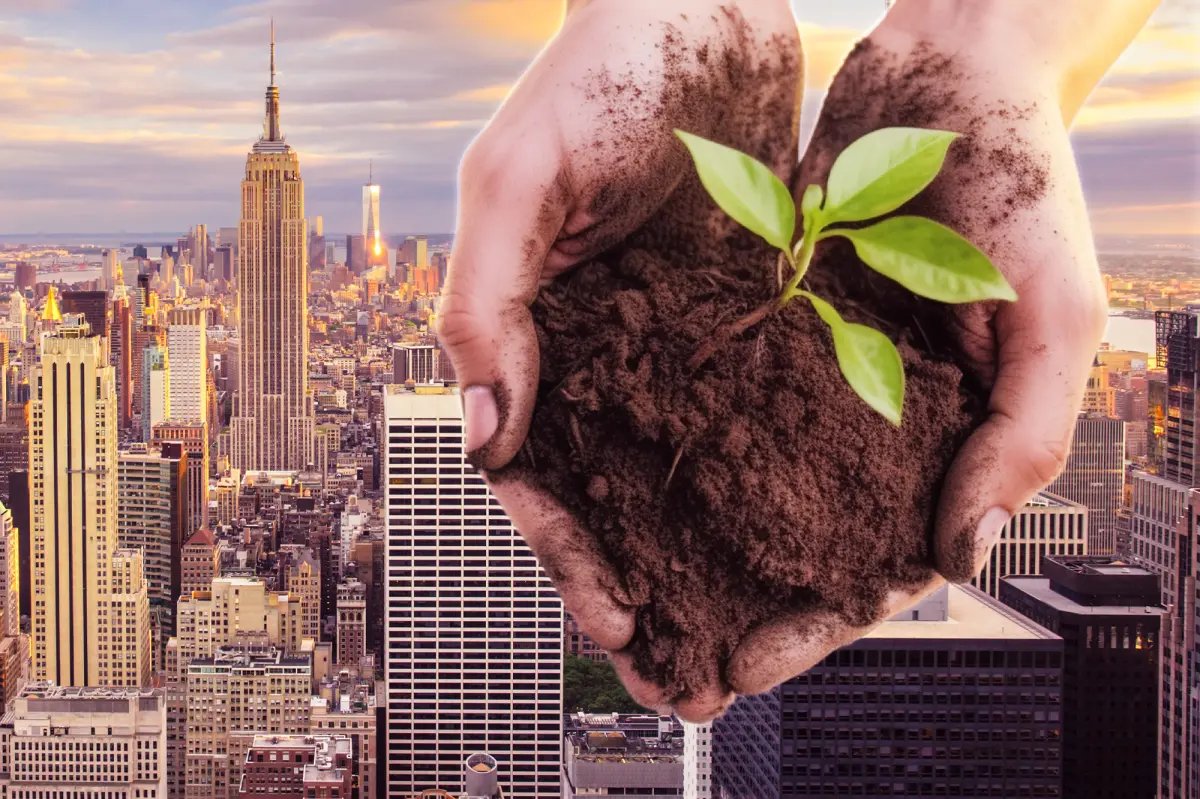


New York’s new symbol could be a rotten apple.
The city’s nastiest table scraps — from old coffee filters to spoiled spinach bunches and greasy boxes — are being recycled back into food and flowers, as residents across the five boroughs have collected some 5 million pounds of decayed waste produced under New York’s controversial composting law.
An estimated 10,000 urban farmers have used the recycled scraps — which they dub “Black Gold” — to nourish their home gardens and grow what they say are “unbelievable” crops.
“This compost produces great vegetables. My fig trees love this stuff. I got four fig trees and they grow so many figs — I can’t keep up. You taste the difference in your fruits and vegetables using this compost. Oh, my word, it’s unbelievable,” said Dominick Rondinelli, 76, who says he takes as many bags of compost as he can grab from the Staten Island Compost Facility’s free giveaways.
“It’s not horse manure. It doesn’t give off an odor. Your neighbors can’t complain, or your wife. I was here last year as well. I take all of the bags they will give me, and what I don’t use, I give to my friends. Who would give someone a gift of a bag of dirt? Only me!”
Of the five boroughs, Queens has returned the majority of the “black gold” crafted by the Department of Sanitation through its intense composting program.
The World’s Borough has passed out more than 1,375,200 pounds of compost between its two collection sites so far this year — making up roughly 28% of the recycled food scraps that the city has passed out for free.
The borough itself collects more than the impressive 1,237,200 pounds of compost that the DSNY has handed over directly to community gardens, schools and other nonprofits throughout the city.
Staten Island is the only other borough that could give Queens compost lovers a run for their money — 1,135,200 pounds of claimed compost have been picked up from the Staten Island Compost Facility so far this year.
Just 775,200 pounds have been collected from The Bronx’s Castle Hill site, and another 684,000 pounds from Greenpoint.
Manhattan’s collection site in East Harlem has only had a measly 381,600 pounds claimed.
DSNY has also pawned off 168,000 pounds at spontaneous pop-up events throughout the five boroughs.
The compost giveback programs have exploded since the DSNY made the recycling program mandatory last year. And though Mayor Adams paused unpopular fines for failure to sort out compostable trash into brown bins last year, the Mamdani administration has brought them back, slapping refuse refusers with penalties as high as $300.
Compost-loving residents are allowed to take home as many as ten 40-pound bags at the six regular sites throughout the city — and the eager gardeners are routinely eager to grab their share.
“This is amazing. It’s my third time coming to get compost. This helps the vegetables grow nicely. I grow tomatoes, cucumbers, zucchini,” said Katarzyna Rodchenko, 44, of Staten Island.
None of the urban farmers expressed any concern about using city trash to grow their dinner.
“If you have health issues, this compost is great. There is no pesticide. It’s all natural. Why not start from the ground up?” said Tracy Rachlin, 48, a Board of Education employee and whose great-grandma and great uncles had farms on Staten Island.
“My kids would rather have a pool! I have three boys, but they help me because I grow asparagus for them and peppers and eggplant and kale and tomatoes, of course, and gagootz. I have a peach tree and an apple tree. My friend just made me a greenhouse. I don’t live on a farm, I live right by a movie theater.”
Catherine Chen, 19, said the DSNY program was a win-win: “Instead of waste piling up, it’s being used to turn waste into something good.”
