
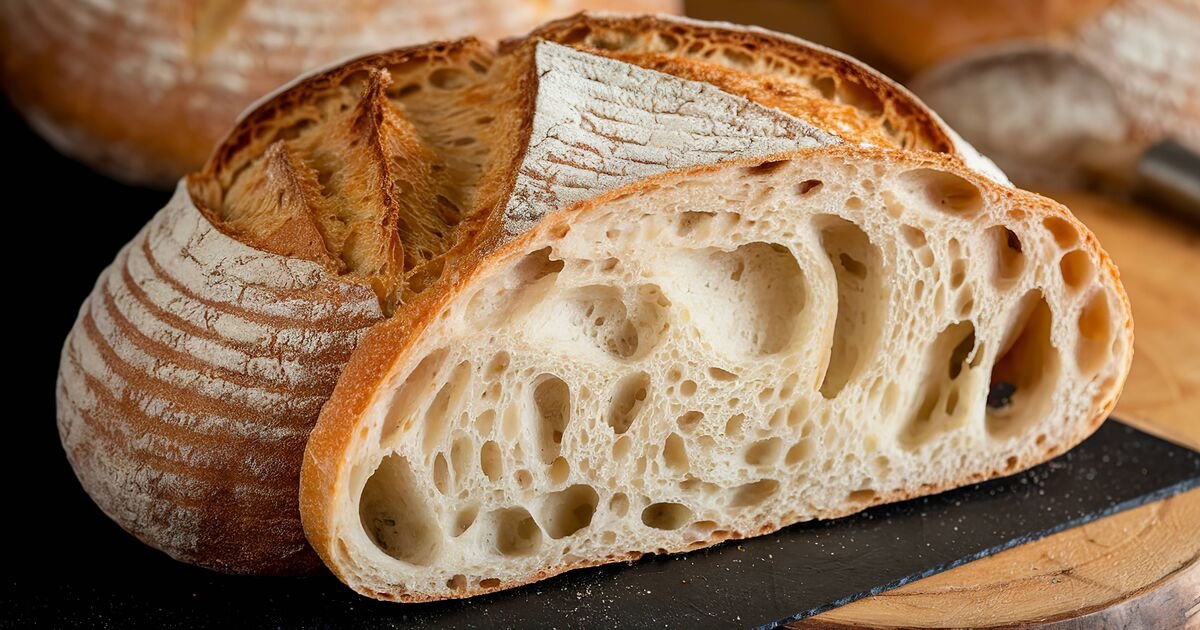

Whipping up your own bread, like a delectable sourdough loaf, not only ensures you know every ingredient but also lets you tailor it to your taste buds. Heralded as one of the healthiest breads around, sourdough boasts a lower glycaemic index, according to the British Heart Foundation, meaning a steadier rise in blood sugar levels compared to regular bread.
Mastering this bakery staple might seem daunting; countless bakers will attest to multiple attempts before perfecting their crusty creation. Elaine Boddy, renowned baking maestro and author of four bread-making bibles, suggests that sourdough needn’t be such a tricky feat: “For anyone new to sourdough, keep in mind that it’s much simpler than you may be thinking,” she says.
“A lot of people have overcomplicated the whole process and made it seem scary and hard to make when it really isn’t.”
Further, Elaine noted, “I’ve seen so many people get overwhelmed, confused, and stressed out when they first start making sourdough, when making it is actually a truly simple, enjoyable process.”
Yet, even with diligent preparation and baking, enthusiasts often face sticky, gummy, or delicate loaves—symptoms of over-proofing, reveals Elaine.
The baking expert offered sage advice to eager home bakers battling the heat. She recommends, “A top tip for home bakers right now: to avoid your dough over-proofing in the warmer temperatures, use less starter.
“You can go as low as you need to, right down to 5g and less, and it will still work.”
The baking guru divulged her secret to perfect sourdough: “This is my master recipe. It’s the basis for everything I do and forms the starting point for all of my recipes.”
Ingredients
- 50g starter (or less)
- 500g strong white bread flour, preferably Matthews Cotswold Flour, Churchill’s white flour
- 350g water
- 1tsp salt
How to make sourdough
Elaine’s method involves a few simple steps, including pulling and folding the dough several times over a couple of hours before leaving it to prove on the kitchen counter overnight.
By using less starter, as Elaine suggests, the dough proves at a leisurely pace, avoiding any chance of over-proofing.
Come morning, she shapes the proved dough in the bowl to fit a banneton, chills it in the fridge for a spell, then scores and bakes it straight from a cold oven.
“No preheating, no hot pans to deal with — works perfectly!” she exclaimed.
Once you’ve mastered the basic recipe, Elaine encourages experimenting with different flavours and ingredients in your sourdough creations.
