
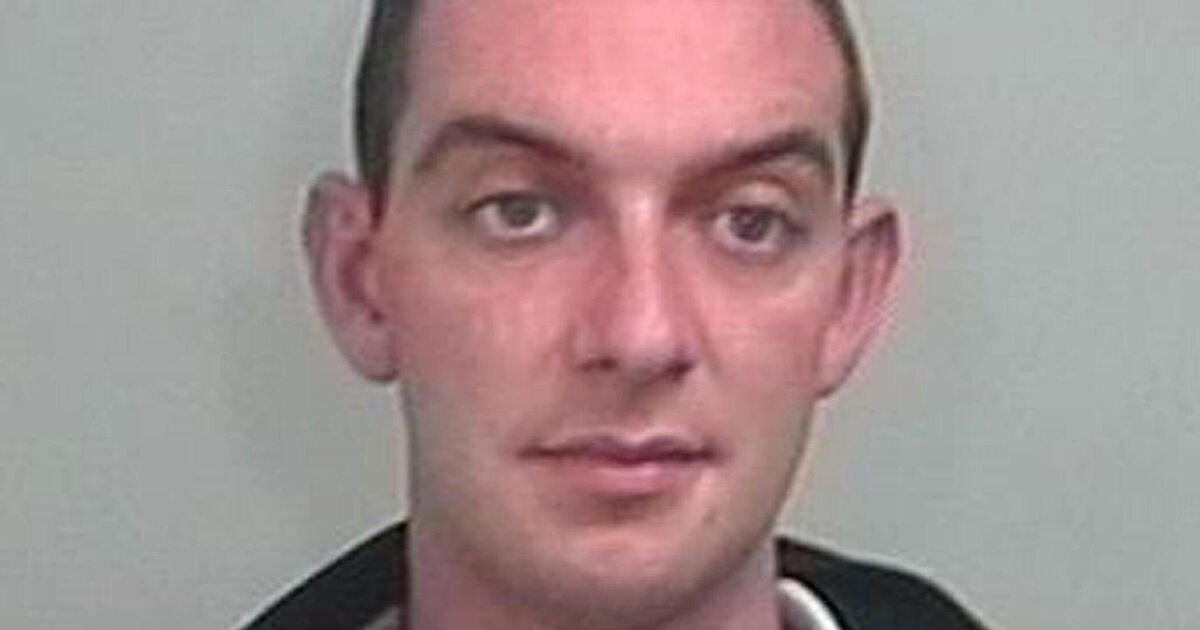


Colin Norris who has changed his name to Campbell. (Image: PA)
A killer nurse branded the “Angel of Death” must remain in jail for the murder of four elderly patients and was not convicted by “unsafe” evidence, the Court of Appeal has been told. Colin Norris – who has changed his surname to Campbell, was jailed for a minimum of 30 years after being found guilty in 2008 following a five-month trial of killing four women and attempting to kill a fifth by injecting them with insulin.
Doris Ludlam, Bridget Bourke, Irene Crookes, and Ethel Hall, were inpatients on orthopaedic wards where Campbell worked in Leeds in 2002 before they developed severe, unexplained hypoglycaemia and died. However, prosecutors relied on a “wholly circumstantial” case, the Criminal Cases Review Commission said after referring Campbell’s case to the Court of Appeal in London four years ago. If he is cleared, it could pave the way for mass murderer Lucy Letby to challenge her conviction at the Court of Appeal.
READ MORE: Watch moment Bentley-driving drug kingpin is seized for running network of ca…

The dead victims. (Image: PA)

Nurse Colin Norris was locked up after being convicted of murdering four elderly patients in Leeds. (Image: Handout)
Campbell had been present when or shortly before each of the patients suffered hypoglycemia, and, because of the rarity of such a cluster of cases happening within a short space of time, which prosecutors said meant the nurse must have been responsible.
Twenty experts gave evidence during the gruelling trial at Newcastle Crown Court, after which Campbell was sentenced to life imprisonment with a minimum term of 30 years.
He strenuously denied any wrongdoing and said he did nothing to cause hypoglycemia in any of the patients.
He unsuccessfully appealed against his conviction in 2009 and applied to the CCRC in 2011.
On the final day of Campbell’s appeal in London today, judges heard closing submissions from barristers representing the Crown Prosecution Service, who are opposing the appeal.
In written submissions, James Curtis KC said the jury in Campbell’s trial had the “exceptional assistance of a meticulous, systematic and detailed summing up” from the judge.
He added: “They were provided with the necessary relevant facts and issues, from a plethora of highly qualified and clinically experienced witnesses.
“The judge carefully summarised and explained these, and accurately directed the jury as to how to approach them.”
Don’t miss… ‘Heartless teens beat my 80-year-old grandad to death as he was walking his dog’ [LATEST]

The serial killer pictured at Christmas 2007. (Image: SUNDAY MAIL)
Michael Mansfield KC told the court on Thursday that Campbell’s appeal is a “straightforward case”, and that judges “must conclude that these convictions are unsafe”.
The appeal before Lady Justice Macur, Sir Stephen Irwin and Mr Justice Picken is due to conclude later today.
Mr Mansfield KC, for Campbell, previously told the court: “The nature of the prosecution case was that this appellant, Colin Campbell, was a nurse, recently qualified, who was at two teaching hospitals in Leeds – the General Infirmary and St James’s.
“The prosecution case was that he injected the five individuals with insulin and as a result of that injection they all suffered a sudden and severe episode of hypoglycemia, namely, low blood sugar.”
He said there was a consensus among the experts at trial that a sudden and severe onset of hypoglycemia was extremely rare.
But new developments in medical knowledge mean there is now more evidence to support the argument that the patients may have died from natural causes, Mr Mansfield said.
He told the court: “The approach of the witnesses we intend to call on behalf of the appellant indicates an evolution of understanding, of knowledge, about hypoglycemia and about glucose generally.

Norris with his mum June Morrison and gran Elizabeth Ogilvie as he graduated from Dundee University. (Image: SUNDAY MAIL)

Watching the case closely – Lucy Letby. (Image: -)
“So we say there is now a range of possibilities relating to natural causes.”
He also said that, towards the end of Campbell’s trial, the jury had asked whether there were other cases of patients suffering from “sudden and profound” hypoglycemia in any of the Leeds teaching hospitals after Campbell stopped working.
Four such cases have since been identified, Mr Mansfield told the court, with the deaths recorded between January 2003 and August 2005, and that “no one is suggesting that these cases were anything other than natural causes”.
The barrister also noted the “remarkably similar” ages in all nine cases, with the patients being between 78 and 93 years old, but this “was not discussed” at the trial.
In referring the case, the CCRC said new expert evidence suggests the women may have died from natural causes, and so there is a real possibility that the Court of Appeal may find the conviction unsafe.
Other developments in the understanding of hypoglycemia have also cast doubt on the expert evidence presented at trial, the CCRC said.
The appeal, before Lady Justice Macur, Sir Stephen Irwin and Mr Justice Picken, has been closely followed by legal team representing fellow killer nurse Lucy Letby.
They are scrutinising the outcome as they are aiming to use similar medical evidence to challenge her convictions for murdering seven babies and attempting to murder seven others.
Questions over the reliability of tests suggesting insulin poisoning are being used to challenge the convictions of both nurses.
Letby’s barrister, Mark McDonald, said Campbell’s case had similarities with Letby’s and those of two other nurses who contest murder convictions because of the “improper use of so-called expert evidence”.
He added: “The prosecution approach to these cases has been based upon a hypothesis. Without having a statistical basis to it, it’s just poor anecdotal gossip.”
Letby’s conviction is being considered by the Criminal Cases Review Commission, the miscarriage of justice watchdog, after two failed attempts to appeal.
Earlier this year McDonald submitted a dossier of evidence by world experts to the CCRC suggesting poor medical care and natural causes, rather than deliberate harm by Letby, were behind the babies collapsing at the Countess of Chester Hospital neonatal unit. He also sent a separate 86-page report from seven doctors claiming the evidence used to convict Letby of insulin poisoning was misleading.
