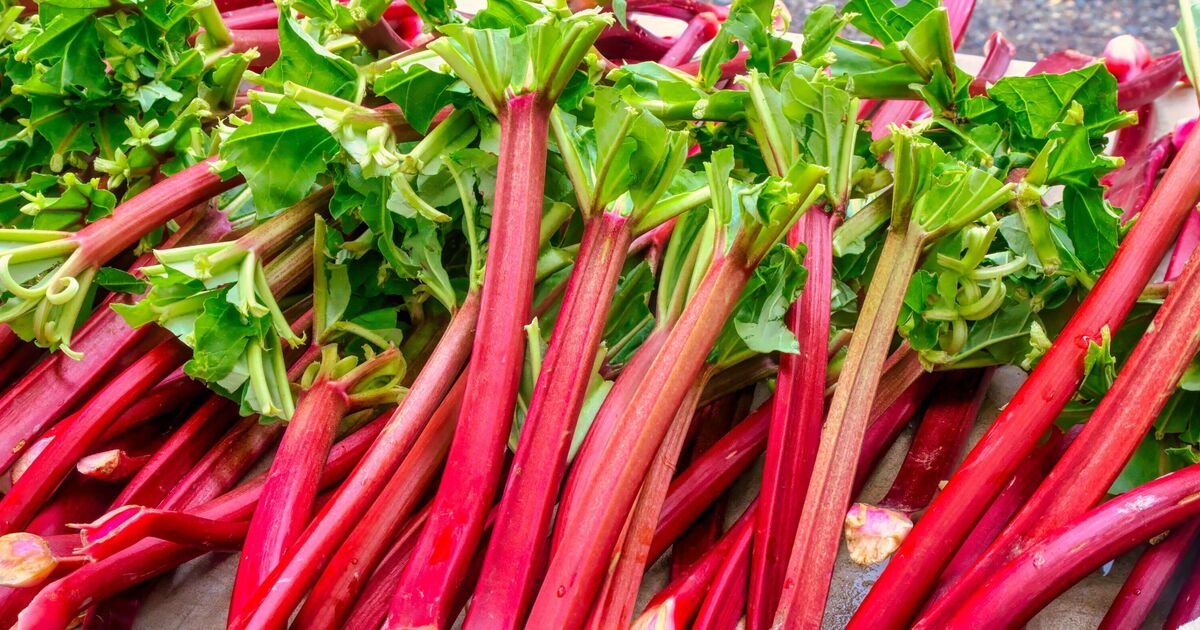

Most rhubarb varieties can be harvested from late April or May and will continue to flourish through the summer. However, gardeners know that harvesting should cease in June, or only a few stems should be picked, as “over-cropping will reduce the plant’s vigour”, according to Thomson and Morgan gardening experts. Caring for rhubarb plants doesn’t end there.
As October’s chill spreads across the UK, dedicated gardeners know it’s time to give their rhubarb plants some attention before they settle in for winter. The Thomson and Morgan team shared: “Rhubarb is an undemanding perennial that’s easy to grow and fantastically hardy. It actually needs a cold snap to produce the best crops.”
They encouraged rhubarb enthusiasts to use two common gardening tools this autumn to encourage the most spectacular crimson fruits.
Rhubarb foliage dies in autumn and is typically the first garden crop to collapse, droop down, and turn black.
The gardening experts said: “When the leaves die back naturally, simply cut back the old rhubarb stalks to leave the buds exposed.”
This is the perfect moment for pruning, so it’s crucial not to postpone it beyond autumn. Once the foliage dies, the plant will rapidly go dormant.
Begin by spotting the old, exhausted stalks – they’re typically easy to identify. Grasp them at the base and twist carefully to remove them, ensuring you don’t harm the crown.
If they resist, use sharp, clean secateurs to make a neat cut at the base. Flower stalks, which drain the plant’s energy, should be cut at the base with a sterilised knife.
Pruning only during dry weather is crucial, as doing so in wet conditions could leave the plant vulnerable to diseases.
After the rhubarb leaves have been trimmed, the Thompson and Morgan experts suggest applying a mulch of well-rotted manure around the plant’s crown.
They said: “This will help conserve moisture in the soil, keep the weeds down, and feed the plants for the following growing season. But don’t cover the crown, as this may cause it to rot.”
According to Thompson and Morgan’s gardening experts, crown rot can be a problem when cultivating rhubarb.
“It’s caused by fungi or bacteria (either in the soil or water) and, once it spreads, the disease call kill the plant”, they warned.
In this situation, the best approach is to act swiftly and remove any infected areas of the plant.
Gardeners shouldn’t hesitate to cut into healthy plant tissue – it could rescue the entire plant.
Slugs, snails and other garden pests feast on your delicious rhubarb, so always monitor your plants and tackle any infestations promptly.
