
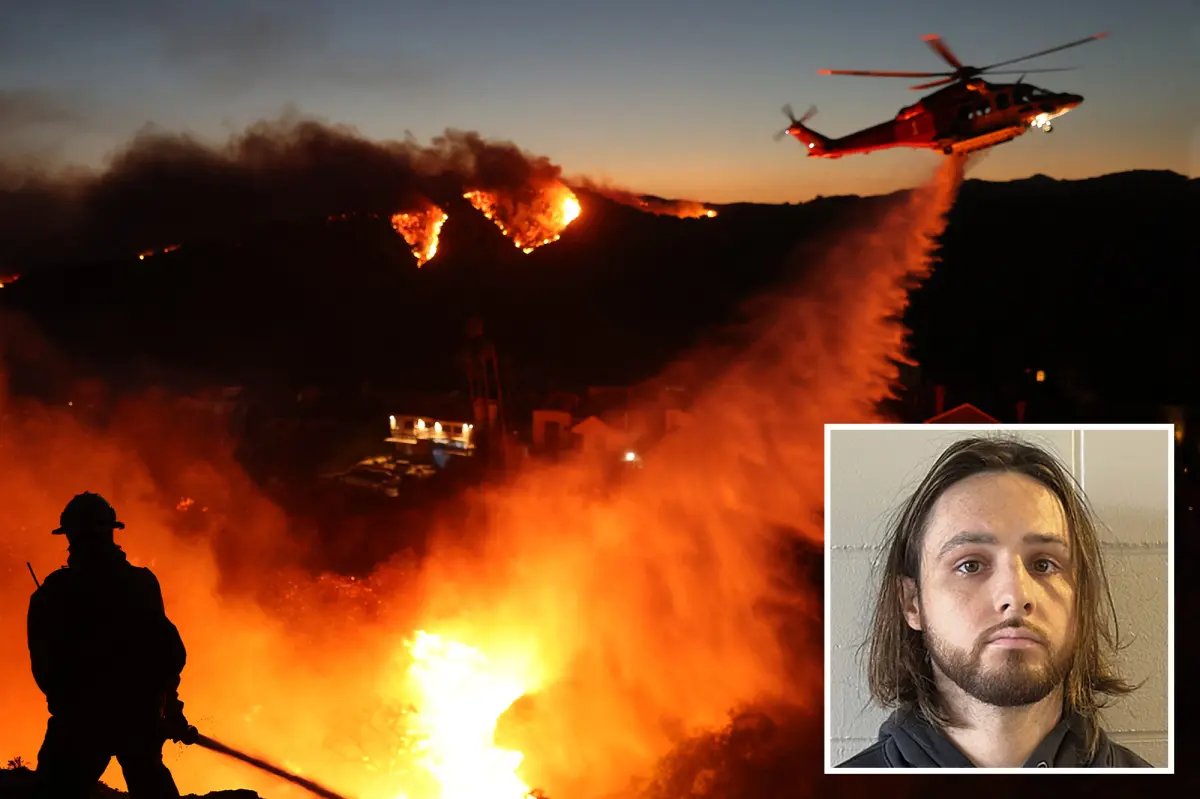


The man accused for sparking the devastating Palisades Fire tried to throw investigators off his trail by recording a 911 call he made to report the blaze along with an online search meant to deceive investigators, a federal agent testified.
As the trial of Jonathan Rinderknecht entered day two on Thursday, prosecutors laid out a meticulous timeline of photos, videos, cellular data and ChatGPT messages arguing that 30-year-old not only started one of the deadliest and most destructive fires in California history, but tried to trick authorities with his searches.
ATF Special Agent Michael Montevidoni testified that Rinderknecht called 911 several times in the early morning of January 1, shortly after the Lachman Fire started.
“There’s a fire, there’s a fire,” Rinderknecht could be heard saying during the 911 call. “There’s a fire a top of Pacific Palisades highland.”
While talking to 911, Rinderknecht screen-recorded the phone call and him asking ChatGPT “are you at fault if a fire is lit because of your cigarettes,” according to the clip.
Montevidoni told the jury he considered that Rinderknecht’s actions recording the call and talking to ChatGPT about the fire suspicious, claiming it appeared he was trying to create an “alternative reason for why the fire was started and have a record to show at a later period.”
Rinderknecht could be seen with his head down and his hands covering his eyes during periods when prosecutors questioned Montevidoni.
Cellular data showed that Rinderknecht was in the area when the fire started, and video captured his vehicle in the Summit Hill neighborhood of the Pacific Palisades driving down from Buddha Hill shortly after the it ignited. He later drove back up the hill when the fire department arrived on scene.
The prosecution showed the jury videos Rinderknecht took on his phone of the fire and first responders battling the blaze between 1am and 1:36am on January 1.
After leaving the area, Rinderknecht accepted several Uber rides before heading back to his apartment around 3:45 a.m., according to prosecutors.
Prosecutors played a video showing Rinderknecht sitting in his vehicle staring blankly into the camera visibly distraught five days after the initial fire started.
“I don’t know what to do right now… in the midst of a mental breakdown,” Rinderknecht said into the camera.
Montevidoni underscored to the prosecution that investigators were only able to retrieve partial data from Rinderknecht’s devices because he refused to provide the password to sign into his iPhone.
The ATF special agent testified that when he served the search warrant on January 24, about two weeks after the fire broke out, Rinderknecht said it would take “thousands of years to get into his iPhone” and that “he had programmed software on iPhones that if connected to one of the tools law enforcement uses it would remotely wipe the phone automatically.”
The prosecution also dove into Rinderknecht’s ChatGPT history on Thursday, showing evidence dating back to July 2024 highlighting Rinderknecht’s apparent disdain for corporate greed and wealth inequality.
Montevidoni also told the prosecution that Rinderknecht asked ChatGPT how to delete his iCloud data and conversations.
“How to make sure like an iCloud conversation is deleted like everywhere,” Rinderknecht asked ChatGPT according to prosecutors. “Like, if you’re on your iPhone and you delete it, like, how, how do you do that? Like delete all the media, all the messages that you send on every device, on every one of your iClouds. Like, what’s the proper way to do this?
Rinderknecht’s defense pushed back at the trial, arguing being vulnerable to ChatGPT and expressing views about wealth inequality doesn’t make someone an arsonist.
“Would you agree with me that not everyone upset with corporate greed is an arsonist?” defense attorney Steve Haney asked Montevidoni, who responded with “that’s a fair statement.”
The defense also noted that Rinderknecht never asked ChatGPT how to commit arson or delete evidence of a crime.
“Deleting potential evidence of a crime is a crime itself, but specifically stating to delete evidence of a crime, no,” Montevidoni responded.
