



Less than 5%.
In hindsight, that’s how likely Dodgers president of baseball operations Andrew Friedman believed the team’s Plan A offseason would happen.
Coming off back-to-back World Series titles, and knowing the core of his club would return in 2026, Friedman and his front office entered this winter in an enviable –– and not all too urgent –– spot.
Yes, the Dodgers had a hole in their bullpen. And yes, they needed to round out the outfield.
But, less than three months ago, this didn’t appear to be shaping up as another splashy offseason of big expenditures and star-studded acquisitions. The club might have targeted Edwin Díaz and Kyle Tucker as their top targets, but there was only faint belief that they would wind up with them both.
“That’s the trickiest part of every offseason,” Friedman told the California Post in a recent interview. “If you have a Plan A, but Plan B or C is coming off the board at a reasonable price point, how do you weigh that? That’s the art of navigating an offseason.”
In the end, it culminated in an unexpected masterpiece.
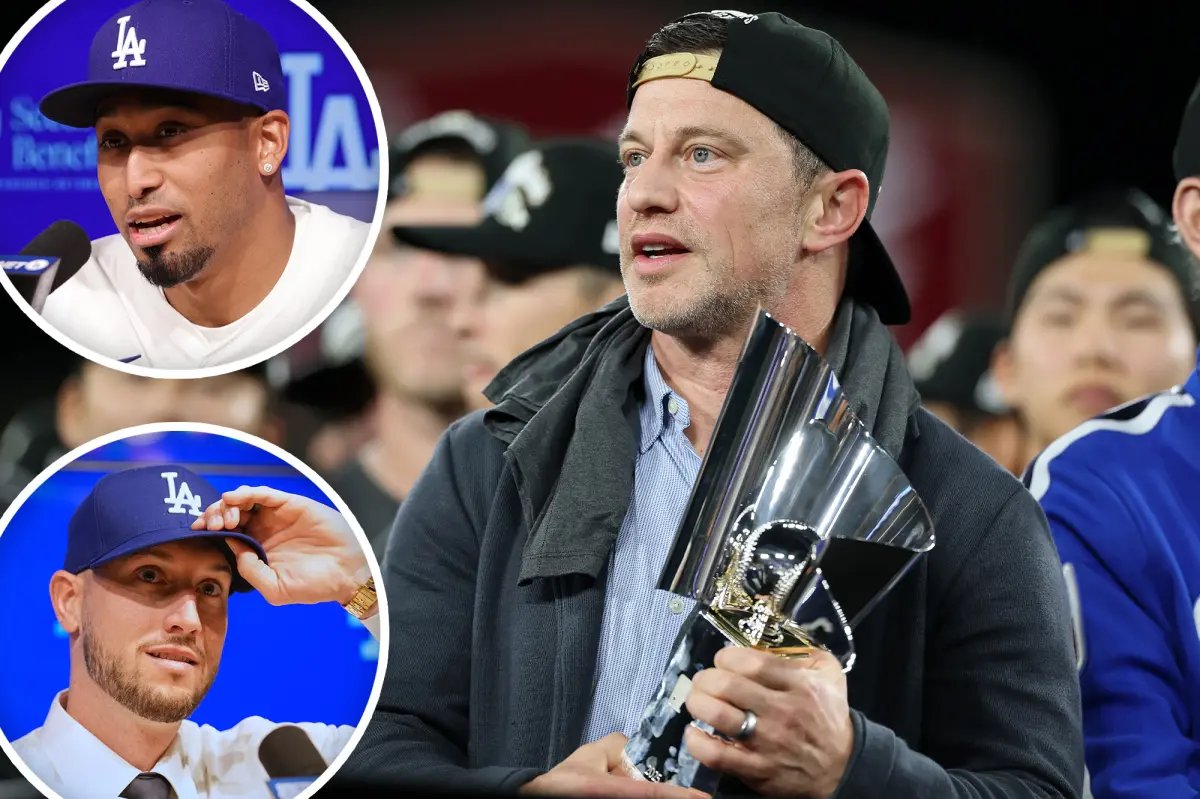
When the Dodgers report to Camelback Ranch for the start of spring training this week, the team’s clubhouse will be stocked in a way that even Friedman is still surprised by, with Díaz arriving as the team’s new closer and Tucker joining as its newest All-Star caliber, MVP-hopeful hitter.
“We feel fortunate that we were able to wind up with both,” Friedman said, before stating his start-of-the-winter prediction: “I would have thought that the odds of us getting both were sub-5%, for sure.”
In another time, or with different financial realities, that likely would have been the case for the Dodgers.
They whiffed (at least for now) on the lucrative four-year deal they handed Tanner Scott last offseason, making the addition of another high-priced reliever a risk-inducing uncertainty. They had enough roster flexibility to work around their outfield hole, seemingly better positioned for a more marginal move on the trade market.
These Dodgers, however, don’t operate in the way other teams (or even they themselves just a few years back) typically do.
They’ve become a financial behemoth, and a desired juggernaut destination.
They have recognized an opportunity for a historic run of dominance, and spared no expense in trying to achieve it.
Thus, they signed Díaz to a three-year, $69 million deal in December. They won the Tucker sweepstakes with a record-setting four-year, $240 million contract in January. And now, they enter this new campaign with no glaring holes, nor any obvious weak points.
Another payroll projected to top $400 million has made them overwhelming favorites to complete a World Series three-peat.
“I don’t mind the three (titles in a row being) in the air as a carrot, and kind of a north star of focus,” manager Dave Roberts said at the team’s Fanfest event. “But I do think that we’re very mindful that there’s a lot of work that needs to be done to get to that point.”
A lot of that work, of course, got done this winter –– with the pieces falling in place for the double-coup of Tucker and Díaz.
In the offseason’s early weeks, the Dodgers considered other relief options, operating under the assumption that Díaz would ultimately re-sign with the Mets. They had interest in Raisel Iglesias and Robert Suarez. They were involved in the bidding for Devin Williams, even as his market reached multi-year offers.
Ultimately, their whiffs in those pursuits resulted in the home run for Díaz.
By the time the three-time All-Star was ready to sign at the Winter Meetings, most other closer-hungry clubs had found other alternatives. His incumbent Mets made a beatable offer, too, unwilling to stretch for Díaz after signing Williams for three years.
Though the Dodgers were unwilling to go past three years, their proposal of $23 million in annual salary (a record for a relief pitcher) was enough to land the hard-throwing right-hander.
“There were a lot of scenarios (that could have played out) where we didn’t necessarily end up with a top-end reliever,” Friedman said after Díaz’s signing. “But we just kind of prepared on a bunch of different fronts. And being aggressive, if something lined up, we’ve known all along (is something we would do).”
Checking the other box off the offseason to-do list would take longer.
Over the holiday period, the front office stayed in touch with Tucker’s camp, but again kept their options open, expecting Tucker to land the kind of long-term deal the Dodgers (with their already hefty collection of future financial commitments) were trying to avoid.
Trade rumors swirled about everyone from Jarren Duran and Steven Kwan to Brendan Donovan and Lars Nootbar. The Dodgers indicated a comfort level with an Alex Call/Ryan Ward platoon in their outfield, too.
But things changed in mid-January, when Tucker expressed an openness to the Dodgers’ shorter-term offer, meshed with club officials during a video conference call, and then received his staggering $240 million offer (which comes with a $60 million annual average salary that will rank second in the sport).
A four-time All-Star, Tucker had also fielded a long-term proposal from the Toronto Blue Jays by then, as well as a similarly lucrative short-term bid from the Mets. But the opportunity with the Dodgers, who also included opt-outs that will allow him to re-test the free-agent market in the next two or three years, was too enticing to pass up.
“Had other things that made sense to us popped up before that, we would have had to balance that and act decisively,” Friedman said.
Luckily for the Dodgers, that crossroads moment never materialized.
The once-remote scenario of adding Díaz, the top free-agent reliever, and Tucker, the top free-agent hitter, became a reality.
And this week, they will take their place in a familiar, but improved, Dodgers clubhouse, joining Shohei Ohtani, Mookie Betts, Freddie Freeman and the rest of the team’s returning star core to pursue the club’s third-straight championship.