
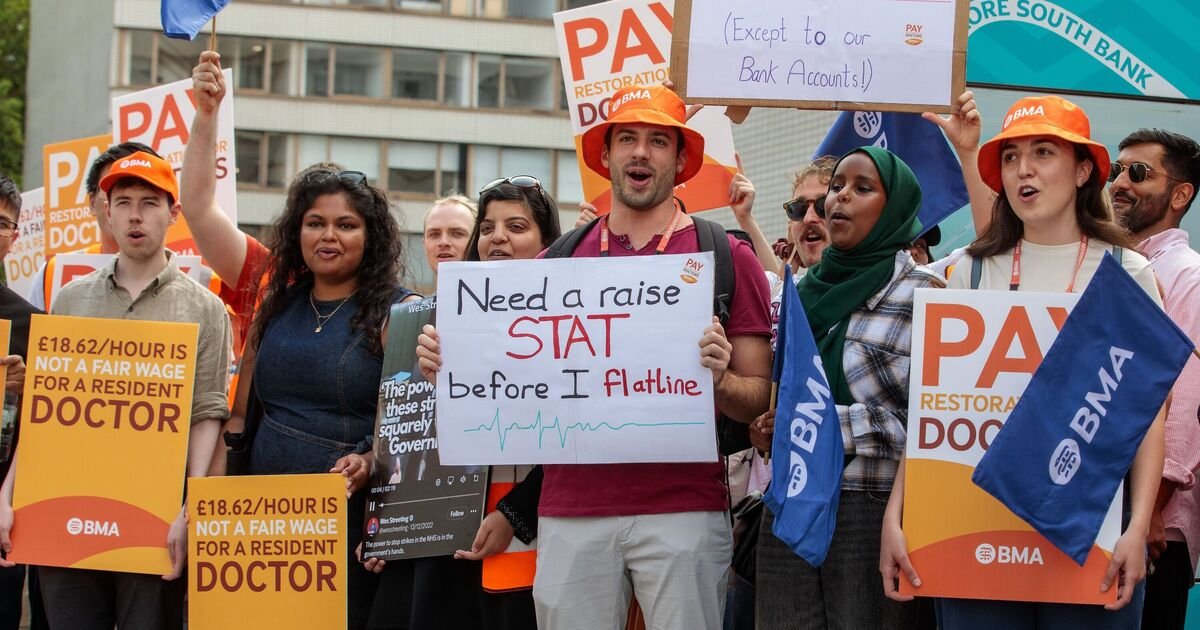

NHS workers who have been striking for 200 days have demanded a £472 pay rise. Thirty-seven phlebotomists, people who take blood samples, at Gloucestershire Royal and Cheltenham General hospitals are taking part in one of the longest strikes in NHS history. UNISON argues that they should be regraded after performing extra duties, taking their salary from £24,465 to £24,937.
General secretary of the union, Christina McAnea, said: “It’s a scandal that hospital managers have allowed this dispute to drag on for 200 days. They must pay up now and show the phlebotomists the respect they deserve for the skilled work they do. These dedicated NHS staff help diagnose illnesses and keep services running smoothly. They didn’t want to strike but were left with no choice after years of being underpaid and ignored.”
UNISON South West regional secretary Kerry Baigent added: “The trust has had months to put this right. Rather than paying staff what they’re owed, bosses have hidden behind endless meetings and hollow promises.
“Phlebotomists want to get back to the jobs they love, caring for their patients and supporting the NHS. However, they’re determined to secure the proper rate for the work they do.
“It’s time the trust stopped dragging its feet and resolved this dispute once and for all.”
This comes after hundreds of NHS hospital workers voted to strike amid claims that they’ve lost over £36 million in pay and pension contributions in the last four years.
Facilities staff at St George’s, Epsom and St Helier hospital group (GESH) are preparing for the industrial action after a report from United Voices of the World (UVW) accused the group of “institutional racism”.
It claimed that GESH had differential pay and conditions for the some 330 staff, who are mainly from minority communities.
The facilities staff earn a maximum of £13.85 an hour, while other NHS workers at the hospital group make a minimum rate of £14.92 an hour, the report added.
Petros Elia, UVW’s general secretary, said: “For years, GESH trust has withheld millions in vital pay and pension contributions from their lowest-paid staff. The clock has run out on this injustice with over 300 workers ready to take industrial action.”
