


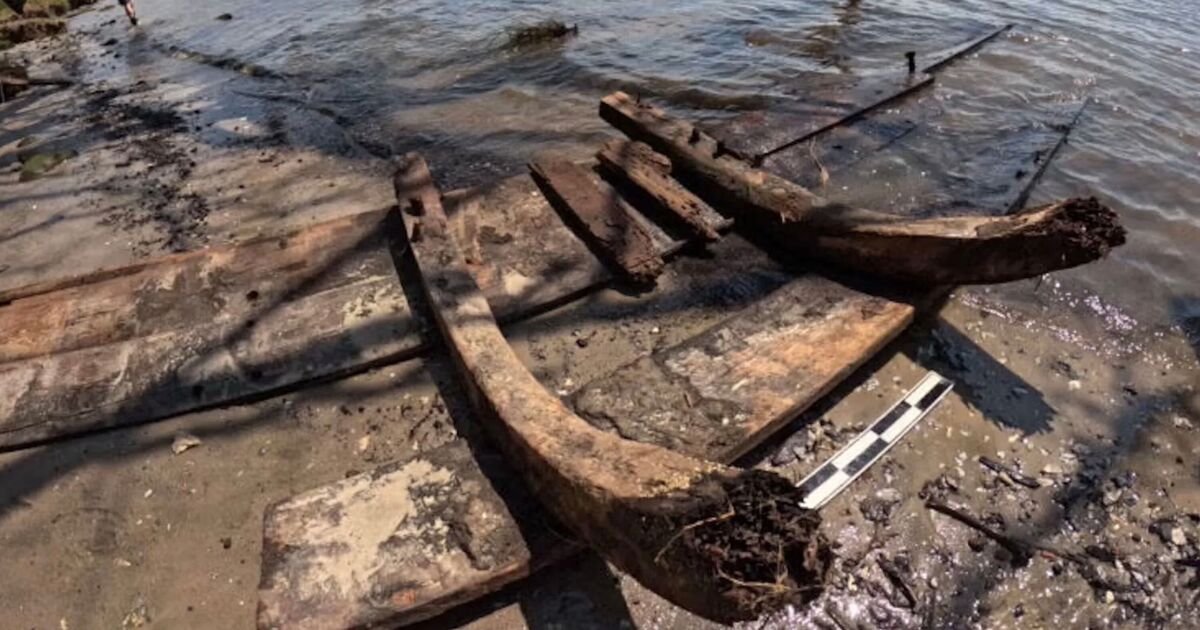
A huge discovery has been made along North Carolina’s Cape Fear River, after maritime archaeologists searched the waters near Fort Anderson. The team uncovered four incredible shipwrecks, one of which, researchers believe, could be a Spanish vessel that was lost nearly 300 years ago.
La Fortuna, a Spanish privateering vessel, exploded in 1748 during a daring attack at the close of King George’s War, fought between Great Britain and France along with their colonies in North America. The discovery, made by East Carolina University’s Program in Maritime Studies, offers a critical insight into one of North Carolina’s earliest port towns and a rare glimpse at the state’s colonial maritime past. However, experts have warned that time is running out to study these wrecks before they are erased.
The team made the find during its annual summer field school at the Brunswick Town/Fort Anderson State Historic Site. Graduate student Cory van Hees was surveying the muddy riverbed when he spotted fragments of wood buried in the clay. The project director, Dr. Jason Raupp, later confirmed it as a shipwreck, possibly La Fortuna.
Wood samples taken from the suspected wreck revealed Monterey or Mexican cypress – a tree species native to regions of Central America and the Pacific coast. Researchers said this detail suggests construction links to Spain’s Caribbean colonies. The site also lies close to where diver Dennison Breece recovered an 18th-century cannon in 1985, long thought to be tied to La Fortuna.
Historical records reveal that La Fortuna launched a daring assault on Brunswick Town in September 1748. The Spanish vessel from Cuba exploded near the colonial wharves, likely due to a direct hit to its gunpowder magazine (storage) during combat with British colonial defenders. Brunswick Town itself, a pre-Revolutionary port, was razed by British troops in 1776 and never rebuilt. During the Civil War, Fort Anderson was constructed on top of the old town site.
In addition to the suspected pirate shipwreck, the team documented three other vessels: a repurposed ship likely used to build up the shoreline, a colonial-era flatboat used to ferry cargo, and an unidentified wreck barely visible above the riverbed. The team also mapped timber wharves, a marsh causeway, and artefacts reflecting trade, daily life, and armed conflict in the 18th century.
However, coastal erosion is rapidly damaging the southern shoreline where the wrecks were found, threatening to erase these fragile remains before they can be fully studied. In fact, over 40 wooden timbers – some with visible tool marks from colonial shipbuilders – were quickly removed from the site before they could be swept away. Dr Raupp said the findings help piece together the story of the region’s colonial seafaring history. However, without protective efforts, he warned, coastal erosion could permanently erase these chapters from the past before we even learn about them.
Closer to home, on the other side of the Atlantic, archaeologists in northern Spain have uncovered grisly 5,700-year-old evidence of war-driven cannibalism in El Mirador Cave, which is rewriting Neolithic history. Within the cave, in the famous Atapuerca archaeological site, researchers found the remains of 11 individuals showing clear signs of human flesh being consumed.