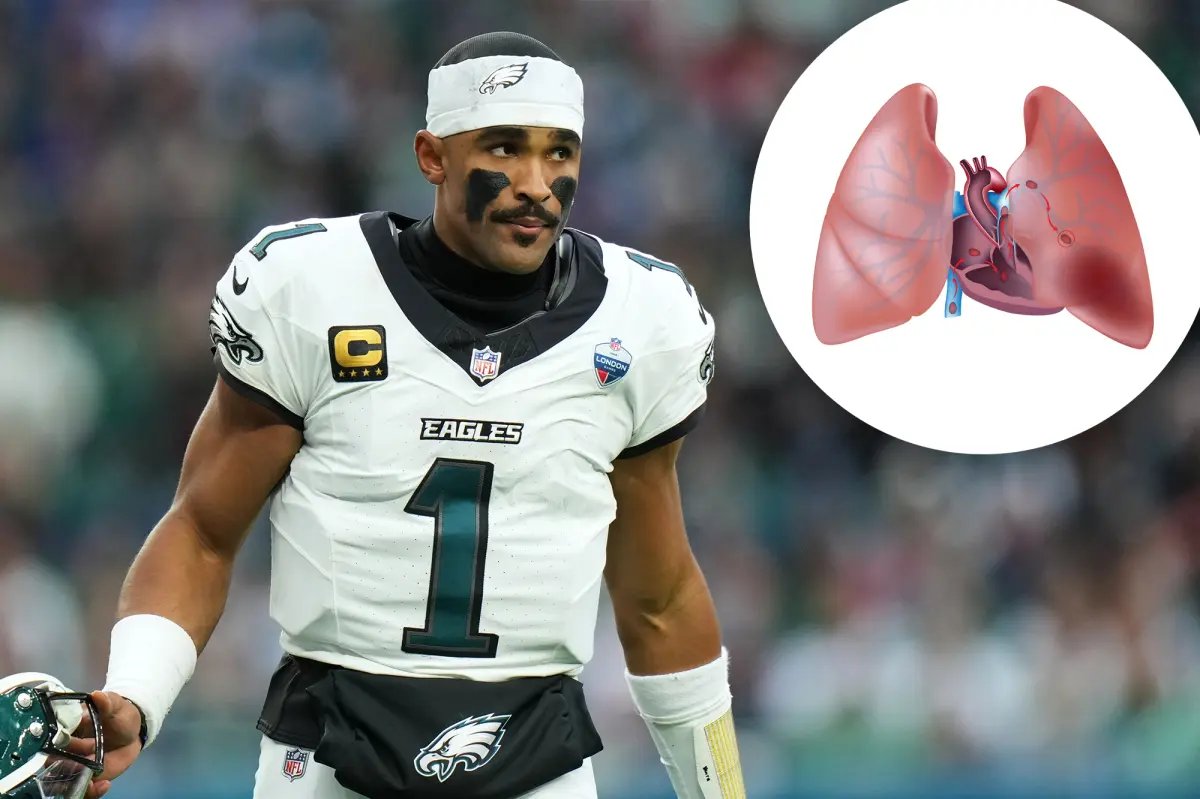


Jalen Hurts is sidelined for the time being.
The Philadelphia Eagles announced Monday that their star player was diagnosed with deep vein thrombosis and bilateral pulmonary emoboli, dangerous blood clots trapped in the leg veins and lungs.
The quarterback will receive blood thinners and has been prohibited from playing football while undergoing treatment.
“Jalen’s prognosis is very good, and we expect a full recovery,” said a statement from the team and Hurts’ agent Nicole Lynn. “We anticipate that he will have the opportunity to resume contact football activities when off the blood thinners.”
Doctors had initially diagnosed Hurts with a superficial vein thrombosis in his left calf in London before the Eagles’ Week 5 game at Tottenham Hotspur Stadium, but further testing and monitoring revealed the full scope of his prognosis.
The team statement added that the three-time Pro Bowler will “remain active around the team and continue to condition” and that he is not expected to have any long-term effects from this condition.
“We are thinking of Jalen and looking forward to a strong recovery,” they said.
Here’s everything you need to know about pulmonary embolism, from causes and risks to treatment options.
What is pulmonary embolism?
A pulmonary embolism occurs when a blood clot travels from an external location in the body to the lungs, halting normal blood circulation.
This type of clot frequently originates as deep vein thrombosis, when you have a blood clot in a deep vein in the pelvis or leg. After breaking away, it drifts through the circulatory system until it becomes wedged in a lung blood vessel, preventing blood from passing through.
Nearly 50% of DVT and PE cases happen after surgery or a hospital stay. Remaining immobile for days causes blood to pool, creating a prime environment for a clot to form.
PE are a widespread condition, resulting in at least 100,000 deaths annually in the US according to experts.
What are the symptoms?
PE symptoms typically strike suddenly and range from mild to severe, including:
- sharp chest pain that intensifies with movement or deep breaths
- sudden or resting shortness of breath
- rapid breathing and heartbeat
- a cough (sometimes with blood)
- wheezing
- dizziness
- fainting
- pale, clammy or blueish skin.
Before reaching the lungs, a blood clot waiting to dislodge may also signal its presence through leg pain, swelling and warmth.
Who’s most at risk?
While PE risk factors vary, they share a common cause: they make blood more likely to form abnormal clots when it should not.
Major surgeries — especially on the hips or legs — prolonged bed rest and hospital stays lasting longer than three days slow blood circulation and cause blood to pool.
Sitting still for long periods, such as during a desk job or a long car or plane ride, stops the leg muscles from helping blood move.
Other major risk factors include inherited blood clotting disorders, pregnancy and the postpartum period, hormone-based medications like birth control or hormone replacement therapy, active cancer or its treatments and chronic illnesses such as autoimmune conditions or severe COVID-19.
How is PE treated?
The goal of PE treatment is to remove the blood clot from the lungs and stop new clots from forming. This care often requires a hospital stay so a health team can monitor the condition closely.
Doctors usually start with anticoagulants (blood thinners given as pills or through an IV) to keep the clot from growing and lower the risk of new ones.
For severe cases or when thinners are not enough, thrombolysis uses special IV or catheter medications to dissolve the clot, while an embolectomy physically removes it.
If the patient cannot cannot take blood thinners, a surgeon may place a small inferior vena cava filter in a large belly vein to catch clots before they reach the lungs. Most patients do not need a filter, so a provider will decide if it’s right.
