


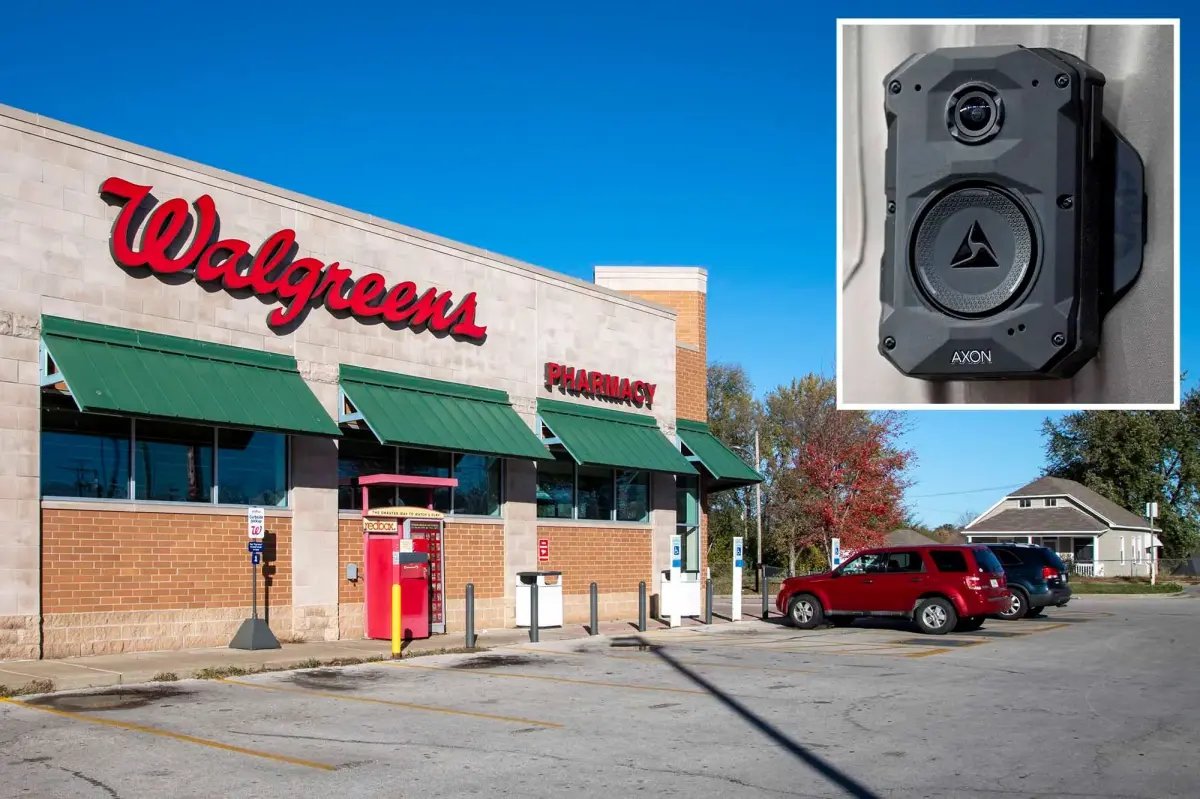
Walgreens will equip employees with body cameras in an apparent first in the city — but “Big Brother” weary New Yorkers say they don’t want to be pharma seen.
The pharmacy store giant — which also owns Duane Reade — kicked off a pilot program it said is aimed at promoting the “safety of both customers and team members.
But shoppers said the Orwellian tech is the latest thing to transform a trip to the corner store into a visit to a “war zone” after years of businesses taking extreme measures to combat rampant shoplifting including locking up even basic merchandise behind plexiglass.

“Body cameras can help de-escalate conflicts, ultimately contributing to a safer environment for everyone,” the company said in a statement. “We understand the importance of protecting customer privacy and have safeguards in place to ensure compliance with all applicable laws and regulations.”
The bodycams are not mandatory, however — employees can decide whether they want to wear the cameras while on the clock.
The drugstore has not released any additional information on the pilot program, including how it would use the footage.
Walgreens also hasn’t said which, or how many, of its several dozen Big Apple stores, will be enrolled in the pilot program — leaving its own employees in the dark.

“We don’t know,” one Brooklyn worker told The Post when asked if her location was asked to participate in the program.
“I saw the news this morning, but we don’t know yet,” she said, adding that she heard rumors that only two stores in the borough were enrolled.
Many customers expressed disdain for the new program, which comes more than a year after Walmart rolled out a similar program elsewhere in the country.
“I feel like it’s a huge invasion, but like I say, I think that we’re beyond it, and there’s not a lot we can really do,” Michelle Bullen, 49, told The Post.
“It’s kind of everywhere, or a little bit past that. You can’t leave the house, the MTA, [Walgreens]. You see the story about Wegmans doing the exact same thing, using facial recognition technology.”
Jenny, 42, of New Jersey, described the program as “extreme.”
“They already have security guards at the door. So… isn’t that enough? Is it getting that bad that we have to be that protected inside?” Jenny, who declined to share her last name, said.
“Like, you go to a bar, and bartenders are not wearing that, and I feel like that’s more dangerous than a pharmacy.”
The pilot program comes just months after Gov. Kathy Hochul revealed that retail theft had dropped 13% between January and June of 2025 compared to the same time period the previous year.
The governor had plunged $40 million into a statewide task force to combat the post-COVID-19 pandemic shoplifting surge that caused big box stores to start locking up goods.
Walgreens reported a 52% increase in “shrink” — or loss of inventory — last year after putting most of its merchandise behind glass, but Tim Wentworth, CEO of Walgreens Boots Alliance, said it was necessary to curb the retail theft he said was akin to a “hand-to-hand combat battle.”
In June, a security guard at a Midtown Duane Reade was stabbed by a shoplifter who was trying to steal a can of soda.
In 2023, another brazen thief used a blowtorch to melt the plastic of locked security cases at a Queens Walgreens before making off with about $448 worth of skin care products.
Walgreens would not say whether the bodycams could lead to select stores getting rid of the plexiglass barriers.
The rollout comes amid concerns that major retailers are breaching their customers’ privacy, with shops like Wegmans, Rite Aid and Macy’s recently collecting facial recognition, eye scans and voiceprints.
Brooklyn Councilmember Shahana Hanif introduced a bill this week to ban facial recognition and other forms of biometric surveillance, a mission she first tried to undertake in 2023.
That bill failed to pass.