


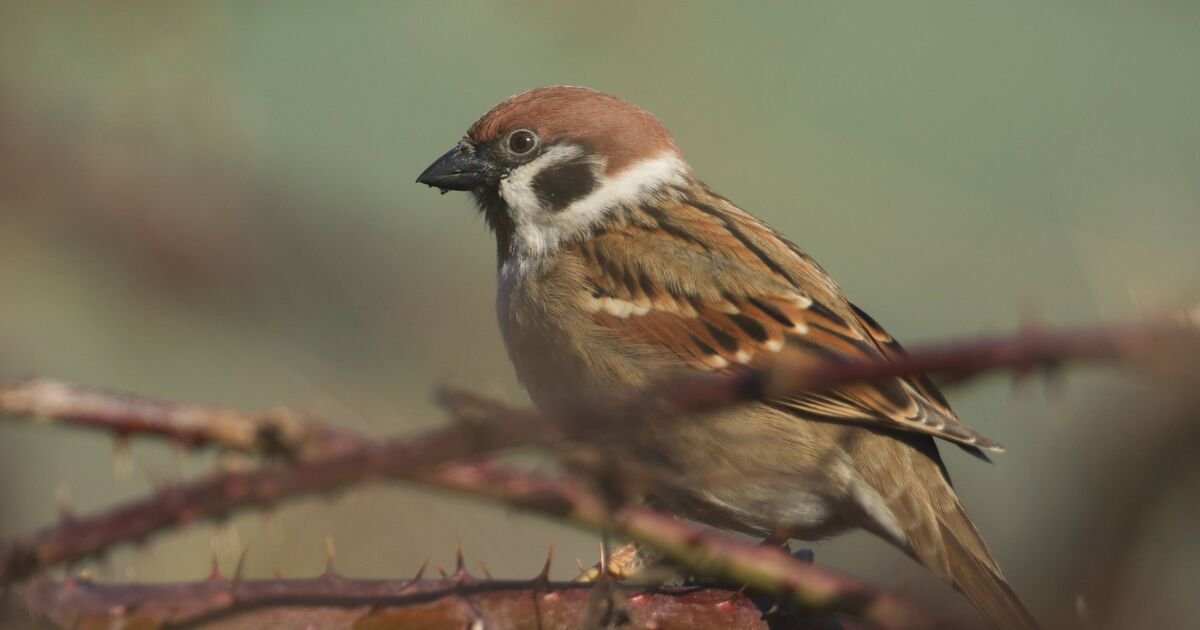
UK gardeners with house sparrows flitting through their foliage are being urged to take immediate, crucial action in the face of a staggering decline in the bird’s population.
Data on BBC Radio 4’s Inside Science programme revealed a shocking 70 per cent average plummet in UK sparrow figures.
Expert on the subject, Dr Julia Schroeder from Imperial College London, emphasised the critical need for prompt and straightforward interventions during her 15 years investigating these birds.
Dr Schroeder has pinpointed city background noise and a severe reduction in insects as significant challenges for sparrows, alongside scant nesting spaces.
Dr Schroeder said: “In the UK, house sparrow numbers have plummeted by an average of 68 per cent and in some areas even up to 90 per cent. So what might be driving this? The answer lies in a combination of factors, all of which affect the production and survival of chicks.”
She added that it isn’t only about adult sparrows locating sustenance; the younger birds depend heavily on insects for growth. However, with insect populations dwindling notably in urban settings, these are desperate times indeed for the chicks.
Furthermore, noisy environments lead to tragic outcomes, where clamour drowns out the hungry calls of nestlings, resulting in mothers feeding them less.
Dr Schroeder said modern homes were also a problem: “It’s a real tragic miscommunication and perhaps the saddest reason is we’ve made our houses too perfect. We seal off every crack and we’ve eliminated the very spaced house sparrows once used to nest in.”
However, she suggested there were simple measures people could take to assist: “There are lots of cheap and very cheerful actions we can take as individuals and as a society. Flowers and trees that support insect life. We can provide nest boxes. Let’s bear house sparrows in mind when building and developing.
“We can avoid plastic grass, gravel and too much asphalt, ditch insecticides and yes, put up with the occasional mosquito bite. But most of all let’s talk about this issue and spread the word where you know you can make a meaningful impact in schools and work and community groups. Let’s make this a conversation that grows and in doing so help sparrow numbers to grow too.”
How to aid sparrows:
- Plant flowers and trees which are good habitats for insects
- Put nest boxes on trees and houses
- Don’t have astroturf instead of grass
- Avoid too much paving, gravel and asphalt
- Don’t use insecticides.
Dr Shroeder added: “Today, house sparrows have perfectly adapted to cohabiting with humans nesting in their roofs, crevices, farms and towns. They like living around people and they don;t just nest in out buildings they also thrive on our mess; spilled grain, chicken feed and left over chips outside a kebab shop make for reliable meals.
“For house sparrow chicks the insects found near our lives are all the protein they need to grow. Most people today enjoy the presence of house sparrows but it hasn’t always been the case. In Mao Zedong’s China, they were accused of stealing too much grain. In a campaign to boost harvests, Mao ordered the extermination of all sparrows; however, the result horribly backfired. Without sparrows to control them, locusts surged and ate the crops, even leading to starvation – a powerful lesson about the importance of ecological balance.”
For more information on house sparrows, click here. To listen to the BBC Inside Science episode, click here.