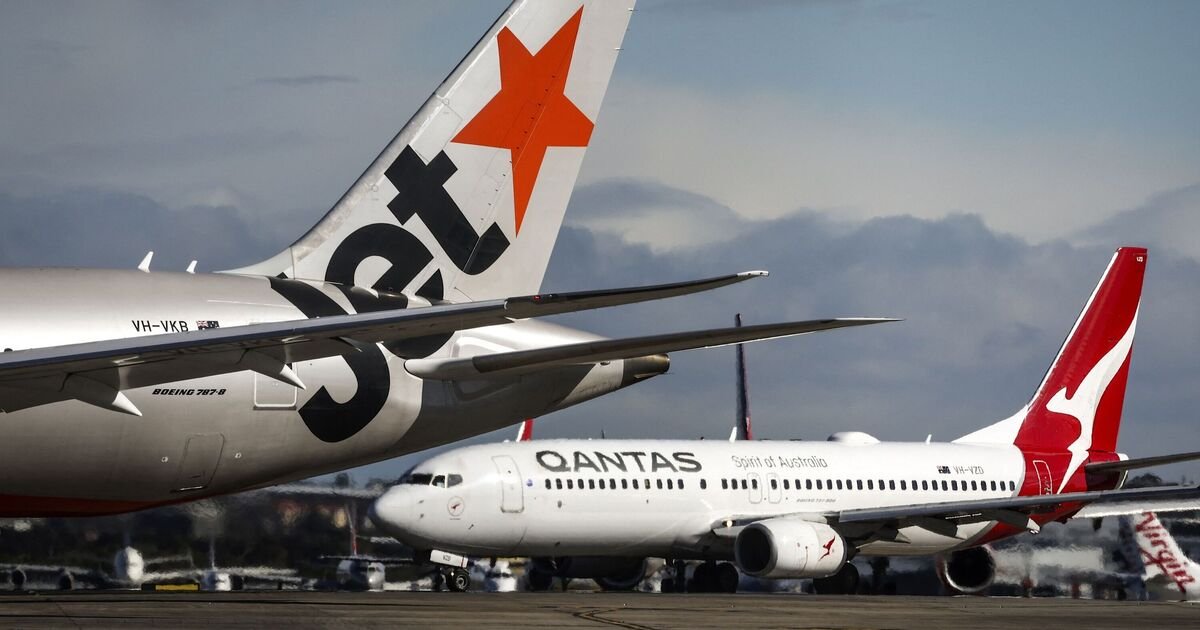

The airline said it planned to cut down on domestic services by four per cent in early 2027. The cuts will affect both Qantas and its low-cost subsidiary Jetstar.
It comes as a result higher oil prices due to the ongoing conflict in the Middle East. The war has, however, redirected global routes and helped Qantas’ international demand.
Qantas’ projected fuel bill for the second half of 2026 is now at $3.75billion, $150million above earlier estimates, the Mail reports. The airline said it “has and will continue to adjust fares and capacity in response to higher fuel costs”. It also said it expects fuel prices to remain high in 2027.
In May, Qantas cut hundreds of flights due to the rising costs of fuel. At the time, the airline said it was planning to cut 88 flights from its Melbourne to Sydney service, 50 flights from the Sydney to Brisbane line and 31 flights from Brisbane to Melbourne.
The disruption was expected to last until June.
In a statement at the time, Qantas said: “Given the continued volatility in fuel prices and the global economic conditions, (Qantas Group) has reduced domestic capacity in (the fourth quarter of the 2026 financial year) by around five percentage points.”
Global oil markets have been turbulent since the US and Israel carried out joint strikes on several key Iranian sites in February. Iran retaliated by closing the critical Strait of Hormuz waterway, through which 20% of all global oil traded passed before the war broke out.
While Qantas and Jetstar domestic services will take a four per cent knock, the carrier plans to expand its international routes by one per cent.
Qantas said that demand remains “resilient”, with customers continuing to prioritise travel.
“International demand across Qantas and Jetstar remains strong, supported by customers redirecting travel away from the Middle East,” the airline said.
“Domestic leisure demand remains strong. Non-resources corporate and government travel remains stable and is being closely monitored.”
