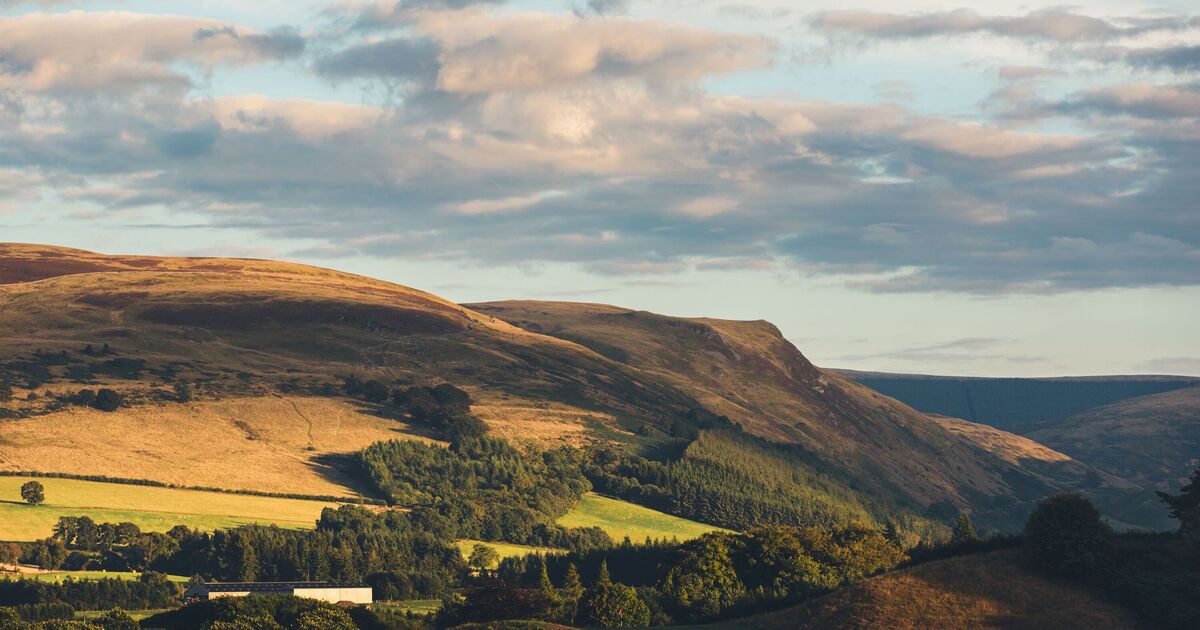

The small village of Dunning is located in the Scottish county of Perthshire, just 10 miles from the city of Perth. While the city has a population of 47,893, Dunning is home to just 950 people, according to the 2020 Census. Despite its small size, this town has a long history going back all the way to the Iron Age, when it’s believed there was a fort on the site.
The fort is thought to be the origin of the village’s name is similar to the Old Irish word for ‘little fort’, dúnán. In the first century there was a Roman camp at Dunning. And the town is said to be the location at which Saint Serif, who is venerated as a saint in the Catholic, Scottish Episcopal, and Eastern Orthodox Churches, slew a dragon.
Perhaps, unsurprisingly given this legend, the village church is named St Serf’s. This church dates back to the 12th century, although much of what stands today is from the early 19th century.
St. Serf’s Church is no longer in use, having last opened its doors as a religious institution in 1972. It is now in the care of Historic Scotland and is open to visitors at no charge.
It’s currently the home of the Dupplin Cross, a monumental Pictish stone dating from around 800 AD. There had been plans to move the cross from Dunning but this had led to protest from the community.
Another landmark that draws visitors to Dunning is a collection of stones about 20 feet high, topped with a cross and decorated with gifts left by visitors. Written on the stones in white lettering is the phrase: “Maggie Wall burnt here 1657 as a witch.”
The Maggie Wall memorial, as it has become known, can be found on the outskirts of the town in what used to be the parklands of Duncrub Castle.
The memorial itself has led to some confusion as although it is believed around 1,500 people (mostly women) were burnt as witches in Scotland between the 1500s and 1700s, there is no record of a Maggie Wall ever facing witchcraft accusations, nevermind going to trial to execution.
While some believe that this ‘Maggie Wall’ is meant to represent all the women accused of being witches, others have argued that Maggie Wall may well have existed, her life just never made it into the historical records.
Those wanting to visit Dunning will either have to drive or travel via bus from Perth, as the town no longer has a train station.
A section of the Scottish Central Railway passes by the town, but its train station was closed to both goods and people in 1956, just over 100 years after it was first opened.
