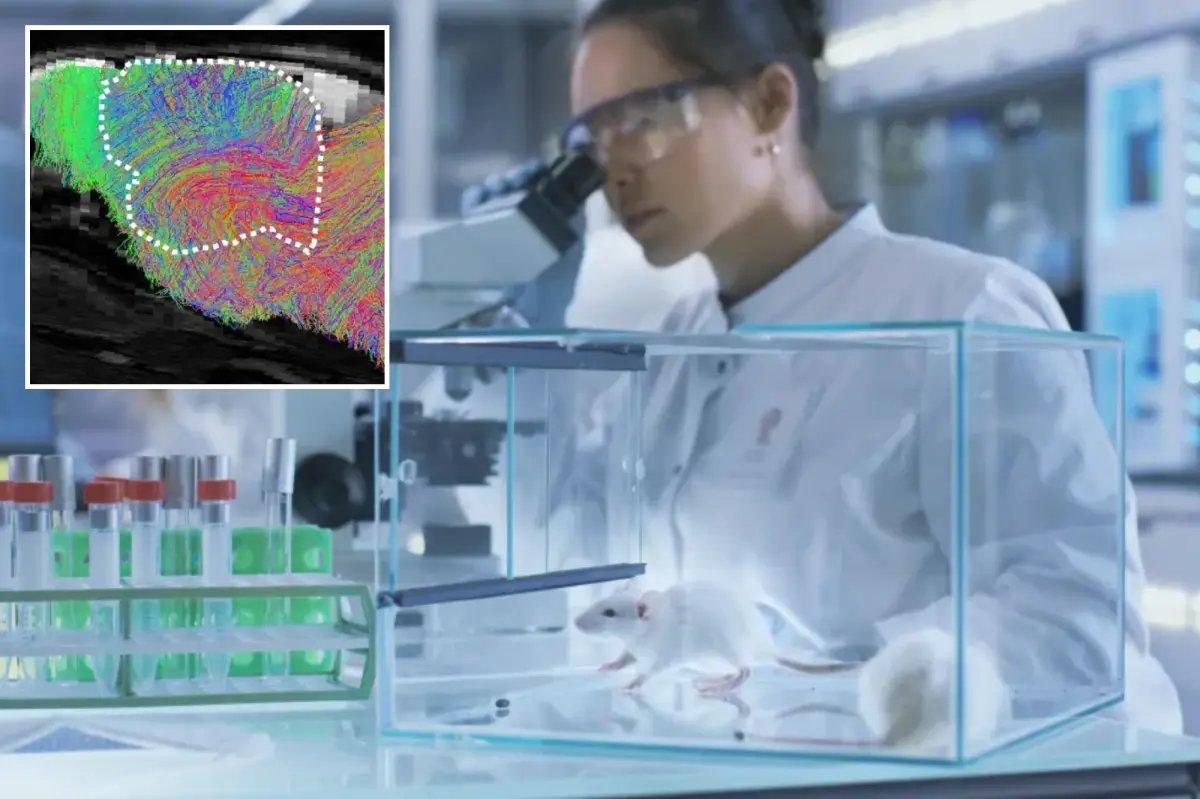


Scientists at Stanford University successfully transplanted lab-grown human brain tissue into mice, opening up new research into brain disorders.
In the study published in Nature, researchers said lab-grown parts of the brain called cortical organoids were placed into specially grown bioengineered lab mice that had been bred with most of their cerebral cortex missing, Stanford Medicine reported.
The cortical organoids are “three-dimensional laboratory cultures resembling specific regions of the brain.” created by transforming human skin cells into stem cells that can “differentiate into most of the body’s cell types.”
These cells eventually formed clusters of brain tissue that replicated the circuitry found in the cerebral cortex.
Officials said the brain tissue not only survived in the mice but “thrived and grew,” developing “working connections to the mice’s brain and beyond to the spinal cord.”
Images included in the report showed how the mice, which were bred with part of their cerebrum missing, had a full brain after the cortical organoid transplant.
The senior author of the study, Professor Sergiu Pasca, celebrated the successful transplant, the Daily Mail reported.
“In these mice, the human grafts generated a broad diversity of cortical cell types and established functional connections throughout the mouse nervous system,” Pasca said of the “xenocortical” mice.
“These animals retain a mouse nervous system, but they contain a larger volume of human cortical tissue that develops, integrates and forms connections within it.
“They are not miniature brains and do not reproduce the full complexity of the human brain, but they allow us to study human neural cell types and developmental processes that would otherwise be extremely difficult to access.”
Researchers said this will give them the chance to study the growth of human cells when it comes to disorders like profound autism, schizophrenia, cerebral palsy and epilepsy.
“We can begin to ask how disease-associated human genetic changes alter neural development and circuitry and whether potential treatments can prevent or correct those changes,” Pasca said.
Alison Singer, president of the Autism Science Foundation, called it a “critical step” in disease treatment and prevention.
“The idea that you can make an organoid model with an individual’s unique genetic character and use that to learn what’s gone awry in that individual’s brain is a critical step toward precision medicine,” Singer said in the Stanford report.
Studying the brain has been difficult at “the molecular and cellular level,” not only because of how complex the brain is, but studying “living human brain tissue” is almost always impossible for ethical reasons.
“Neuroscientists will be able to learn much more about the causes and mechanisms of neurodevelopmental and pregnancy-incurred disorders and to test possible interventions to correct or prevent them,” Pasca said in the Stanford report.
Download The California Post App, follow us on social, and subscribe to our newsletters
California Post News: Facebook, Instagram, TikTok, X, YouTube, WhatsApp, LinkedIn
California Post Sports Facebook, Instagram, TikTok, YouTube, X
California Post Opinion
California Post Newsletters: Sign up here!
California Post App: Download here!
Home delivery: Sign up here!
Page Six Hollywood: Sign up here!
