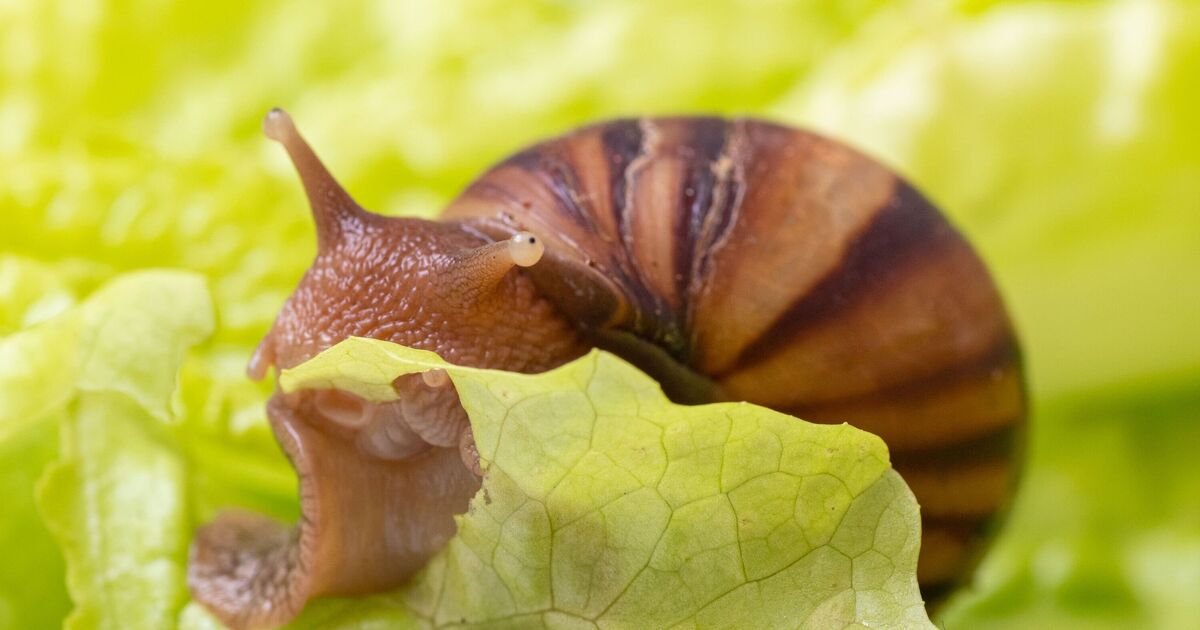

If slugs are plaguing your plants and leaving holes in your well-loved vegetables – this genius hack will not only enhance your soil’s health but it will also help banish the slimy pests from your garden. As a bonus – you probably already have this kitchen scrap in your cupboard.
From now on, save your coffee grounds for your borders. This savvy tip serves as an effective natural deterrent against slugs, according to Oregon State University. It advises households to stop throwing away used coffee grounds and instead save them for their gardens.
According to the study: “Spent coffee grounds can be used as a soil amendment and compost ingredient, while liquid coffee acts as an effective slug killer.”
It also helps keep the masses of coffee grounds in circulation out of our sewage systems. It continued: “According to various sources, between 400 billion to 1 trillion cups of coffee are consumed around the world every year.
“No matter the number, that’s a lot of coffee, which means a lot of spent coffee grounds. Using coffee grounds in the garden keeps them out of the waste stream and gives gardeners another option for caring for plants and dealing with slugs.”
Gardener’s World similarly endorses the use of coffee grounds as a plant fertiliser, acknowledging their role in nutrient enrichment and promoting plant growth.
These grounds are particularly rich in nitrogen while also housing essential minerals such as potassium and phosphorus, making them a superb addition to your gardening regime. Oxford Garden Design suggests that acidophilic plants greatly benefit from this method.
Specifically, plants like azaleas, rhododendrons, camellias, blue hydrangeas, and Pieris, which is synonymous with Japanese Andromeda, thrive with coffee ground application.
With their high nitrogen levels, coffee grounds perfectly suit leafy greens such as spinach, lettuce, kale, and Swiss chard, optimising their growth.
Garden enthusiasts should take note of the plants that take a disliking to coffee grounds, with tomatoes, lavender, rosemary, succulents and cacti, as well as clovers and legumes being among those that should steer clear of the caffeinated remains.
Beyond brewing up a morning cuppa, coffee can give compost heaps a boost too. According to Gardeners World, integrating coffee dregs with dry “woody” garden waste can help hasten the decomposition within your compost bin.
Striking the correct balance between moist and arid components is vital for successful composting.
Elaborating on the benefits, Gardeners World notes: “The nutrients contained in coffee grounds will be recycled back into the soil when finished compost is used as a mulch or dug into the soil. Also, add any un-drunk coffee to dry material in a compost bin.”
If you’re combating slug invasions, Greenside Up asserts that these garden interlopers are put off by the aroma of coffee. They recommend applying a mixture of cold, stout coffee directly onto the offending molluscs as a repellant spray.
Additionally, Gardeners World mentions that while spreading coffee grounds around plants beloved by slugs, like hostas, might seem smart, the success of such a tactic isn’t guaranteed.
However, Linda Brewer, Oregon State University Extension Service soil scientist, said coffee grounds can be worked into the soil or added to a compost pile but should be done with some restraint.
“The big message is that generally people are too enthusiastic,” Brewer said. “You really need to take the recommended dosages to heart.
“I’ve visited a site where a raised bed was ruined by too much coffee grounds. Like most kitchen waste, it is a fine amendment for the garden, but like anything else, coffee grounds can be overdone.”
