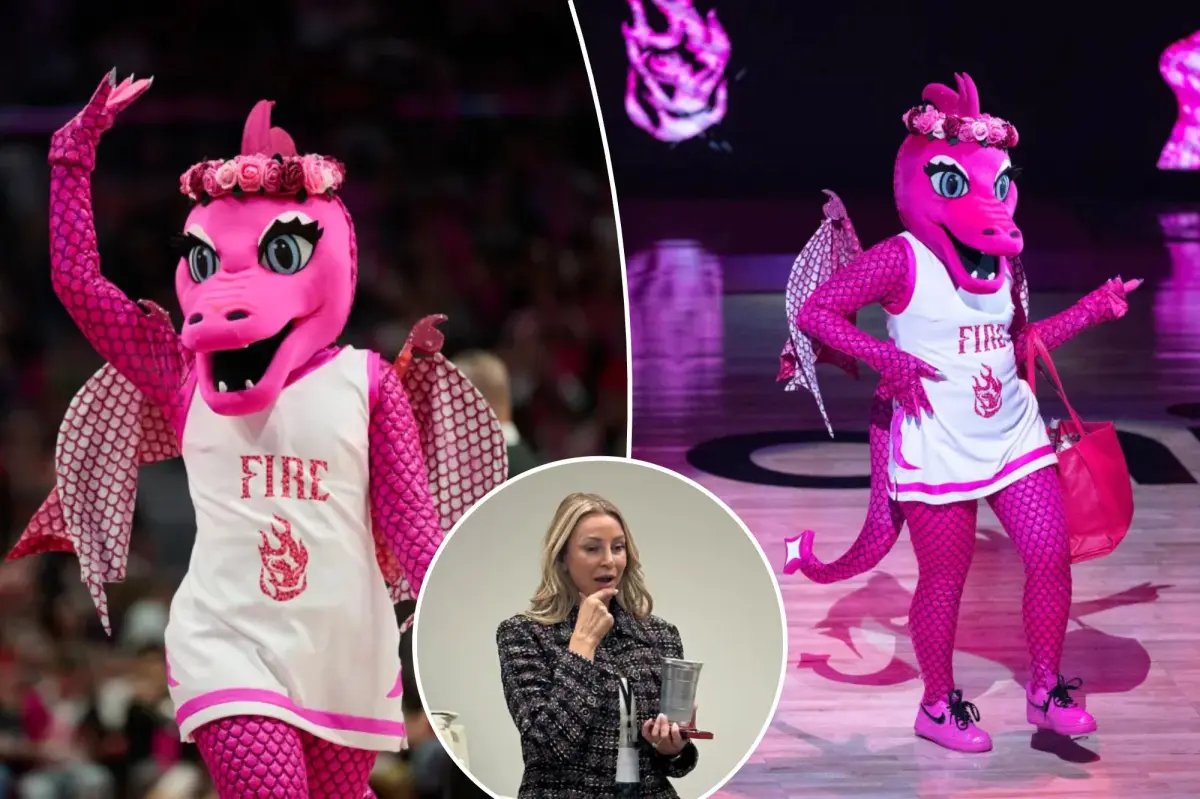


Building a WNBA expansion team meant assembling a roster, establishing a brand and answering one unexpectedly complicated question about a glitter-breathing dragon.
“Is it a he? Is it a she? Is it nonbinary?”
Portland Fire co-owner Lisa Bhathal Merage recalled that discussion during Front Office Sports’ Asset Class conference in New York. She said the organization’s first mascot meeting lasted several hours as executives studied other teams’ characters and debated nearly every element of their creation — including its gender.
The Fire ultimately arrived at their answer: Rose is a she.
Portland introduced Rose in August as a pink dragon whose defining talent is breathing glitter instead of flames. Her design includes rose-covered scales, a flower crown, glitter eye shadow, a glowing tail and a rotating collection of Nike sneakers.
According to the mascot’s fictional history, Rose spent 24 years living beneath the Rose Quarter after Portland’s original WNBA team folded in 2002. She finally emerged when the Fire returned in 2026, entering a league experiencing significant expansion and schedule growth.
Portland’s lengthy conversation about the gender identity of a fictional character may sound excessive, but research suggests mascot identities can quietly reinforce ideas about who gets to appear powerful, funny or important.
The Geena Davis Institute’s “Mascots Matter” study, which examined 1,096 mascots used by leading consumer brands rather than sports teams, found that male mascots outnumbered female mascots by more than two to one.
Male characters were also seven times more likely to be presented as funny and considerably more likely to occupy commanding roles. Meanwhile, female mascots were depicted through gender stereotypes more frequently than their male counterparts.
Those findings do not directly evaluate sports mascots, but they help explain why choosing Rose’s gender, appearance and personality represented more than a superficial decision.
Bhathal Merage credited Portland’s marketing staff with turning the initial debate into a complete personality. The organization introduced Rose through a week-long campaign involving mysterious scorch marks and trails of pink glitter before she emerged at Moda Center.
Mascot development may appear minor beside the competitive demands confronting an expansion franchise. Yet Rose has become one of the Fire’s most visible representatives as the team establishes itself—and earns landmark victories.
After spending hours deciding what Rose should be, Portland produced a mascot that feels unmistakably local: colorful, unconventional and entirely comfortable commanding the room.
The Fire will wrap up their WNBA return in the coming days with four games left. Portland sits at 16-24 and will miss the playoffs.
