


NPR didn’t manage to quote a single member of the Michigan synagogue that was attacked last month by a crazed Hezbollah-supporting terrorist last month — but did manage to track down his pals 6,000 miles away in Lebanon, a new report reveals.
Now even NPR’s public editor is criticizing the lefty broadcaster for the stunning oversight.
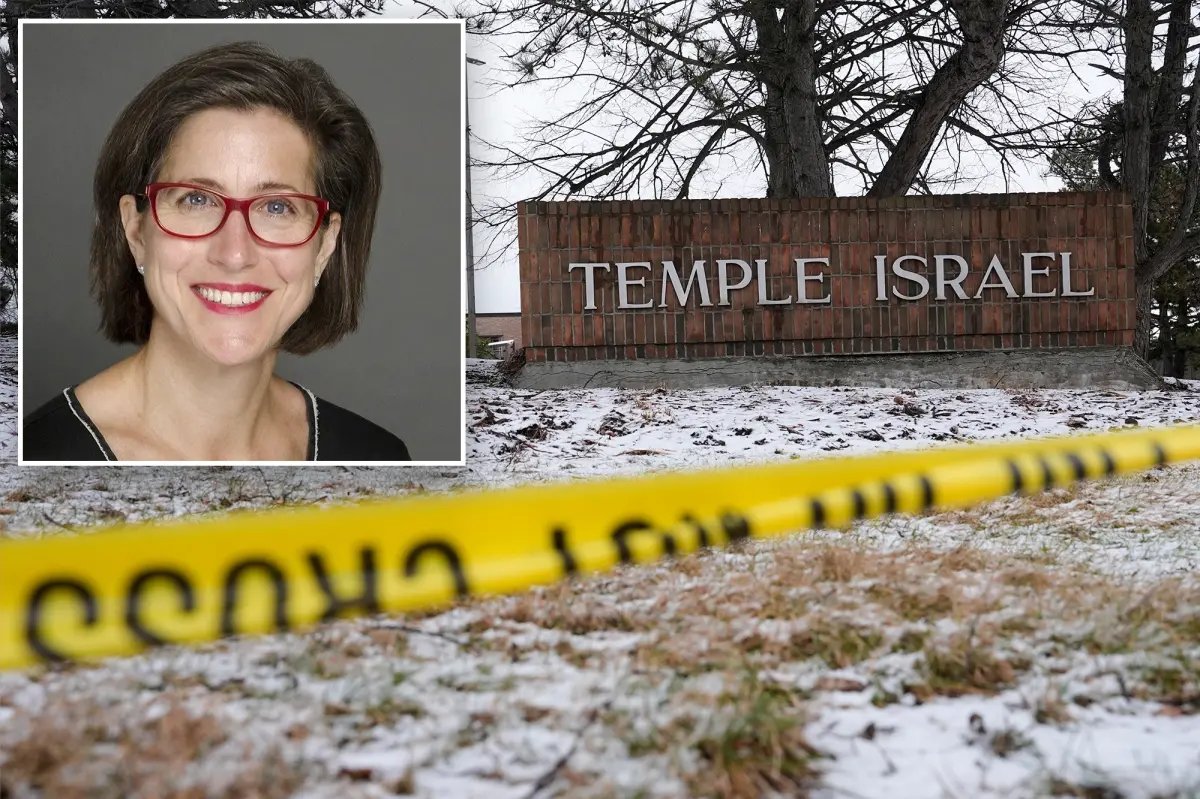
Instead of focusing on the victims in the heinous attack, a March 14 “All Things Considered” segment sent an NPR reporter to the Lebanon hometown of Ayman Ghazali, 41, who just days earlier had rammed his truck into a Jewish preschool at Temple Israel in West Bloomfield Township.

The FBI later confirmed Ghazali — who killed himself after engaging in a firefight with a security guard — was inspired by the Iran-backed terrorist group.
NPR headlined its article “In a small Lebanese town, grief and fear follow the Michigan synagogue attack,” resulting in listeners quickly calling out the publicly funded outlet for attempting to paint the terrorist and his family in a sympathetic light.
One listener, Batya Ungar-Sargon, wrote sarcastically in a Substack post about the coverage that “NPR found the real victim of an attack on 140 Jewish American babies — and it’s the Hezbollah-infested town in Lebanon that raised a family of terrorists.”
Israel Defense Forces revealed after the attack that Ghazali’s brother was a Hezbollah commander.
Another audience member, Richard Wilkins, took NPR to task for its one-sided coverage that downplayed the brothers’ known association with the terror group.
“NPR’s reaction? Sympathized understanding for the subsequent ‘grief and fear’ in his former hometown. Concealment of then public knowledge that those two brothers were Hezbollah terrorists, in a town full of Hezbollah sympathizers,” he wrote NPR’s public editor Kelly McBride.
McBride began her response defending NPR’s reasoning for its reporting 6,000 miles away in Lebanon.

“The journalistic purpose of the story was to explore the connection between the terror attack on the Michigan synagogue and the family that was killed on the other side of the world,” she wrote.
“Simply documenting that relationship and humanizing the family does not imply that Ghazali’s attempt to kill more than a hundred children was justified.”
However, she admitted that the network fell short in telling the full story.
“This story on this village should not be judged as NPR’s complete coverage of the Michigan synagogue. NPR ran multiple stories on the attack,” she wrote.
“In all of that coverage, voices from Temple Israel are absent. I couldn’t find any stories that quote rabbis, congregation members or the families of the children who had to flee the building.”
She also acknowledged that parallel coverage by local news outlets did cover the congregation extensively.
“NPR or Michigan Public Radio pulled away from the story at Temple Israel too soon,” she said.
She added, “when important voices are missing from coverage, it distorts the audience’s perception of everything else.”