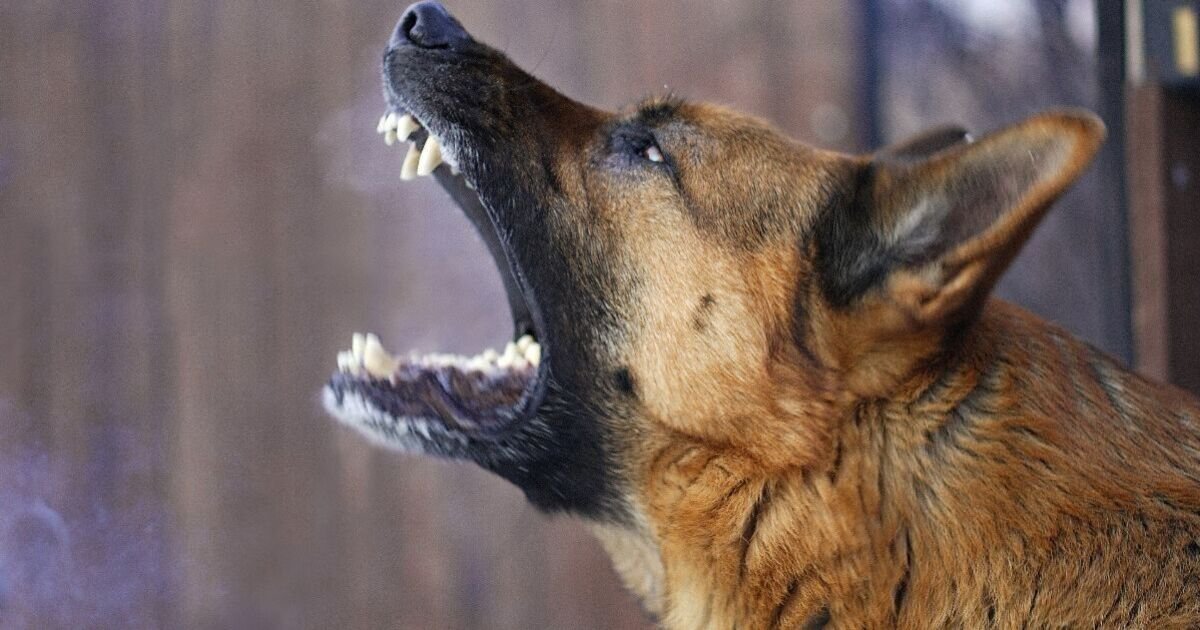

Nazi attack dog kennels have been discovered alongside suspected human bones by archaeologists working at the notorious Dachau concentration camp. A team working at the former death camp near Munich excavated 35 kennels used to house savage canines trained by Hitler’s infamous SS units.
Hyper-aggressive German shepherds, Dobermanns, Boxers and other powerful breeds were trained to launch vicious and frenzied attacks on defenceless inmates. In an even more chilling discovery, investigators uncovered layers of ash containing bone fragments believed to be human remains from the ovens where murdered prisoners’ corpses were systematically burned.
“The crematorium area and the dog-handler area formed a closely connected functional unit as places of terror,” said Gabriele Hammermann, director of the Dachau Concentration Camp Memorial Site, near Munich, Germany.
The dark and disturbing finds, uncovered during excavations near the former crematorium, have exposed fresh evidence of the industrial scale of the heinous Nazi terror machine at the camp. Dachau was where over 41,500 people lost their lives through starvation, disease, torture and murder.
The SS used dogs as living weapons, deliberately training them to launch savage attacks on any prisoners daring to escape their hellish existence in the camp. The vicious, powerful dogs were also deployed alongside forced labour gangs, keeping the starved and exhausted inmates in a state of constant abject terror as they were driven to slave away for their Nazi captors.
The SS created a special dog unit at Dachau in 1942, housing the animals just yards from the same facilities where the bodies of murdered prisoners were incinerated. New excavations, carried out ahead of plans to redesign parts of a memorial at the site, have revealed the foundations of a substantial SS dog-handling complex that lay buried for decades.
As part of the dig, archaeologists also discovered that the area housed the crematorium administration, where SS officials organised and documented the burning and disposal of corpses. The remarkably preserved kennels are expected to provide historians with fresh evidence of how the Nazis trained, housed and deployed their attack dogs to maintain their brutal grip over prisoners.
Dachau, established outside Munich in March 1933, was the first regular Nazi concentration camp and became a blueprint for the vast network of camps that followed. More than 200,000 prisoners from across Europe were incarcerated at Dachau and its satellite camps during Hitler’s 12-year reign.
Jews, political opponents, priests and resistance fighters endured starvation, savage beatings, extreme forced labour, torture and nightmarish medical experiments.When American troops liberated the camp on April 29, 1945, they encountered scenes of unimaginable horror. Some of the soldiers who witnessed the atrocity later committed suicide.
Railway wagons were crammed with the corpses of murdered prisoners, while thousands of survivors were skeletal, desperately ill and traumatised by years of Nazi brutality.
Mathias Pfeil, Bavaria’s chief heritage conservation officer, said the Dachau discoveries demonstrated the growing importance of archaeology as the generation of Holocaust survivors disappears.
He described the soil at the camp as “the last and incorruptible witness to Nazi crimes”.
The disturbing discoveries have prompted discussions with organisations representing victims and survivors about how these suspected human remains should be dealt with, alongside how to preserve the newly uncovered site preserved.
The archaeological excavations were initiated by the Freising State Construction Office and advised by the Bavarian State Office for the Preservation of Monuments (BLfD).
See more of the stories you love from Daily Express and find us easily in Google by making us a Preferred Source. Free and easy-to-do, just click here to activate or add us as Preferred Source in your Google search settings.
