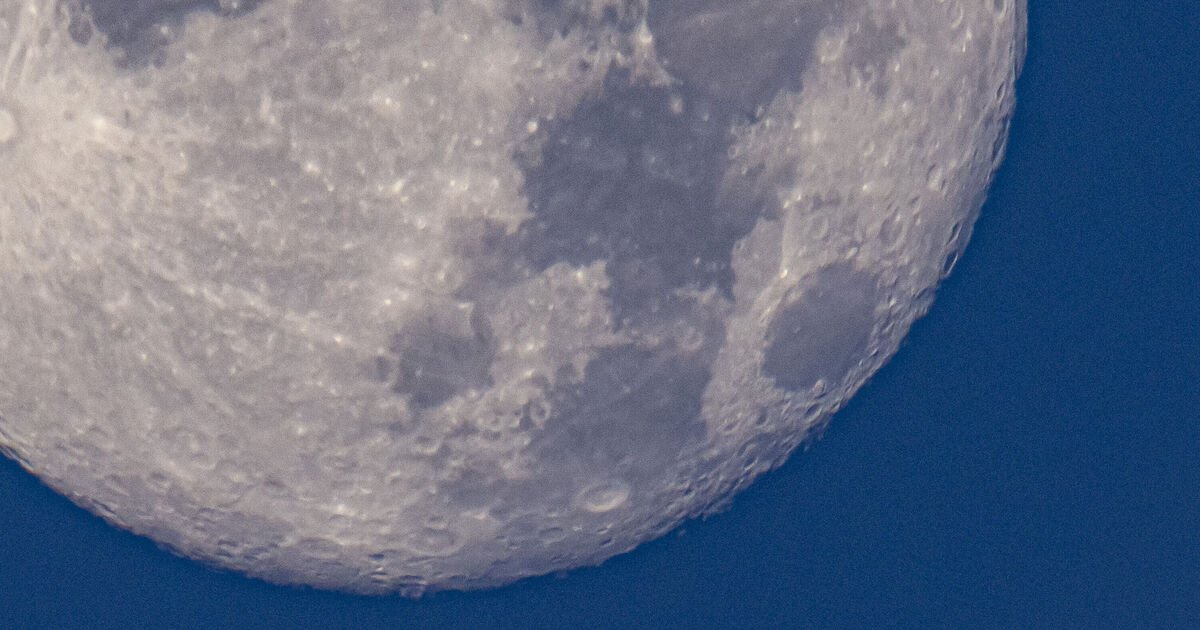

New research has shown that when an asteroid slammed into the Moon billions of years ago, it carved a pair of huge canyons on the far side that faces away from Earth.
The incoming space rock is said to have passed over the lunar south pole before hitting, creating a huge basin and sending streams of boulders hurtling at speeds of nearly one mile a second (3,600 mph).
The debris then landed like missiles, digging out two canyons – comparable in size to Arizona’s Grand Canyon – in barely 10 minutes.
“This was a very violent, a very dramatic geologic process,” said lead author David Kring of the Lunar and Planetary Institute in Houston.
This revelation has been welcomed with delight by scientists and NASA, which is looking to land astronauts at the south pole on the near, Earth-facing side which remains untouched by that impact and contains older rocks in original condition.
British and US scientists used photos and data from NASA’s Lunar Reconnaissance Orbiter to map the area and calculate the path of debris that produced these canyons about 3.8 billion years ago. They reported their findings on Tuesday (February 4) in the journal Nature Communications.
Mr Kring and his team estimate that the asteroid measured 15 miles across and that the energy required to create these huge canyons would have been more than 130 times that in the world’s current inventory of nuclear weapons.
Most of the ejected debris was thrown away from the Moon’s south pole, he added. This means that NASA’s targeted exploration zone will not be buried under debris, keeping older rocks from over four billion years ago exposed for collection by future moonwalkers.
It is hoped that these older rocks will help shed light on not just the Moon’s origins, but also Earth’s.
It is unclear whether these canyons are permanently shadowed like some craters on the Moon’s south pole. These areas are thought to contain considerable ice, which could be turned into rocket fuel and drinking water by future moonwalkers.
“That is something that we’re clearly going to be reexamining,” said Mr Kring.
NASA’s Artemis program – the successor to Apollo – aims to return astronauts to the Moon by the end of the decade.
The plan is to send astronauts around the Moon in 2026, followed by the first lunar touchdown by astronauts since Apollo about a year later.
