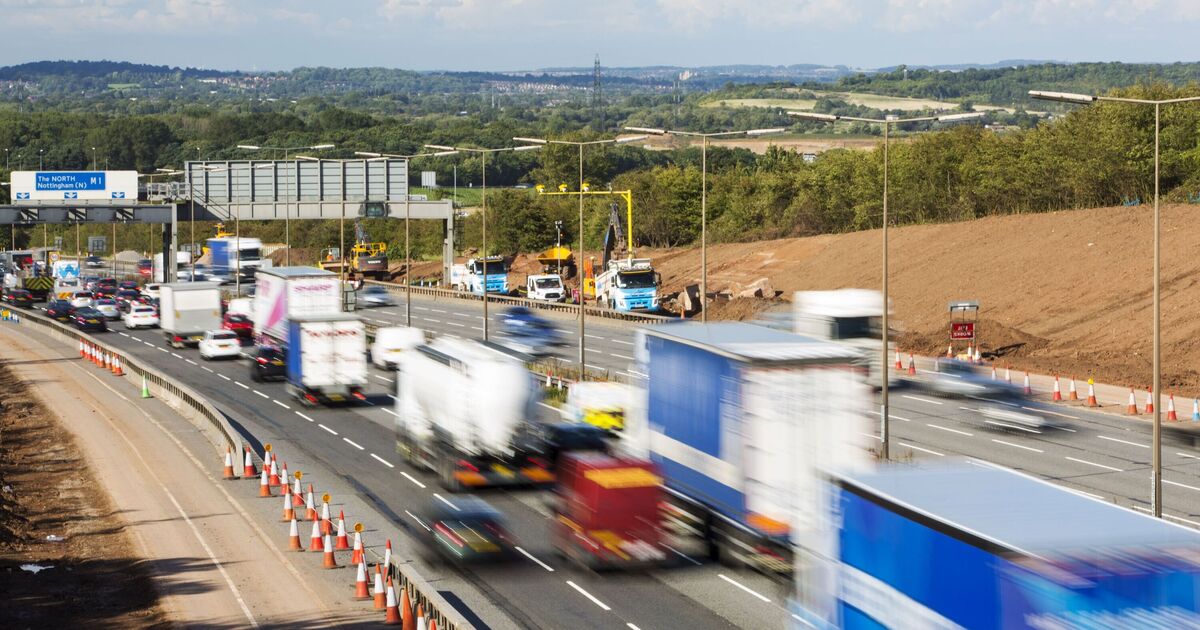

Owners of these eight vehicles must follow different motorway speed limit rules to almost all other road users to avoid fines, according to officials. It is well-known that motorways are usually set at the highest UK national speed limit of 70mph.
It means most cars can drive up to 70mph legally on motorways unless there are temporary speed restrictions or closures in place. However, many individuals may not be aware that certain vehicles have a different “maximum” speed limit of just 60mph. Failing to follow these rules by travelling at 65mph or 70mph could see these road users slapped with penalties, including heavy fines.
GOV.UK said: “You must not drive faster than the speed limit for the type of road and your type of vehicle.
“The speed limit is the absolute maximum – it does not mean it’s safe to drive at this speed in all conditions.”
According to the Government, cars, motorcycles, car-derived vans and dual-purpose vehicles must stay below 60mph while towing caravans or trailers.
Meanwhile, buses, coaches and minibuses which are more than 12 metres in length are also restricted to 60mph.
Goods vehicles weighing more than 7.5 tonnes in maximum laden weight must also meet 60mph.
Motorists caught speeding could be slapped with a £100 on-the-spot fine if they exceed the minimum speed limit.
Meanwhile, road users caught out could be hit with three penalty points on their driving licence.
A driver who builds up 12 or more penalty points on their driving licences within a period of 3 years could be disqualified from driving completely.
Under more serious circumstances, road users may also be hit with a £2,500 fine and a potential disqualification.
National Highways have previously urged those getting behind the wheel of HGVs to remember the different speed limits.
Those switching between driving a car and a HGV for work could get confined over the different speed limits and risk being caught out.
They said: “Due to its weight, an HGV will take more time to accelerate, especially when starting or going uphill.
“Be prepared to adapt your driving when you’re around HGVs by reducing speed. HGVs’ speed is restricted to 60mph on motorways and dual carriageways, and to 50mph on single carriageways.”
